
ALEC’s Rich States, Poor States index now has Mississippi at 24th for economic outlook. The trend lines, and the policy choices behind them, explain why.
The latest Rich States, Poor States index has just been published by ALEC, and for anyone who cares about the direction of our state, it makes for encouraging reading.
Mississippi now ranks 24th in America for economic outlook. That is a forward-looking measure, built from fifteen different state policy variables — tax burden, regulatory environment, labor law, and more. A decade ago, the idea of Mississippi sitting in the top half of that table would have been difficult to imagine. Today, we are there — and we are still climbing.
Three trends worth noting
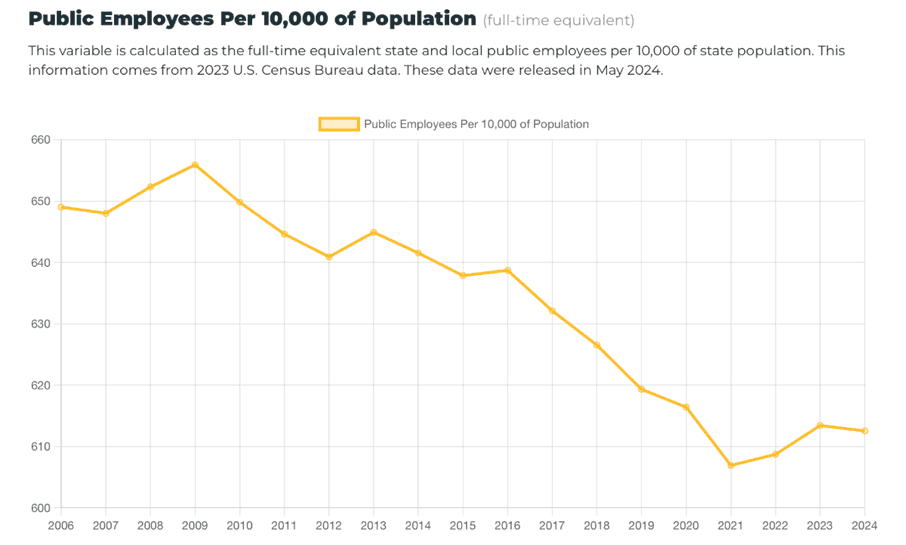
Public sector shrinking, private sector growing. The number of public sector employees in Mississippi is falling — which means the private sector, the part of the economy that actually generates wealth, is becoming more prominent. That is a structural shift, not a one-off.
Public Employees Per 10,000 of Population (full-time equivalent)
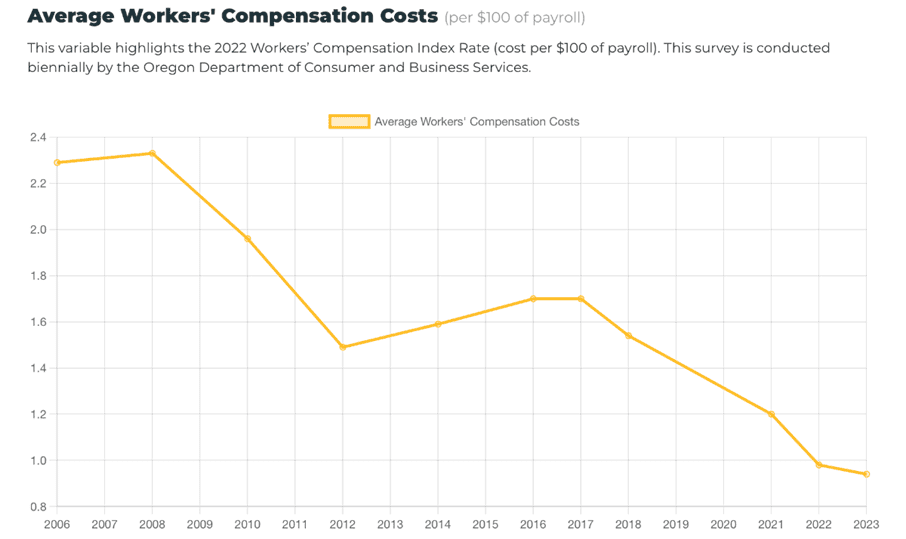
The cost of doing business is falling. The non-wage costs of hiring people in Mississippi have come down steadily. That is one of the reasons so many firms are now choosing to invest here rather than somewhere else.
Average Workers’ Compensation Costs (per $100 of payroll)
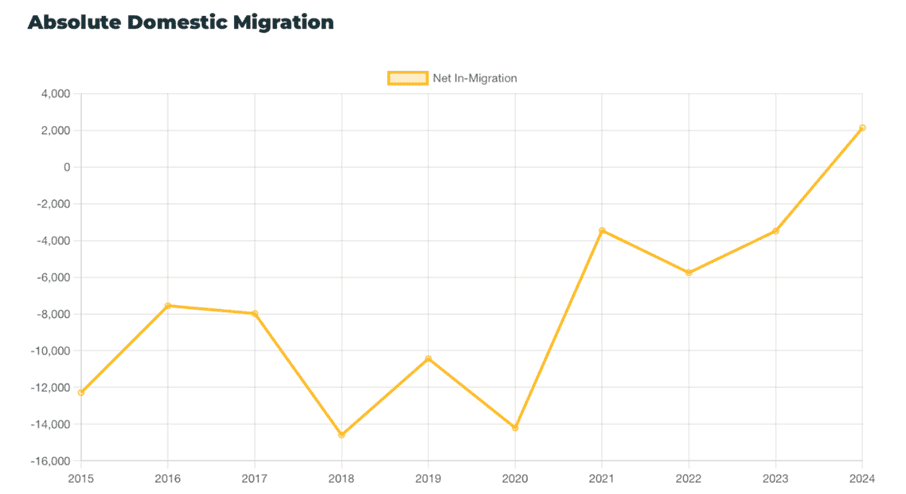
More people are moving in than out. This may be the most important of all. For too long, young Mississippians moved to Birmingham, Nashville, or Austin to find better opportunities. Now, at last, the trend is reversing. More people are moving to Mississippi than leaving it.
Absolute Domestic Migration
How we got here
None of this happened by accident. It is the cumulative result of half a decade of serious policy reform — and at every stage, opposition was loud.
In 2021, Mississippi enacted serious labor market reform — making it easier for people to work, to train, and to move between careers.
In 2022, we replaced an old, progressive tax code with a flat tax.
Year after year, we have kept energy costs among the most affordable in the country — a quiet advantage that every family and every employer benefits from.
In 2024, we passed education funding reform so that the money at last follows the child.
In 2025, we enacted the historic elimination of the state income tax — a policy that only a few years ago was dismissed as politically impossible.
And in 2026, we have begun to take on the thicket of red tape that has held back our healthcare economy.
Every one of these reforms was resisted. Each was said, at the time, to be too ambitious or too politically risky. Each now stands as part of the answer to why Mississippi is moving up the rankings.
How laws actually pass
Ideas do not turn into law without people willing to fight to make it happen. Sycophancy might get you into the signing ceremony. It takes robust advocacy to ensure that there is a bill to be signed in the first place.
The rest of the country is beginning to notice. Mississippi is no longer the state that others use as a punchline. We are becoming a state that others are studying.
There is a great deal still to do. But the direction of travel is clear — and you have helped set it.