New York Gov. Kathy Hochul has announced that she intends to opt the state into the new federal scholarship tax credit program, making her another Democratic state leader to do so. Hochul’s decision brings the total count of states on track to participate to 31.
Gov. Tim Walz has stated Minnesota will not opt into the program, going so far as to propose an end to longstanding nonpublic student aid if the state participated, which is essentially a nonstarter on the topic. Legislative efforts to opt the state in remain at play.
Starting in 2027, the Education Freedom Tax Credit (EFTC) allows taxpayers who donate to federally certified Scholarship Granting Organizations (SGOs) to claim a dollar-for-dollar federal tax credit up to $1,700. Those SGOs, in turn, award scholarships to eligible K-12 students in public schools, private schools, and home education for use toward tutoring, educational therapies, special needs services, testing fees, supplementary services, educational software, and tuition, among other things.
Participation does not impact the state’s education budget or take money from public schools. In practical terms, the EFTC simply encourages private giving to student scholarships by offering a tax incentive.
But opting out risks leaving money on the table that could support students, because Minnesota taxpayers can claim the tax credit regardless of whether the state participates. And the amounts are significant.
According to a new dashboard published by the America First Policy Institute, even modest participation by Minnesota taxpayers could send hundreds of millions of dollars out of state over the next few years. If just 10 percent of Minnesota single filers earning $75,000 or more donate the maximum creditable amount ($1,700) from 2027-2029, over $463 million could flow out of Minnesota instead of supporting students here. If participation ticks up slightly, say 12 percent in 2028 and 14 percent in 2029, now we are looking at roughly $500 million over three years.
For a state that routinely argues it needs more education funding, saying “no” to this opportunity is an odd place to draw the line. Especially given that public school students make up the majority of those who would benefit.
While the scholarship tax-credit program does reduce federal tax collections, a key piece that gets glossed over is that it doesn’t send a government check. Framing that as a federal “cost” assumes that every dollar of income belongs first to Washington. It also misses the longer view — an educated, skilled workforce earns more over a lifetime, and higher earners pay more in taxes. Evidence from states with scholarship tax-credit programs shows that student outcomes improve without the negative fiscal effects critics predict.
And for those genuinely concerned about the federal deficit, it’s worth asking where that deficit actually comes from. Entitlement programs and debt service, like Social Security, Medicare, and Medicaid, account for the overwhelming majority of federal expenditures. A scholarship tax credit is marginal in comparison. Deficit anxiety should not be directed at families seeking better educational options for their children while the entitlement crisis goes unaddressed.
Nor is this approach to education investment new territory. Consider 529 savings plans, the American Opportunity Credit, and the Lifetime Learning Credit, all of which use the tax code as an incentive, and all with broad bipartisan support.
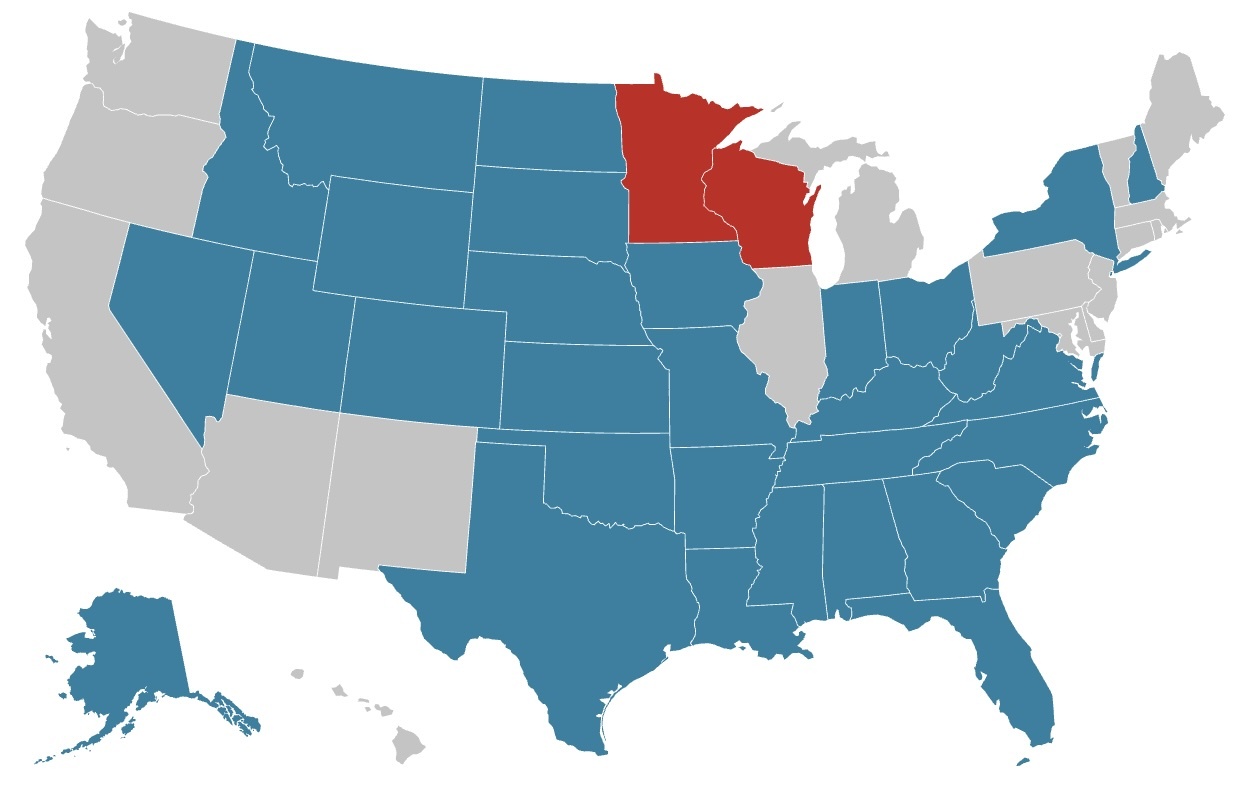
Thirty-one states have looked at this program and said yes. The map below shows just how much of an outlier Walz’s refusal has become. Urge him to change his mind and put all students first here.