Not too long ago, I had a conversation with a staff member of one of Idaho’s US Senators. The conversation centered around why it was so difficult to get federal spending under control – which clearly has not happened. This staffer remarked to me, when Congress cuts spending they hear loudly from those who oppose the cuts, but rarely a thank you from those constituents who favor cuts. In other words, it is perceived by politicians to be a thankless task. There is more to that story, of course, including a federal budget process that has not worked well – it has been over 25 years since Congress has passed all budget bills on time.
There are other factors at play at all levels of government. The most obvious one is the veiled threats that opponents of cuts routinely use: people will die, children will suffer, the air will become foul, and public safety will be impacted.
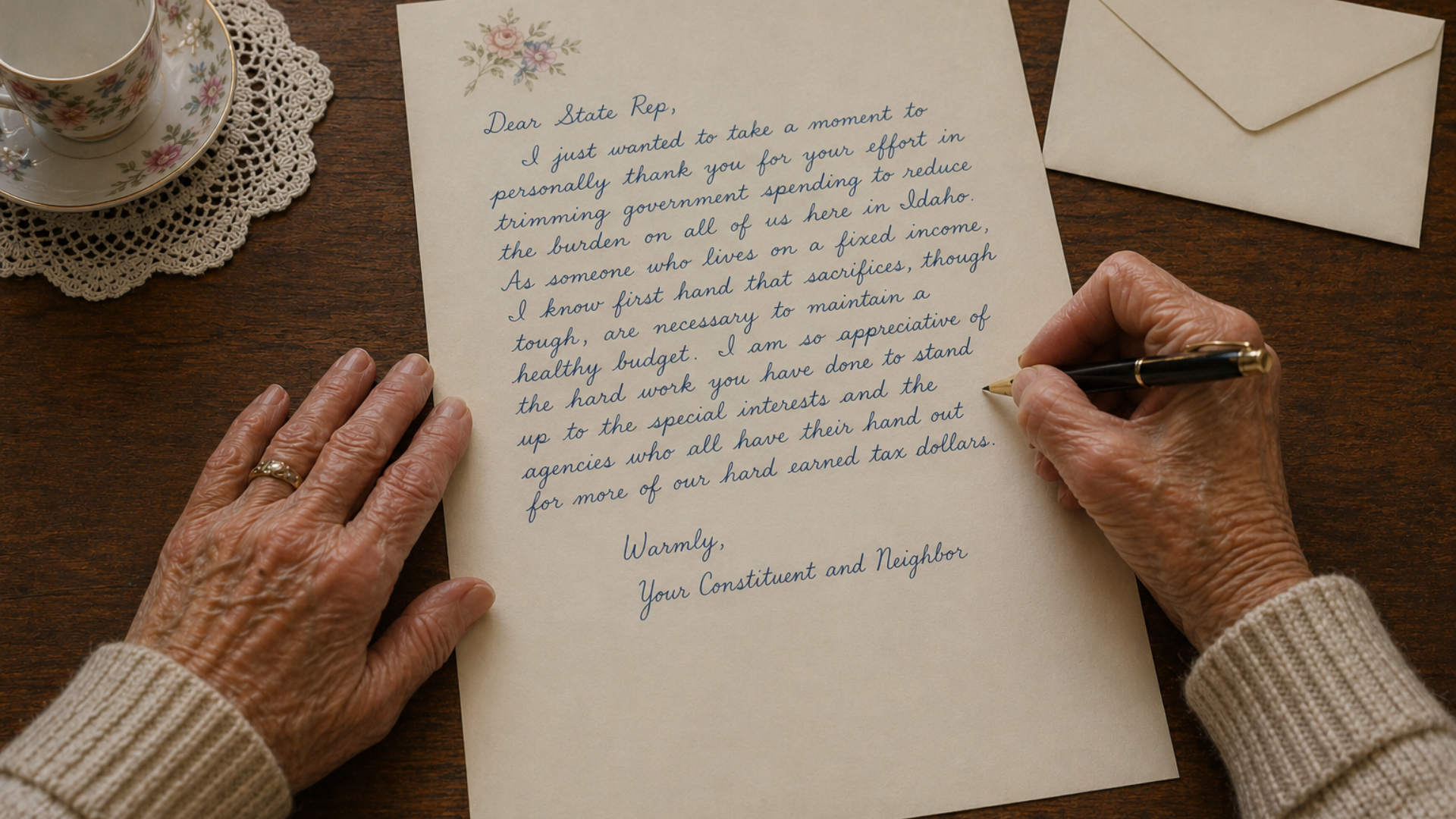
And so Idaho’s fiscally conservative legislators should be thanked for their courage in standing up for taxpayers, with the realization that this is what the big spenders will always say. It never changes.
But consider this: have you noticed any difference in the delivery of federal services after a net cut of 12% of the federal workforce – roughly 300,000 fewer federal employees – since President Trump took office? I haven’t. Certainly, the border is more secure. Even the Wall Street Journal had a front-page article suggesting the Trump headcount cuts to the IRS would impact revenue collection. However, for the first six months of the federal fiscal year 2026, revenues are up 9.9%, from $2.260 trillion last year to $2.483 trillion for the same period this year. Maybe all of those IRS employees weren’t needed after all.
Idaho has a much better budget process, which is completed on time, but the debates by those opposed to spending cuts carried the same odor as the federal debates. Senator Wintrow actually said that people died as a result of programmatic cuts. It was a blunt weapon to frighten fellow legislators. And although it largely didn’t work, you can bet that theme will be used against fiscal conservatives in the campaign season.
Let’s examine some details from the most recent legislative session. Fiscally conservative legislators rejected enough budget bills to save $107 million. Yes it is less than 1% of the total appropriation of $14.5 billion. But those cuts, if they had not occurred, would have accumulated more than $1 billion in spending over the next decade. So the cuts do matter. Five bills were voted down on the floor of either the House or Senate, and one was returned to committee before a vote. Here is a list and the impact.
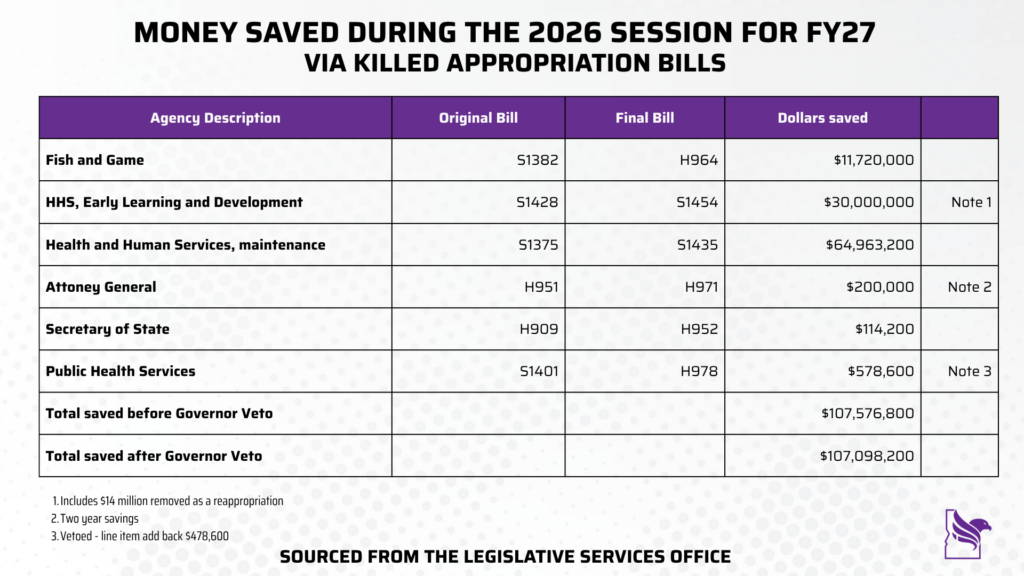
Despite what you hear from political opponents of fiscal conservatism, no agency was defunded. Overall spending increased by 2.5% from Fiscal Year 2026 (FY26) to FY27. Legislators who call themselves fiscally conservative but voted for the first round of budgets listed above (original bills) might want to explain why they consider themselves such. The only way to reduce the growth of government spending is to vote for lower spending when presented with the opportunity. But the key takeaway from this session is that you can’t wait until next year. By voting no during the session, conservative legislators sent a signal to the Joint Finance-Appropriation Committee —- send us smaller budgets. And they did, to the tune of $107 million in savings.
So let us thank legislators who had the moral courage to say no, because they work for taxpayers first, not the agencies asking for more money.