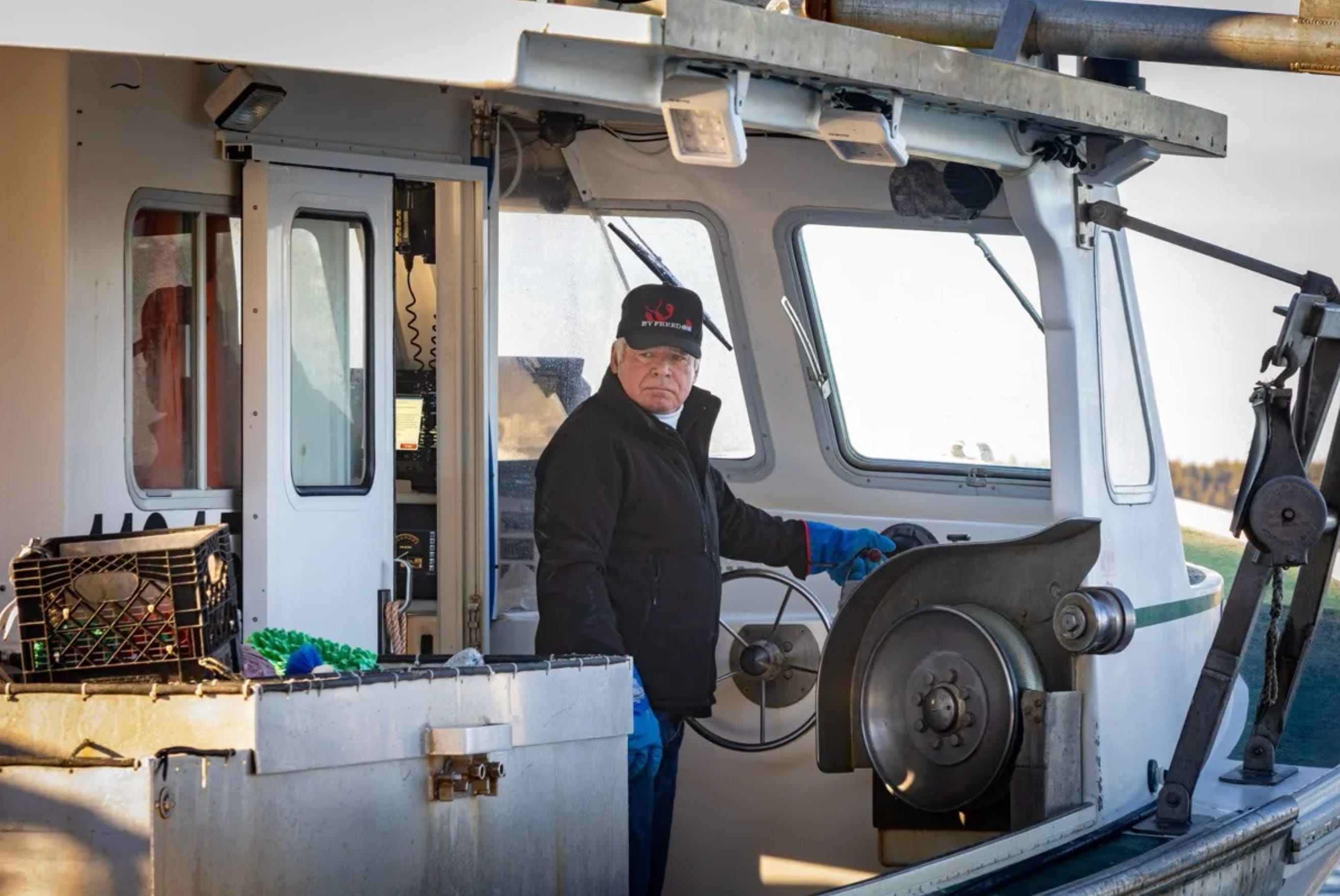
What if keeping your job meant letting the government track your every move? For Maine lobsterman Frank Thompson, that isn’t a hypothetical; it’s his reality.
The Atlantic States Marine Fisheries Commission (ASMFC) is an interstate body that coordinates fishery management along the Atlantic coast. In 2022, its American Lobster Management Board approved changes to the lobster and Jonah crab management plans, requiring electronic tracking for vessels with certain federal commercial trap gear permits.
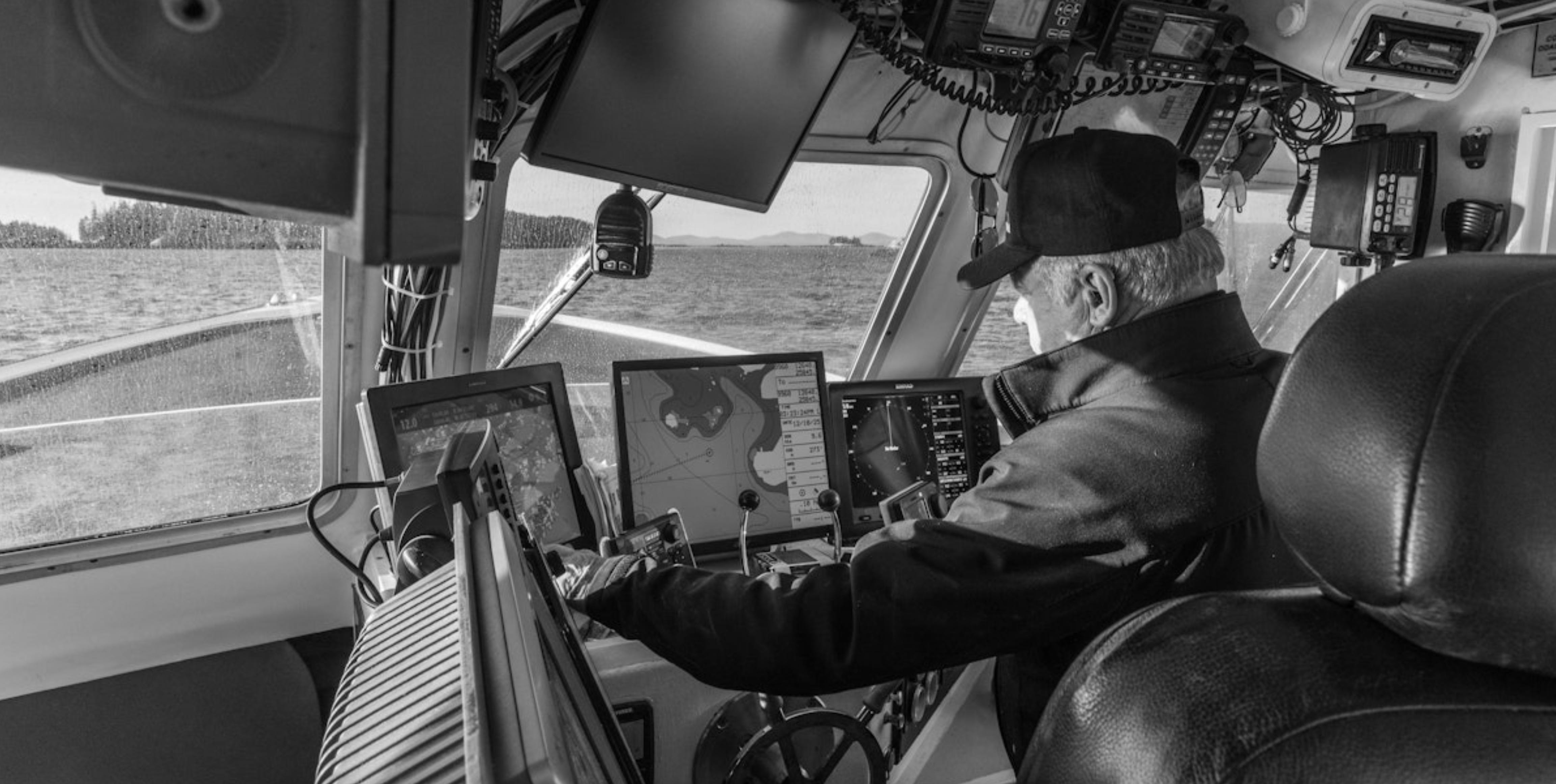
A year later, in 2023, Maine implemented that mandate by creating a rule that, according to the state Department of Marine Resources (DMR), forces a device to be attached to a covered boat that records every minute while the boat is moving, and once every six hours while tied. The device must be active and on the vessel at all times, including in port, when the owner is fishing, and even when the owner is using the boat for personal purposes only.
Now, the U.S. Supreme Court has been asked to take up a challenge to the government’s power to track a lobsterman’s boat at all times.
The petitioner in the case is Frank Thompson, a fifth-generation lobsterman from Vinalhaven who argues that the rule goes too far. The Supreme Court has not yet agreed to hear the case, but Thompson’s petition to be heard by the court will be reviewed at the justices’ September 28 conference. If the court agrees to take up Thompson v. Wilson and rules in Thompson’s favor, it may impose some limits on the government’s power to track people simply because they work in a regulated industry.

Although ASMFC is not a federal agency, Congress has given its management plans particular authority under the Atlantic Coastal Fisheries Cooperative Management Act. A state that refuses any measure in a required plan is considered “out of compliance,” and if the federal Secretary of Commerce later agrees with the plan’s goals, he or she may impose a moratorium on that fishery in state waters. Maine could reject the mandate and risk such an imposition, but that could put the entire Maine fishing and lobstering industry at risk.
The stated purposes of this requirement are improving stock assessments, informing decisions about other ocean uses, and aiding enforcement. None of these purposes justify tracking a lobsterman’s boat every minute throughout the workday or during trips taken for personal reasons, nor do they justify the disappearance of the Fourth Amendment.
Faced with the potential consequences of non-compliance, Maine adopted a rule implementing the tracking mandate. But a requirement this sweeping never received an up-or-down vote from Maine lawmakers. The DMR classified the tracking mandate as a “routine technical” rule rather than a “major substantive” rule, allowing it to take effect through the ordinary administrative rulemaking process without legislative approval.
Under Maine law, major substantive rules must be submitted to the Legislature before final adoption; routine technical rules do not. The result was that a new system capable of continuously recording the movements of Maine citizens’ privately owned vessels became law without the Legislature ever voting specifically to approve it.
The DMR claims it can do this because of broad authority granted to it under 12 M.R.S. § 6171 to make rules that affect how we catch marine organisms. The DMR does have a legitimate claim to making routine technical rules given the authority it possesses, but minute-by-minute tracking of workers’ boats is anything but routine.
The result was that a new system capable of continuously recording the movements of Maine citizens’ privately owned vessels became law without the Legislature ever voting specifically to approve it.
Thompson challenged the rule under the Fourth Amendment’s protection against unreasonable searches. A federal district court dismissed his claim, and the First Circuit Court of Appeals affirmed it in November 2025. Maine conceded in court that the tracking is a search, but the appeals court nevertheless found it reasonable under the legal test for administrative searches of closely regulated industries.
In his petition, Thompson asks the U.S. Supreme Court to reject the government’s demand that he carry a tracker on his private boat as the price of keeping his fishing license. The Supreme Court should take up the case and strike down this requirement as unconstitutional.
Regulation is not a blank check for surveillance. Just because lobstering is a regulated field does not mean the government should be able to demand minute-by-minute monitoring of every fishing trip, let alone a family outing on the same boat. Tracking hardworking Maine lobstermen’s every move is a massive overreach and is not the proper role of government.
[M]inute-by-minute tracking of workers’ boats is anything but routine.
Despite the importance of these issues, the Maine government is urging the Supreme Court not to hear the case, arguing that the First Circuit correctly applied existing law and that Thompson did not properly preserve part of his argument. In doing so, the state is erroneously defending the constitutionality of the tracking rule itself.
This fight over lobster trackers is part of a much broader debate in Maine over how far government surveillance should be allowed to reach. Earlier this year, the Maine Policy Institute raised concerns about automated surveillance when it fought against LD 1457, which would have authorized a pilot program to use automated speed-enforcement cameras in Maine Turnpike work zones. Those cameras and sensors would automatically identify vehicles that were speeding and ticket the vehicles by referencing the recorded license plate, time, and location.
Regulation is not a blank check for surveillance.
Maine Policy argued that allowing the government to automatically record people and vehicles was an overreach of government power. The Legislature ultimately rejected LD 1457, but the same basic privacy concern is now at the heart of Thompson. In both cases, the government points to a legitimate regulatory objective and then asks Mainers to accept automated collection of their location information as part of achieving that objective.
That is a dangerous precedent. The government should not be given unlimited authority to track the people engaged in an activity simply because it’s one the government regulates. Whether the justification is enforcing speed limits or managing a fishery, technological convenience does not erase constitutional limits. If anything, as surveillance becomes cheaper, easier, and more precise, those limits become more important.
The Fourth Amendment was not written with GPS trackers and automated cameras in mind. But the principle it embodies — that the government must generally get a warrant before invading your privacy — is as relevant as ever. That’s the principle at stake in this case.
Whether the justification is enforcing speed limits or managing a fishery, technological convenience does not erase constitutional limits.
But the implications do not stop at the dock. If the government can justify increasingly intrusive surveillance whenever it can point to some regulatory interest, the line protecting everyone’s privacy becomes a little easier to move the next time.
That is why Thompson matters far beyond Maine’s lobster industry. As technology makes it cheaper and easier for government to know where people are and what they are doing, Americans will increasingly have to push back against government overreach and insist that the government remain within its proper constitutional limits.
Rights do not protect themselves. Cases like Thompson are a reminder that keeping government in its proper place sometimes requires ordinary people to stand up and tell it that it has gone too far.