The Supplemental Nutrition Assistance Program (SNAP) is about to become significantly more expensive for states as they take on new responsibilities imposed by the One Big Beautiful Bill Act. For the first time in program history, states will shoulder a portion of costs based on their payment error rates. Massachusetts registered a 12.5% error rate in the 2025 fiscal year, meaning the Commonwealth could be on the hook for upwards of $350 million.
On top of this, the reform will include changes to work requirements and eligibility standards. Together, these reforms shift a higher workload and level of financial responsibility to states, forcing the question: how will the state provide necessary food assistance to those who need it while absorbing millions of dollars in costs?
The new cost sharing structure is part of the reform’s greater mission of improving program accuracy and reducing federal spending. Beginning in October 2027, states will pay between 5 and 15% of the benefit costs depending on their payment error rates, which measure the overpayment and underpayment of benefits to SNAP recipients. Federal reviewers examine random samples of SNAP cases in each state to calculate the rate by interviewing households to verify that all documentation – like pay stubs and household size – aligns with the benefit they are paid.
Many states have struggled to reduce their payment error rate to the USDA threshold level of 6%, and it cost the federal government a collective $10.1 billion in improper payments in FY2025. Currently in the highest cost-sharing tier, Massachusetts must reduce its payment error out of fiscal necessity.
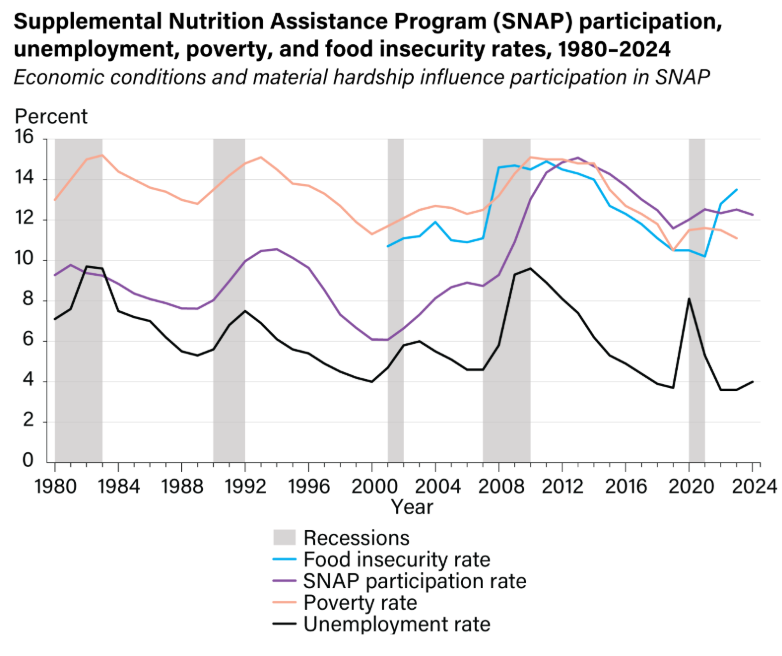
Figure 1: Relationship between SNAP Participation and Socioeconomic Indicators, 1980-2024. Source: USDA
The reform’s stakes extend well beyond its impact on state budgets. SNAP has always been about providing low-income households with access to nutritious food. The program serves almost 42 million Americans, who are overwhelmingly children, persons with disabilities, and racial and ethnic minorities. As of 2024, Massachusetts reported 16% of the state population participated in SNAP, with half of participants belonging to families with children.
Food insecurity isn’t just a measure of available food but also reflects whether households have financial and physical access to nutritious meals, as shown in Figure 1 above. By helping families meet this basic need, SNAP can mitigate downstream costs and improve health outcomes, promote educational attainment, and foster economic stability.
With food insecurity on the rise, program accuracy is important to ensure that the neediest groups are served effectively. Therefore, the new funding structure seeks to better target at-need populations under the new work requirements and eligibility rules while also increasing savings with more thorough verification of household information. The new eligibility rules apply to adults aged 18 to 64 without dependents under 14 years old, requiring at least 80 hours of work per month and removing exemptions for veterans, homeless individuals, non-citizens and those who aged out of foster care. These changes aim to encourage labor force participation among able-bodied adults while protecting those with disabilities and low-income families with children who would still qualify.
Enrollment levels in Massachusetts show a 10% drop in participation since the reform was enacted (see Figure 1). Even so, SNAP caseloads are still above pre-pandemic levels at around 590,000 in 2026.
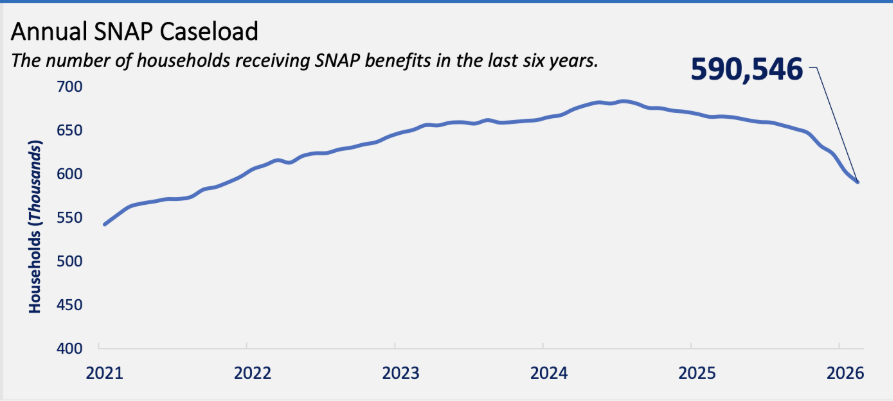
Figure 2: Massachusetts Annual SNAP Caseloads Remain Heightened from Pandemic Levels. Source: Department of Transitional Assistance (DTA)
Even as enrollment falls, the state’s financial obligations continue to grow due to a combination of the payment error rate and its designated share of program administrative costs. Massachusetts’ administrative share will rise from 50% to 75% in FY2027, resulting in an estimated $53 million in additional costs. While there is both a new level of administrative and financial burden on the state’s hands, states will be forced to put a concerted effort into reducing the payment error rate with few additional resources. Prior to 2020, Massachusetts maintained a low payment error rate, typically between 4 and 6 percent, so the guidelines could help return the state to original benefit levels. The administrative requirements also could be helpful in achieving this aim, as state agencies will be required to implement more frequent eligibility reviews, navigate the new work requirements, and process more case changes.
Altogether, the state will be looking for innovative solutions to streamline processes and avoid these costs. One such solution includes the introduction of artificial intelligence and machine learning tools, which can help to identify abnormalities in SNAP cases before the eligibility determination. While AI could provide a solution to error rates, it is important that AI processes are explainable, transparent, and auditable, especially when providing a crucial benefit like SNAP and protecting its participants’ privacy. Reducing payment error is seemingly a strong solution for states seeking to control costs if they can devote resources to modernizing technology systems in a safe way.
In July, Governor Healey approved the FY2027 budget, which included a $4.1 million budget increase for the Department of Transition Assistance (DTA) and a $2.7 million increase for SNAP funding. This budget allows a continuation of DTA’s current plan to reduce the payment error rate by hiring more case workers and establishing a dedicated quality assurance team. On top of this, the DTA hopes to leverage data to streamline the review process and improve technology platforms. Innovative solutions to the payment error rate could ultimately save money and improve reliability for SNAP recipients.
Mia Raineri is a Roger Perry Government Transparency Intern at Pioneer Institute. She recently earned her M.S. in Applied Economics from Boston College.