Conservatives Must Reclaim the Fourth Amendment from Mass Surveillance
Every day, hundreds of thousands of Alabamians drive to work, drop their children off at school, go to church, and run errands with the quiet, fundamental understanding that unless they are suspected of a crime, the government is not tracking their every move. Americans once understood instinctively that a free citizen ought to be able to travel public roads without the government keeping a ledger of their movements. Law enforcement watched suspects because it had a specific reason to suspect them, it did not watch everybody in the hope that someday the information collected on them might become useful. Yet, quietly and systematically, that reasonable expectation of privacy is being erased across the Yellowhammer State.
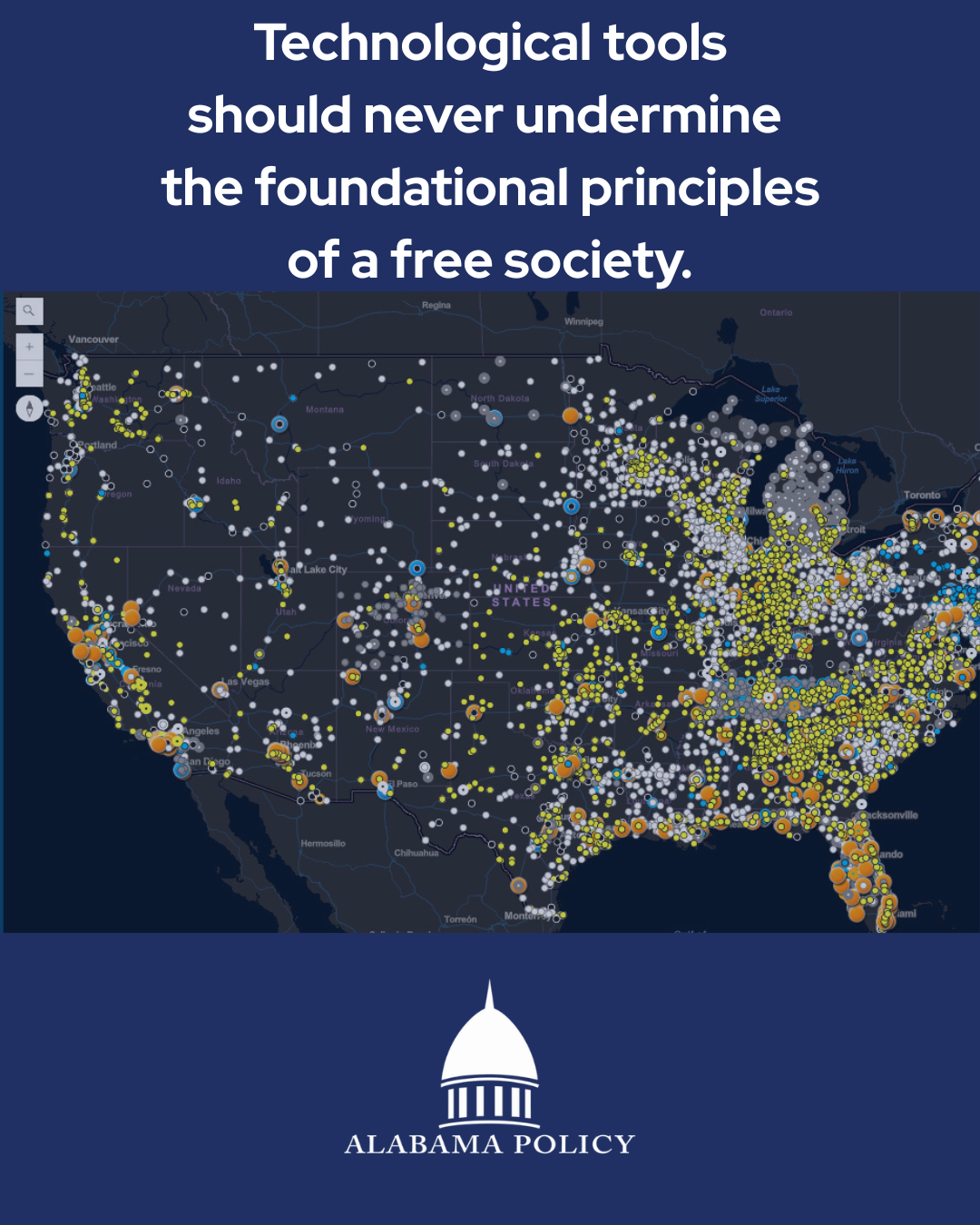
From the Birmingham metro area, where nearly 1,500 automated license plate readers operate, to small towns in North and South Alabama, “safety cameras” have been installed. Nationwide, there are currently at least 120,000 of these cameras across 49 states, with more being added daily. Rather than capturing red-light runners, these stationary, AI-powered systems log the license plate, make, model, and identifiable details of every single passing vehicle into a timestamped, searchable national database. As cameras proliferate across public streets and private parking lots, avoiding them has become nearly impossible, making the data accessible to the government essentially indistinguishable from placing a government GPS tracker on every citizen’s car.
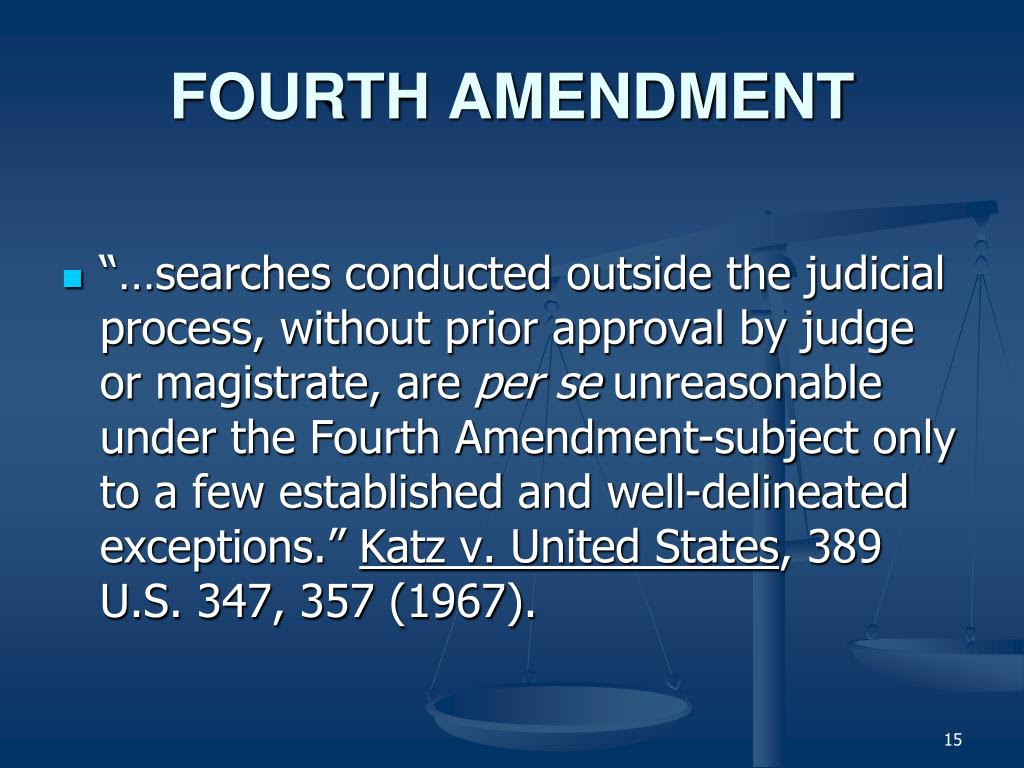
The Fourth Amendment to the U.S. Constitution guarantees the right of the people to be secure in their persons, houses, papers, and effects against unreasonable searches and seizures. While proponents point to legacy legal precedent holding that individuals have a lower expectation of privacy on public roads, modern technology alters this calculus entirely. Our Constitution was written by men who distrusted concentrated power because they understood human nature; they did not assume that every sheriff, prosecutor, governor, or bureaucrat would always be wise and virtuous, so they built restraints for the day when one of them would not be. Modern Supreme Court jurisprudence, such as United States v. Jones, regarding GPS tracking and Carpenter v. United States regarding cell-site location data, has recognized that aggregating bits of public information into a continuous, searchable map of a citizen’s life constitutes a search under the Fourth Amendment. When interconnected camera networks allow the state or a private out-of-state vendor to build a persistent, retrospective database of daily travel, it ceases to be “plain view” police work and becomes warrantless mass surveillance.
Under the Alabama Administrative Code, state agencies are permitted to retain license plate reader data for up to five years, a remarkably long window compared to broader private standards. History teaches us that government power, once acquired, is seldom surrendered voluntarily. First, the technology is reserved for serious crimes, then seamlessly applied to lesser offenses until usage shifts to routine investigations. Normalization eventually allows surveillance for political demonstrations, personal associations, or basic commerce and citizen movement.
Somewhere along the way, surveillance becomes normalized.

Across the country and here in Alabama, citizens are demonstrating unhappiness and a genuine grassroots movement is spreading through social media groups and regional news outlets; concerned citizens are pressuring local lawmakers to rescind their contracts with surveillance companies, while more drastic dissenters have even donned masks to cut down cameras with electric saws. More than 50 jurisdictions have ended their surveillance following local pushback. In response to public pressure, one company recently announced plans to cut its default data retention period from 30 days to 7 days, require clients to tie searches to specific case codes, and remove federal agencies from its nationwide search database.
Public skepticism is well-founded, driven in part by documented misuses of license plate databases. Reports have highlighted cases where government officials used networks to track romantic partners and private individuals without a legitimate investigation, alongside dangerous incidents where camera errors led police to pursue and hold innocent drivers at gunpoint. However, what truly drives widespread opposition is not merely present misuse, but the potential for future overreach, from detecting compliance with public health mandates to monitoring political opponents. The public backlash illustrates that the presumption of good faith toward governmental experts has completely evaporated. Government power should never be granted if that same amount of power can’t be trusted in the hands of political adversaries.
The core issue is not whether these cameras can help solve crimes, of course they can. The issue is whether we are willing to construct a system capable of tracking the movements of millions of innocent Americans because that system might make law enforcement quicker or more convenient. Convenience is a poor bargain for liberty, and we have heard this argument before: give up a little freedom and the state will keep you safe. Two weeks to flatten the curve.
Laws and institutions must be built for the politicians we fear, not the politicians we trust.
Conservatives in Alabama must reject the false dichotomy of security or liberty. If these cameras are allowed to remain, it is imperative that the Alabama Legislature protect our Fourth Amendment rights by establishing standard-setting guardrails: require police to obtain a search warrant based upon probable cause before accessing historical location databases, restrict data retention to very short timeframes (hours or days rather than weeks, months, or years), prohibit Alabama government on all levels from pooling vehicle location records into unrestricted nationwide private network databases, mandate public transparency with local government approval alongside third-party security audits, and make any violation of these guardrails a serious offense.
Technological tools should never undermine the foundational principles of a free society.
A sustainable republic requires a stubborn people with a certain distrust of government and their “experts”, whether they be in public health or public safety. We, as a nation and state, must be willing to assert that there are some powers the government shouldn’t possess regardless of utility. Conservatives are often asked what exactly we are trying to conserve. Chief among them should be the Bill of Rights and the U.S. Constitution.
If Alabama fails to rein in warrantless surveillance today, we risk handing future decision-makers an infrastructure capable of tracking and passing judgment on every medical appointment, political rally, religious gathering, and private encounter in the state. It is imperative for Alabama lawmakers to secure our Fourth Amendment protections.