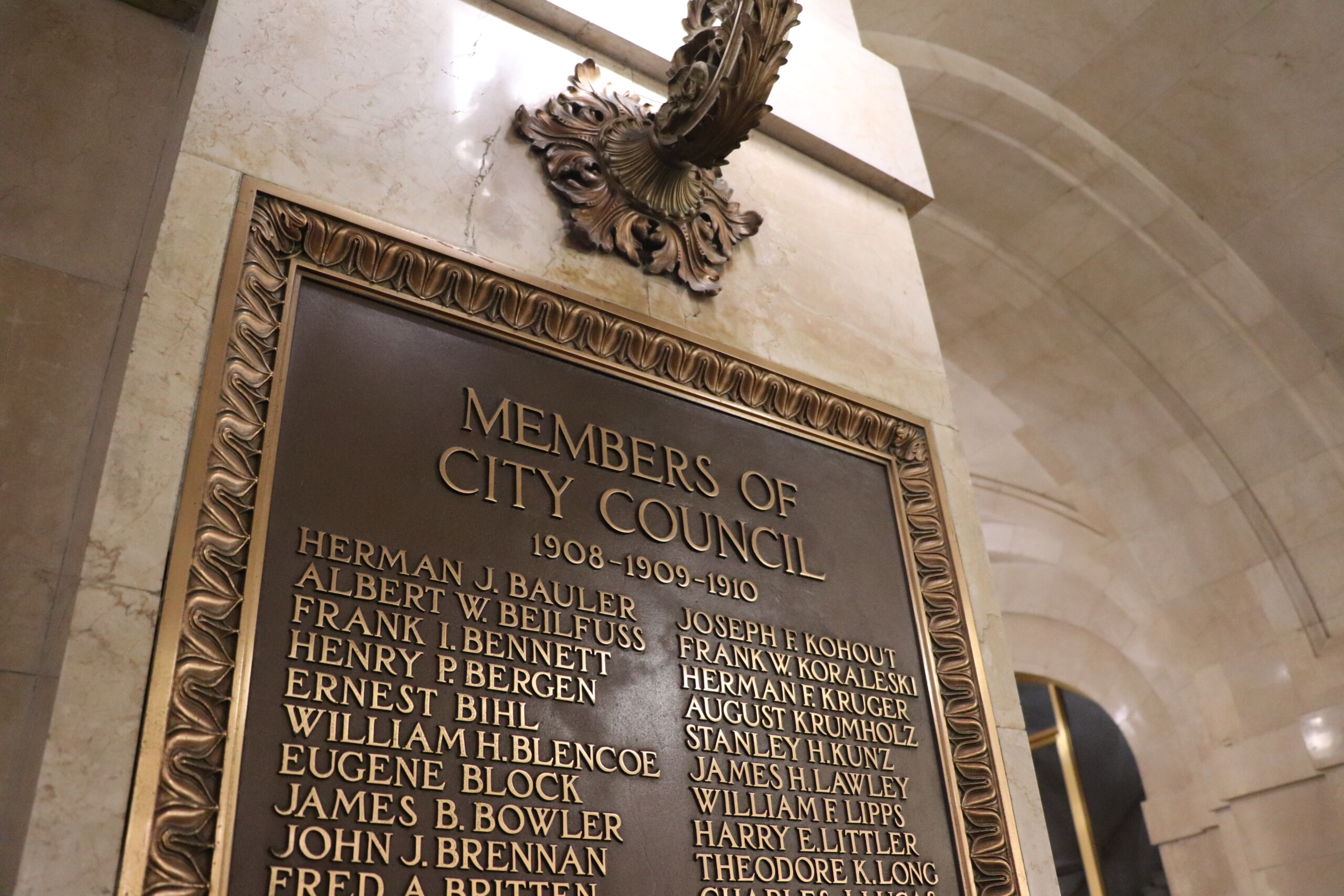
Going into this budget cycle, there should be an added urgency for the City Council to build its capacity to play a co-equal role in the budget process and push to adopt more reforms and efficiencies to control spending.
Recently departed Chicago Inspector General Deborah Witzburg sharply criticized Mayor Brandon Johnson’s administration as “reflexively hostile to oversight.”
Nowhere is this more clear than in the city’s budget process.
A lack of transparency has become routine, with aldermen, watchdogs and media reports alleging the administration has failed to provide timely, accurate or complete information on projected deficits and spending plans.
In the latest budget cycle, aldermen said they had been left in the dark, as Johnson failed to brief them about possible spending cuts and revenue proposals. Ald. Brendan Reilly questioned whether the budget team’s math was credible, saying information is “hidden from this council.” Aldermen said the administration ignored the majority of an EY report identifying up to $1.4 billion in potential savings, instead pursuing tax increases.
In past budget cycles, aldermen called for “more transparency” in spending on the migrant crisis, noting insufficient documentation of vendor expenses and vague answers about how federally funded services would be sustained.
The City Council shares the blame for the flawed process. While it has made progress, the council has failed to secure independent access to data and has not invested in the staff or expertise needed for meaningful oversight.
The inspector general’s farewell audit underscores this failure. Reviewing 2015–2023, the audit found that the City Council’s Office of Financial Analysis, its independent budget arm, had only a few employees, no direct data access and no clear reporting requirements.
As a result, the office’s reports were neither timely nor complete and offered limited help in budget decision-making. The IG pointed to a lack of resources, weak mandates and insufficient independence from council politics.
That lack of independence mirrors the longstanding “Chicago Way,” where decisions are made with minimal scrutiny and limited public participation.
In Johnson’s mind a progressive council aligns with a progressive mayor and that’s how government should function. He is continuing the tradition of giving the council and public too little time and too little information. Major decisions — from asset sales to pension holidays to tax-increment financing and the casino deal — have been shaped behind closed doors, with the council largely rubber-stamping them.
The budget process illustrates the problem. The mayor’s office allows roughly 35 days from proposal to passage, longer than Chicago’s recent average of 26 days but still short compared with other major cities.
Compounding the issue, neither the City Council Budget Committee nor the Legislative Reference Bureau has the staffing or expertise to thoroughly examine the budget. Chicago lacks mechanisms to monitor revenues and spending in real time and independently assess financial health and programs.
With another projected $1 billion deficit, the City Council must build transparency and accountability into the system. It can start by:
- Establishing an independent budget office with full access to city financial data and sufficient staff to evaluate spending and monitor revenues.
- Extending that office’s oversight to all mayor-controlled entities, especially Chicago Public Schools, which was to receive $4.2 billion from property taxes and $552 million from TIF surpluses in 2026, with little accountability for how that money is used.
- Requiring public disclosure of budget methodologies and data through a truth-in-budgeting ordinance.
- Creating a fixed budget timeline that releases preliminary plans months in advance for public review.
- Ensuring true independence for the inspector general, including subpoena power and authority for financial and forensic audits and repealing rules that allow suppression of reports.
Going into this budget cycle, there should be an added urgency for the City Council to build its capacity to play a co-equal role in the budget process and push to adopt more reforms and efficiencies to control spending.
Johnson has made it clear he doesn’t plan on reigning in spending and instead will put taxpayers and businesses on the hook for additional revenue sources. Johnson went to Springfield this week to lobby for adding a digital tax and a payroll tax, as well as ask the state to amend Chicago’s home rule authority to authorize the city to enact additional progressive revenues.
The council offered isolated pushback to the last budget — such as rejecting the mayor’s head tax and a property tax hike — but it has largely approved budgets intact, with limited scrutiny.
Chicago urgently needs stronger tools and a transparent process. That is how taxpayers are protected and the city’s future secured.