Executive Summary
Civil litigation policy in the U.S. is no longer just a debate over legal philosophy; it is driven by money, organization, and political influence. This paper examines the intersection of trial lawyer political spending and Republican governance in Texas and Florida, two national leaders in civil justice reform and economic growth. We analyze the history of tort reform, the rising political clout of the plaintiffs’ bar, expanding attorney general enforcement powers, outsized jury verdicts, and the largely unregulated growth of third-party litigation financing. Combined, these forces threaten to stall, reverse, or circumvent decades of hard-won reform.
Texas’ and Florida’s economic dominance is the direct result of multi-decade efforts to create a predictable civil justice environment. These reforms spurred the business investment, population growth, and capital inflows that define the “Boom Belt.” However, this competitive edge is under threat. In response to growing economic stakes, trial lawyer organizations, most notably the Florida Justice Association, are pouring substantial, targeted political resources into state legislative elections. In Texas, plaintiff-aligned groups are funding candidates and PACs to weaken reforms of the last several decades.
Protecting the legal and economic gains in both states requires actively defending nuclear verdict reforms and enforcing mandatory disclosure for third-party litigation financing. Policymakers must also block efforts to resurrect one-way attorney fees and other litigation-friendly mechanisms that were previously repealed due to the economic damage they caused. Boom Belt status is earned, not guaranteed, and statehouse politics now pose just as much risk to civil justice reform as the courts.
Introduction
Across the country, the battle over civil litigation policy has become increasingly defined not only by competing legal philosophies but by money, organization, and political influence. In recent years, plaintiffs’ firms and trial lawyer associations have expanded their use of political action committees, independent expenditures, and coordinated lobbying to shape state legislatures, judicial races, and regulatory outcomes. All tactics that critics say aim to blunt tort-reform measures and secure a more favorable legal environment for large verdicts and new causes of action that might otherwise face substantial legislative or judicial resistance.
Our purpose is to present a comprehensive look at an increasingly influential intersection of law, politics, and finance. Accordingly, this paper analyzes how trial lawyer political spending and advocacy intersect with governance in Texas and Florida; the impact of enlarging the authority of the state Office of Attorney General and creating statutes allowing new civil causes of action; how unreasonable judicial verdicts can disrupt the civil justice system; how third-party litigation funders may influence judicial outcomes; and how the combination of these factors contributes to the weakening, delay, or reversal of tort reforms enacted to reduce litigation costs, improve market stability, and encourage business and economic growth.
In June 2024, Texas announced a new Dallas-based national securities exchange, the Texas Stock Exchange (TXSE), informally known as Y’all Street. On April 7, 2026, Governor Greg Abbott joined Governor Ron DeSantis (Florida), Paul Atkins (SEC Chair), and financial executives to discuss the rise of the business and economic “Boom Belt” occurring in 11 Southeastern/Southern region states.
The conference highlighted Texas and Florida as two of the states with the fastest-growing economies in the country. The participants emphasized outperformance in GDP growth, population migration, job creation, and capital investment as key indicators of the economic boom. A key focus of the conference was the Texas Stock Exchange. The exchange is intended to attract companies and capital that have been centralized in traditional financial centers like New York. According to TXSE leadership, continuous trading is scheduled to launch between July 2, 2026 – July 17, 2026.
While energy continues to hold a substantial share of Texas’ GDP and exports and Texas was reported by the U.S. Energy Information Administration in 2024 as the nation’s top energy producer (accounting for 43% of U.S. crude oil; 28% of natural gas production; and 28% of wind electricity generation),
the state has diversified into technology, manufacturing, and services. According to a March 3, 2026 Trade & Industry Development article, Texas now ranks number one in the nation for total services employment. The state is also a draw for manufacturing and technology companies due to its lower costs, fewer land use restrictions, regulatory clarity and temperance, and access to a rapidly growing population and business base.
Florida’s economy has undergone a structural transformation over the past decade, fundamentally reshaping the stakes of civil justice policy. What was once characterized primarily by tourism, agriculture, and real estate has evolved into a diversified, globally competitive economy anchored by financial services, technology, aerospace and defense, life sciences, and capital markets. That transformation was on display during the Boom Belt event. DeSantis noted that, during his tenure, Florida has attracted more adjusted gross income into the state than any other state during that time period, with this inflow driven by high-profile corporate relocations like Citadel to Palm Beach and Palantir to Miami, alongside the broader repositioning of financial firms, technology companies, and business headquarters from high-cost, high-regulation states to the South.
This transformation is not coincidental to Florida’s legal reform agenda; in fact, it is largely a product of it. Companies and investors evaluating relocation or expansion decisions weigh legal environments alongside tax rates and labor costs. Florida’s decades-long arc of civil justice reform, from the 2006 abolition of joint and several liability to the landmark 2023 overhaul, has materially reduced litigation exposure and introduced greater predictability for businesses operating in the state. Governor DeSantis has credited business-friendly measures, including tort reform, with helping accelerate the inflow of capital and enterprise.
Citadel’s decision to establish Palm Beach operations, and the company’s leadership’s description of their COVID-era experience with Florida’s regulatory and legal environment as a decisive factor,
illustrate how the legal climate shapes location decisions at the highest levels of finance. When multinational corporations, private equity firms, and technology companies evaluate litigation exposure across jurisdictions, Florida’s reformed legal system represents a measurable competitive advantage. That advantage is not incidental; it is the direct output of deliberate legislative action, sustained over multiple sessions, in the face of organized opposition.
Florida’s economic center has shifted considerably, as well. The state’s economic ascent has not gone unnoticed by the plaintiffs’ bar — and trial lawyers, like capital, will follow economic opportunity. A more sophisticated, capital-intensive economy means larger corporate legal defendants with deeper pockets. High-net-worth financial and technology executives relocating to areas like Miami and Palm Beach result in these more affluent residential bases becoming very attractive to trial lawyers, thus generating higher potential damages in personal injury, premises liability, and commercial disputes. A more active capital markets environment creates new frontiers for securities and business litigation. The result is predictable: a more prosperous, more globally competitive Florida economy is simultaneously a more attractive litigation venue. The Florida Justice Association recognizes this dynamic. The political investment through targeted campaign contributions and legislative maneuvering is all documented in the sections that follow and is best understood not merely as a defense of past gains but as a forward-looking effort to position for a significantly larger economic prize, one created by Florida’s own success.
The History of Tort Reform in Florida and Texas
Texas Immunity Reforms
Since the 1969 enactment of the Tort Claims Act during the 61st Legislative Session, Texas has undertaken a sustained and evolving effort to reform its civil justice system. Prior to 1969, Texas operated under English common law, which stated that a person could not sue the government for a stated wrong against the person. Texas courts held that, unless constitutionally or statutorily waived, a municipality could not be held liable for the torts of its agents or officers related to personal injury or property damage related to a governmental function solely for the benefit of the public. However, the municipality could be liable for personal injuries, death, or damages arising from proprietary functions. If the behavior was proprietary, the municipality would be treated as a private entity. See Dilley vs. City of Houston (Tex. 1949).
Additionally, before the Act, counties were considered legal subdivisions that could not perform proprietary functions and had no tort liability until the Tort Claims Act.
The 61st Legislature created a statutory waiver of immunity in Texas Civil Practice and Remedies Code Annotated Section 101.001, et seq. (Vernon 2005 & Supp. 2006) (Originally enacted as Tex. Rev. Stat. Art. 6252-19). The 1969 Act includes a partial waiver of sovereign or governmental immunity of the State and its various agencies, political subdivisions (including counties, cities, and school districts), districts created by statute or constitution, boards, bureaus, and departments. According to the Act, the state had sovereign immunity and the political subdivisions had governmental immunity.
As part of the 70th Legislative Session on tort reform in 1987, the Legislature sought to further define governmental functions versus proprietary functions and, thereby, limit municipalities’ liability. To that end, the adoption of Texas Civil Practice and Remedies Code Section 101.0215 clarified which municipal functions were immune governmental actions and which were waived proprietary actions that resulted in the municipality being treated as a private entity.
Since the 1960s, Texas has undertaken a sustained and evolving effort to reform its civil justice system. These reforms focused on matters such as rising litigation costs, forum shopping, insurance availability, and access to medical care. The success of these reforms cannot be overstated. They helped fuel a transformation of the Texas economy from one focused heavily on natural resources to a modern economy with broad diversification across all industries. Today, Texas is a primary target for business relocations and startups. Moreover, according to Texans for Lawsuit Reform, passage of Senate Bill 29, which instituted corporate reforms that position Texas as an alternative to legal incorporation in Delaware, will attract businesses, and it “puts the world on notice that Texas is open for business.”
Texas Medical Malpractice Reform
The earliest health care reform of Texas’ civil justice system can be traced back to the Medical Liability and Insurance Improvement Act (MLIIA) of 1977.
This Act was passed during the state’s 65th Legislative Session. It was the beginning of medical malpractice reform and is considered Texas’ first comprehensive effort to reform tort law.
According to “Personal Health Care Expenditures by State,” (Selected Years 1966 – 1978), national personal health care spending in the U.S. was $39 billion. By 1978, this number had grown to $166 billion. In Texas, the costs per capita during 1966-1978 grew an average of 11.6 percent per year.
MLIIA was enacted to address the rising costs in medical malpractice insurance premiums.
In the early 2000s, Texas Medical Liability Trust stated in their article, “20 Years of Texas Tort Reform,” that Texas medical liability insurance costs grew by as much as 600% from 1971-1976, which fueled an increase in insurers and physicians withdrawing from the Texas market.
Core reforms introduced by the Act included:
- noneconomic damages cap;
- punitive (exemplary damages) limits;
- allowance of structured settlements;
- tightening of statute of limitations and discovery rules; and
- strengthening of requirements to ensure legitimate malpractice claims.
However, following Article 4590i’s enactment, MLIIA’s enabling statute, from 1977 until the late 1990s, “the courts either eroded or completely eviscerated many of the protections contained in the Act.” In personal injury cases, the courts declared the $500,000 damages cap unconstitutional, the statute of limitations was enlarged for some cases, judicial discretion rendered ineffective medical expert reports intended to help determine the merits of a suit, and the frequency of medical malpractice claims rose to the point at which 1 in 5 Texas physicians were forced to defend their practice from such claims. The notion that 20% of all physicians in Texas committed medical malpractice would have been cause for statewide alarm, but these inflated numbers were the product of aggressive trial lawyers taking advantage of a system that rewarded such action, rather than producing desired outcomes for targeted legitimate claims. Indeed, by the late 1990s, the liability environment deteriorated to the point that Texas insurance carriers either went out of business, left the state, or limited the amount of business they would do in the state.
Texas Reform Beyond Medical Malpractice
In the 1980s, Texas expanded its civil justice reforms into the areas of products liability and comparative fault. These efforts included Senate Bill 4’s Tort Reform Act of 1993 (Parker | Seidlits| 73 (R)), HB 373 (Seidlits | Identical | 73 (R)), and the 74th Regular Legislative Session (1995) amendments to the 1973 Deceptive Trade Practices Act. Combined, these legislative efforts reshaped laws regarding seller liability, venue, and proportionate responsibility. In 2003, a significant shift to reform occurred with the enactment of House Bill 4 (Nixon | Ratliff | 78 (R)) and voter approval of HJR 3/Proposition 12. Together, these measures constitutionally authorized and statutorily imposed caps on noneconomic damages in health care liability cases and overhauled procedural and substantive tort doctrines. Since 2003, subsequent reforms targeted specific litigation sectors, including asbestos and silica claims (2005), early dismissal procedures (2011), protections against meritless claims (2011), insurance and storm-related litigation (2017), commercial vehicle litigation (2021), and marketplace seller liability (Amazon v. McMillan, 2021). The latest enacted reform was HB 1182 in 2023 (Harless | Whitmire | 88 (R)). This Act mandated that courts publish monthly data regarding court activity.
Summary of Key Eras of Legal Reform in Texas
1960s and 1980s: Sovereign and Governmental Immunity Waiver
- 1969: Tort Claims Act. The Texas 61st Legislature introduced a partial waiver of sovereign and governmental immunity for personal injury and property damage torts of state units, distinguishing between an immune governmental action and an actionable private proprietary action.
- 1987: Tort Claims Act Amendments. The Texas 70th Legislature amended the 1969 Act to further define the difference between a governmental action and a proprietary action performed by a municipality.
- 1970s-1980s: Medical Malpractice Reform
- 1977: Medical Liability and Insurance Improvement Act (Art. 4590i). This was the beginning of comprehensive medical malpractice reform in Texas.
- 1988: Lucas v. United States, 757 S.W.2d 687 (Tex.). The Supreme Court of Texas struck down damages caps under the Open Courts provision by ruling that the caps under Tex.Rev.Civ.Stat.Ann. art. §§4590i 11.02 and 11.03 (Vernon Supp. 1986) denied plaintiffs meaningful access to remedies under Article 1, Section 13, Texas Constitution.
1990s: Texas Tort Reform Acts – Products Liability and Damages Caps
- 1993: Texas Tort Reform Act of 1993 – Chapter 82, Civil Practice & Remedies Code. This Act established “innocent seller” protections in product liability. Chapter 82 was enacted because the Supreme Court of Texas provided that the intended purpose of Chapter 82 is to “protect innocent sellers who are made parties to products liability lawsuits by assigning responsibility for the burden and cost of defending such lawsuits onto the manufacturer of the allegedly defective product.” See General Motors Corp. v. Hudiburg Chevrolet, Inc., 199 S.W.3d 249, 262 (Tex. 2006). Further, in Graco, Inc. v. CRC, Inc. (2001), the Court ruled that primary liability is effectively placed on the manufacturer, as opposed to the innocent seller, since manufacturers are usually in a better position to recognize and remedy product defects. See Graco, Inc. v. CRC, Inc. of Texas, 47 S.W.3d 732, 745 (Tex. App.—Dallas 2001, pet. denied).
- 1995: Texas Tort Reform Act of 1995 – Chapters 33 & 41, Civil Practice & Remedies Code. Chapter 33 created proportionate responsibility. Chapter 41 established uniform punitive standards by providing exemplary damages caps as well as prohibiting wealth, general character, unrelated conduct, and evidence intended to emotionally incite the jury from being used to determine punitive damages awards.
2000s: Omnibus Tort Reform
- 2003: (Nixon | Ratliff | 78 (R)): HB 4 (Omnibus Tort Reform). This sweeping tort reform bill added damages caps, venue restrictions, and limitations on medical malpractice claims.
- 2003: Proposition 12. This constitutional amendment added Tex. Const. Art. III, §66 and authorized noneconomic damage caps in medical liability lawsuits.
2010s-2020s: Expansion of Reforms
- 2011: (Creighton | Huffman | 82 (R)): HB 274 (Meritless Claims & Expedited Actions). House Bill 274 updated Chapter 22, Government Code, to establish early dismissal procedures and allow attorney’s fees recovery in meritless claims. The legislation also authorized expedited civil actions.
- 2013: TRCP 91a: Following the 82nd Legislature’s mandate under HB 274, the Supreme Court of Texas adopted TRCP 91a on February 12, 2013, and it became effective on March 1, 2013. This statute streamlined litigation and allowed early challenges to baseless claims. It enabled dismissal of claims lacking basis in law or fact, and it permitted recovery of attorney fees for the prevailing party on the motion to dismiss.
- 2017: (Bonnen | Hancock | 85 (R)): HB 1774 (Weather-related Insurance Laws). Chapter 542A, Insurance Code, was modified to require pre-suit notice and amended attorney-fee rules for storm claims.
- 2021: (Leach | Taylor | 87 (R)): HB 19 (Commercial Motor Vehicle Litigation). This bill added Subsection B to Chapter 72, Civil Practice & Remedies Code, and it permitted bifurcated trials and limits on employer negligence claims in commercial vehicle claims.
- 2021: Amazon v. McMillan, No. 20-0979 (Tex.). The Supreme Court of Texas limited online marketplace seller liability by finding that Amazon is not automatically a “seller” under Chapter 82, Civil Practice & Remedies Code, and, therefore, would not be liable if the company is a non-manufacturing seller of defective products. The Court held that “because the product in this case was sold on Amazon’s website by a third party and Amazon did not hold or relinquish title, Amazon is not a seller even though it controlled the process of the transaction and the delivery of the product.”
- 2023: (Harless | Whitmire | 88 (R)): HB 1182 (Transparency Reform). Required the Office of Court Administration of Texas (OCA) to publish monthly court data.
Florida Tort Reform
Florida’s civil justice reforms were not abrupt or ideological outliers; instead, they developed over decades in response to rising costs, insurance market instability, and disproportionate exposure for minimally at-fault defendants.
Florida has passed significant legislation over time to limit and eventually eliminate the doctrine of joint and several liability in most negligence actions, shifting to a system of fault-based liability rooted in comparative negligence. This reflects a broader history of legal and tort reform in the state, particularly in the realm of personal injury and civil litigation, aimed at promoting predictability, proportionality, and economic stability. These reforms have been a consistent focus for advocacy groups such as the Florida Justice Reform Institute, which argues they work to prevent “frivolous lawsuits” and bring “fairness and predictability” to the civil justice system.
Summary of Key Eras of Legal Reform in Florida
1980s and 1990s: Initial Liability Limitations
- 1986 Tort Reform and Insurance Act: This early legislation introduced the concept of pure comparative negligence, allowing a plaintiff to recover damages even if they were significantly at fault for their own injuries, a standard that was among the most permissive in the nation. It also began limiting the doctrine of joint and several liability in most negligence actions.
- 1999 Reforms: Further significant changes were enacted, including limits on punitive damages, a shortened statute of repose for product liability claims, and capping the amount a defendant could be held jointly and severally liable for based on their percentage of fault and the total amount of damages, thereby reducing exposure for minimally at-fault defendants.
2000s: Abolition of Joint and Several Liability
- 2006 (HB 145): A landmark reform abolished the doctrine of joint and several liability for most tort cases. This meant defendants were generally only responsible for damages in proportion to their actual percentage of fault, rather than being forced to cover the entire damage award if other defendants were unable to pay; a change widely credited with reducing excessive verdict exposure.
- 2010 (Slip-and-Fall Laws): Legislation was passed to restore a «constructive notice» standard for businesses in slip-and-fall cases, making it harder for plaintiffs to win unless they could prove the business had prior knowledge of a dangerous condition, or should have reasonably known of it.
2020s: Sweeping Civil Justice Reforms
- 2022 (SB 2A): Governor DeSantis called on the Florida Legislature to address the state’s growing property insurance crisis during a special session in December 2022. Crafted to discourage frivolous insurance litigation driven by the pursuit of attorneys’ fees, SB 2A effectively eliminated one-way attorney fees in property insurance cases, reformed bad-faith actions, ended Assignment of Benefit litigation, and reduced by half the time by which insureds may file notice of claims.
- 2023 “Watershed Moment”: The most recent and comprehensive reforms came in March 2023, when Governor Ron DeSantis signed HB 837 into law, bringing sweeping changes to the state’s personal injury and civil justice system. Key provisions of the 2023 bill include:
- Shift to Modified Comparative Negligence: Florida abandoned its «pure» comparative negligence standard, adopting a «modified» standard where a plaintiff cannot recover any damages if they are found to be more than 50% at fault for their own injuries.
- Reduced Statute of Limitations: The statute of limitations for general negligence claims was halved from four years to two years to encourage timely filings and preserve evidentiary integrity.
- Attorney’s Fee Limitations: The legislation limited the use of attorney›s fee multipliers and largely eliminated «one-way» attorney›s fee provisions, except in limited circumstances.
- Bad Faith Insurance Claims: New standards were established for bad faith actions against insurers, requiring lawyers to prove insurers acted improperly before demanding excess money.
- Premises Liability: It expanded immunity for property owners in specific negligent security cases if they implement certain security measures.
Legal Reform Accomplishments
Texas
Tort medical liability reform benefited Texas’ residents and businesses by introducing the following into the system:
- an increase in the number of physicians and available services;
- increased stability in the insurance marketplace and the availability of coverage;
- a reduction of investment risks associated with unrestrained civil litigation helped create an environment for medical business expansion;
- a noticeable decline in medical malpractice claims frequency and average payout amounts, which helped the physician workforce growth by setting professional liability limits.
In 2012, researchers hypothesized that Texas’ 2003 comprehensive tort reform (HB 4 and Proposition 12) resulted in a significant increase in the number of Texas physicians. To test their theory, they compared the rate of physician growth before and after 2003: and the number of licensed physicians and the number of physicians per 100,000 population.
Comparing before and after tort reform, the rate of increase in Texas physicians per 100,000 population increased significantly (p
The study went on to find that in a survey representing 176 Texas medical facilities and more than 31,000 licensed beds, 80% of the hospitals completing the survey indicated that physician liability costs were stabilizing and declining, or a more favorable climate, had a “significant” or “somewhat significant” impact on the hospital’s availability of emergency or specialized care services. Further, 85% of hospitals stated that physician recruitment was easier due to stable and declining medical liability insurance costs or a more favorable business climate in Texas.
The Heritage Foundation’s 2013 “Ten Years of Tort Reform in Texas: A Review” report further described 2003’s House Bill 4 achievements as including increased access to care and an unexpected positive effect on Texas’ economy. The report stated that the number of licensed physicians in the state grew at twice the rate of population growth. Rural communities were filling areas of need for specialists and medical centers in large metropolitan areas such as Houston, Dallas, and Fort Worth were seeing exponential growth. El Paso added more than 200 physicians, including specialists, in the 10 years following the comprehensive tort reform, and Memorial Hermann Hospital System added 26 pediatric subspecialists just one year after House Bill 4 was enacted.
In 2023, the Texas Medical Association reported that, in the 20 years following HB 4, the number of new physicians licensed each year has tripled from approximately 2,000 to more than 7,000. Finally, reports indicate that the 2003 reforms were followed by a substantial decrease in the cost of medical malpractice premiums and the incidence of medical malpractice claims and lawsuits. As a result of these efforts and their results, Texas has become a national model for medical malpractice reforms.
Florida
Recently, Florida has challenged efforts to undo recent reforms in 2025, including the repeal of the one-way attorney fee statute. HB 1551, by Representative Cassel (R), a Broward County Democrat-turned-Republican who is also a plaintiffs’ attorney, sought to redefine what constitutes the “prevailing party” in disputes, essentially reviving the one-way attorney fee structure that was eliminated just a few years ago, which has been central to the state’s prior legal reform and market recovery efforts. After meeting opposition in the House Judiciary Committee, House Bill 1551 was added as an amendment to Senate Bill 832, a priority bill regarding phosphate mine liability. The Florida Senate refused to move forward with the combined bill. House Bill 1551’s insurance provisions were subsequently removed from SB 832, and HB 1551 was officially withdrawn from consideration and died in the House Judiciary Committee on June 16, 2025.
Such a change would likely have reintroduced incentives for speculative and low-merit litigation. Historical experience clearly suggests these costs would ultimately be passed on to consumers in the form of higher insurance premiums. Rolling back these reforms would undermine the progress that has contributed to the market’s stabilization, foster a litigious environment that benefits trial lawyers at the expense of consumers, and risk renewed premium escalation for homeowners and businesses statewide.
Political Influence & Plaintiff’s Bar
While political engagement by trial lawyers is lawful and constitutionally protected, the scale, coordination, and tactical targeting of these efforts raise serious public policy questions. They challenge whether the Texas and Florida civil justice systems are being shaped primarily by broad public interests or by narrow, litigation-driven priorities.
Texas
In Texas, Democratic personal injury trial lawyers like Kurt Arnold and Jason Itkin, founders of “Democratic Voices,” and partners at Arnold & Itkin, have taken an unconventional approach of funding organizations and candidates they might not otherwise support in the hopes that they will weaken tort reform legislation. According to The Texas Voice, in 2025, Arnold and Itkin contributed $10 million to launch the Texans for Truth and Liberty PAC. Much of their spending was directed toward attempting to influence Republican primaries.
Florida
Florida provides a vivid case study. The Florida Justice Association (FJA), the state’s primary plaintiffs’ bar advocacy organization, maintains a broad set of programs: member mobilization, research and education foundations, legislative committees, and political vehicles that together shape lawmaking and public debate on civil justice issues.
Opponents of FJA’s positions argue that this organized advocacy has at times undermined prior reforms and worked to expand liability through new causes of action or attacks on statutory limits. Supporters counter that FJA defends victims’ access to the courts and checks corporate misconduct.
Florida’s trial lawyers, organized mainly through the Florida Justice Association (FJA) and its affiliated PACs, function as a policy-driven coalition. The issue-oriented organization is institutionally aligned around preserving expansive causes of action, damages availability, and fee recovery mechanisms. This makes them naturally opposed to most tort reform that seeks to constrain litigation volume or settlement leverage.
To that end, they heavily fund overtly Democratic candidates and PACs, including a $1 million donation to the Florida Democratic Party over just the last five years and tens of thousands more to other ActBlue-aligned groups, while funding only select Republicans.
The FJA PAC, Florida Justice, has given $110,000 to the Republican House Speaker’s personal PAC, $87,000 to Florida Conservatives United, as well as $30,000 to Florida Strong Leadership, and has made additional direct contributions to Republican candidates and PACs across Florida, although with a particular focus on the South Florida/Miami-Dade area.
It’s worth noting that the current FJA Executive Director, Jeffrey Porter, a Republican, was originally hired in 2011 as legislative affairs director to engage an overwhelmingly Republican state legislature.
The timing and targeting of these contributions underscore their strategic nature. For example, more than $140,000 was directed to a southwest Florida Republican senator, including $10,000 just three days after he filed two bills during the 2025 legislative session to reverse or weaken current reform measures.
Campaign finance records reflect a consistent pattern: broad philosophical alignment with Democrats supplemented by targeted investment in Republican leaders, committee members, and policymakers (many attorneys themselves), positioned to slow, block, or unwind reform. This approach maximizes influence while minimizing political risk.
Texas’ and Florida’s experience illustrates how civil justice policy can be shaped not only by public debate and legislative intent, but by targeted political investment from highly organized interests. Preserving a fair, efficient, and predictable civil justice system requires vigilance, transparency, and a clear understanding of how money, policy, and institutional incentives intersect. The lessons from the states provide cautionary case studies for jurisdictions pursuing meaningful tort reform.
Increased Civil Caused of Action & Attorney General Power
During recent 84th – 89th Texas legislative sessions, there has been a notable increase in filings of bills proposing to create new civil causes of action. There has also been an increase in filed bills proposing to expand the Office of the Attorney General’s (OAG) enforcement powers. This appears to be a shift away from an approach that looks at new causes of action with a skeptical eye and towards one in which civil causes of action are a preferred enforcement mechanism.
In order to analyze how this enlargement in filings may impact the state’s decades-long tort reform accomplishments, the Texas Conservative Coalition Research Institute (TCCRI) conducted a data analysis of bills filed during the 84th through 89th Texas Legislative Sessions that either proposed new private causes of action or expanded the OAG’s enforcement powers. The data were mixed. Although there was a surge in the total number of new civil causes of action bills filed during the 89th Legislature, the percentage enacted was the lowest of all analyzed sessions. Furthermore, the bills that passed largely focused on important Texas values, including life, parenting, privacy, and public safety. These new laws also encourage enterprise by legitimately limiting the liability of business owners in certain actions.
While there has been an increase in the amount of legislation that allows new causes of action, these bills primarily relate to promoting Texas values. For example, Texas legislators sought to protect parental rights during the 89th Legislative Session with the passage of Senate Bill 12 (Creighton). SB 12 protects parents’ rights to have authority over the following, related to their children:
- Direct Education and Training;
- Access to Information;
- Notification of Health-Related Services;
- Consent for Certain Activities — such as psychological or psychiatric exams, treatments, medical procedures, health screenings, and human sexuality instruction;
- Transparency in Instructional Materials;
- Grievance Procedures;
- Parental Engagement Policies Development Requirement;
- Choice of Educational Setting;
- Protection Against Information Withholding — regarding matters related to their child’s mental, emotional, or physical health unless disclosure would likely result in abuse or neglect; and
- Parental Notification of Student Performance.
Additionally, House Bill 1403 (Harris) amends the Human Resources Code to protect Texans’ 2nd Amendment and privacy rights by prohibiting the Health and Human Services Commission, the Department of Family and Protective Services, and a child-placing agency that contracts with the department from requiring an agency foster home to:
- disclose the specific types of firearms that are present in the home; or
- notify the child-placing agency if there is any change in the types of firearms that are present in the home.
Senate Bill 441 (Hinojosa, “Juan” Chuy | 89 (R)) modifies Chapter 98B, Texas Civil Practice & Remedies Code, to add that a defendant shall be liable to a person depicted in artificial intimate visual material for actual damages (including mental anguish), court costs, and reasonable attorney fees for the consensual, unlawful production, solicitation, disclosure, or promotion of certain artificial intimate visual material. Further, a prevailing claimant may recover exemplary damages. The presiding court, on the motion of a party in a suit under Chapter 98B, is authorized to issue a temporary restraining order or a permanent injunction to prevent the disclosure of the intimate material.
Finally, House Bill 1130 (Isaac | 89 (R)) and Senate Bill 1119 (Hughes | 89 (R)) limit the liability of certain activities occurring
at cavern entities and water parks, respectively, when the entity or water park was not the proximate or intentional cause of a participant’s injuries, and written warnings to participants were visibly posted as prescribed by Chapters 75C and 75D, Texas Civil Practice & Remedies Code. See Texas Civil Liabilities and Remedies, Tables 1 and 2, for new causes of action data.
In addition to the increase in new causes of action, recent Texas legislation has broadened the OAG’s enforcement powers by authorizing the office to enforce laws with state-initiated civil causes of action. Legislation on this front includes:
- 2023: HB 4 (Capriglione | 88 (R)): Relating to the Texas Data Privacy Act and the OAG’s authority to enforce regulations concerning the collection, use, processing, and treatment of consumers’ personal data by certain business entities;
- 2023: HB 3033 (Landgraf | 88 (R)): Authorizing the OAG to mandate that state governmental bodies undergo training in the public information law;
- 2025: SB 12 (Hughes | 89 (2)): Empowering the OAG with primary jurisdiction to prosecute Texas elections criminal offenses and to appear before a grand jury in connection with such cases;
- 2025: SB 17 (Kolkhorst | 89 (R)): Granting the OAG enforcement powers in actions involving the purchase or acquisition of interest in Texas real property by certain aliens of foreign entities; and
- 2025: HB 149 (Capriglione | 89 (R)): Authorizing the OAG to enforce the regulation of artificial intelligence systems in Texas.
The heightened emphasis in new civil causes of action and Office of the Attorney General enforcement powers is notable, though it is also worth recognizing that this occurrence is driven by a desire to conserve traditional Texas values. Legislators are taking appropriate steps to safeguard the rights and safety of Texas citizens and businesses.
While continuing to protect Texas residents and enterprises, legislators should be mindful of how the further expansion of these laws has the potential to undermine almost a half-century of legislative work that made Texas a national leader in civil justice reform and in business and commerce. As it relates to third-party litigation financing, the increase in parties’ accessibility to litigation through these agreements should be statutorily tempered by the risks this largely unregulated industry poses to state and national security as well as to business growth. In addition to the Texas legislature, the courts should support the legislative branch’s civil justice efforts and ensure that its rulings do not undermine the state’s recognition as a national leader in tort reform.
Outside Counsel Engagement Growth
In Texas, the Office of the Attorney General has increased its utilization of outside counsel. An example is the utilization of the firm Keller Postman LLC. The state contracted with Keller Postman to litigate a Texas lawsuit against Meta on behalf of the AG’s office.
A November 26, 2024 letter from Keller Postman to the attorney general reflects that, after the case was settled, the state owed the firm $93,361,556.00, which was paid out of the settlement money as a contingency fee, rather than out of taxpayer dollars. Additionally, Norton Rose Fulbright, which helped secure a $1.38 billion settlement in Texas’ case against Google in May 2025, stands to earn fees in excess of $190 million from the settlement.
The use of outside counsel in cases involving the Office of the Attorney General at this scale is relatively new. It is not necessarily facially objectionable for the Office of the Attorney General to hire outside counsel, particularly on a contingency basis, which is preferable to costly hourly rates, but the practice should be monitored with greater scrutiny moving forward to ensure that its use is appropriate, and there should remain a preference for litigation using internal staff at the Office of the Attorney General.
Outsized Judicial Verdicts
According to the American Tort Reform Foundation’s 2025 report, between 2009 and 2023, Texas has led the nation in nuclear verdicts – damage awards of $10 million or more – with 207 awards totaling more than $45 billion. Some of these judgments include:
- A May 2025 $831 million San Antonio jury verdict for a motorcyclist who was injured by an intoxicated driver in 2021.
- In 2025, a Harris County jury awarded $160 million in compensatory damages and $480 million in punitive damages against TNT Crane & Rigging for gross negligence in a wrongful death suit because of a 2021 construction accident.
- A June 2025 Tarrant County jury delivered a $31 million damages verdict in a case involving a Texas man who died while vacationing at a Cancun hotel.
- In June 2025, however, the Texas Supreme Court reversed a 2018 $90 million award in Blake v. Werner Enterprises, Inc., that had grown to $116 million with post-judgment interest, stemming from a commercial vehicle collision. The court reaffirmed its position that an employer’s legal responsibility attaches only to the employee’s conduct that was the proximate cause of the alleged harm.
It is important, as reflected in the Texas Supreme Court’s Werner decision, that courts remain vigilant in ensuring reasonable jury awards, which supports legislative tort reforms and helps reduce the yearly $1,725 additional cost for goods and services borne by Texans due to lawsuits and outsized court awards to plaintiffs.
Senator Schwertner introduced Senate Bill 30 (Schwertner) during Texas’ 2025 89th Legislative Session to address the negative impact of these nuclear verdicts. The bill stalled in the Conference Committee.
Third-Party Litigation Financing
Another potential threat to tort reform is the growth in popularity of third-party litigation financing (TPLF). TPLF is currently an approximately $15 billion industry that is projected to reach between $50-56.2 billion by 2035. While the freedom of parties to contract for third-party litigation funding should not be unnecessarily hindered, policy considerations should be given to the ethical and legal obligation to protect the proprietary information of other business owners, and guarding against state and national security threats that could arise from the current lack of regulation over an industry that often has foreign financiers who are requesting access to otherwise privileged litigation documents.
Texas
Champerty Laws, which would limit the amount of interest a funder receives if the client wins the case, are one of the issues that stem from third-party litigation funding. On average, lenders charge between 27-60% annual interest to finance a case.
Although legislation was introduced in the 79th Legislative Session (2005), HB 2987 and SB 1405 (Very Similar), there has been no further proposed statutory language to address this matter. These bills would have prohibited third-party funding agreements from having a rate of return that exceeds the usurious interest prohibition prescribed in Section 302.001, Finance Code. Unless otherwise provided by law, the rate is 10 percent. Further, violations of this requirement would have been subject to the financial penalties prescribed by Chapter 305, Finance Code. Presently, Texas courts follow Anglo-Dutch (1st District, Texas Court of Appeals), which found that a public policy violation is the only way to invalidate a third-party litigation funding loan, and that these agreements are not implicitly invalid because the financiers only receive money if the contracting party prevails.
Texas legislators did work to address matters regarding the necessity of mandatory disclosures of TPLF agreements during the 86th Regular Legislature (2019) SB 1567; HB 2096, and 89th Regular Legislature (2025) SB 3205 (Identical). However, these bills were never heard in committee. Apart from the Texas Rules of Professional Conduct, promulgated by the Supreme Court of Texas, there is no direct regulation of these third-party contracts. Moreover, the parameters that are applicable to TPLF agreements relate solely to rules governing attorney behavior. See Rules 1.06 and 1.08. The risks involved in not having more oversight of the TPLF industry include:
- state and national security threats, with the ability of foreign financiers to exercise undue influence over attorneys’ performance of legal duties;
- negative impact on enterprise due to a potential increase in class action suits that may have a potential for settlement absent the third-party lender’s interference in the lawsuit;
- stifling business growth, due to pressure on businesses to settle baseless claims rather than risk the financial and reputational harms that often accompany public lawsuits;
and - exposure of sensitive, confidential business data because of the lack of statutory constraints placed on proprietary information that could be shared with third-party lenders.
Florida
In Florida, SB 1396 by Senator Burton (R) would have required certain disclosures about third-party litigation financing agreements; agreements in which a party with no connection to a lawsuit funds it in exchange for a portion of the recovery. On February 3, 2026, SB 1396 was voted favorably with a committee substitute out of the Senate Rules Committee. Unfortunately, the bill died awaiting a full Senate vote since the House bill was never given a committee hearing.
Policy Recommendations
To maintain Texas’ and Florida’s recognition as Boom Belt and national leaders in economic development and expansion and civil justice reform, the following are policy recommendations to examine in future legislative sessions.
Recommendation 1
Reconsider previously introduced legislation designed to prevent reasonable damage awards and rising public costs.
The introduced version of Senate Bill 30 (Schwertner | 89 (R)) in Texas redefined the meaning of “future loss earnings” and “noneconomic damages” to help prevent unreasonable jury verdicts. These changes would help address the negative effects that excessive damage awards have on the state — such as rising economic costs to consumers from businesses increasing prices to cover these judgments and the avoidable strain on judicial resources when these judgments are appealed.
To address the rising costs and accessibility issues of healthcare in Florida, the healthcare industry and Florida lawmakers must undertake a multifaceted approach to medical malpractice reform. This includes placing reasonable limits on the recovery of non-economic damages in medical malpractice cases. In 2024, SB 248 sought to address this while at the same time expanding the class of survivors eligible to recover damages in such cases. Additionally, reforms should include installing sensible, per-claimant limitations on noneconomic damages and offering physicians and hospitals certainty regarding their damages exposure, while at the same time ensuring all claimants affected by medical negligence are able to bring suit and recover damages.
This legislation did not pass, and similar legislation was vetoed by Governor DeSantis in 2025. Any expansion of medical negligence liability must be paired with reasonable damages limitations or we risk exacerbating physician shortages, rising healthcare costs, and reduced access to care. Moreover, all efforts to undermine the 2023 insurance reforms should be resisted, including any efforts to reintroduce one-way attorney fees in insurance claim litigation or reinstitute assignment of benefits.
HB 6003, filed by Representative Trabulsy (R), sought to repeal subsection (8) of section 768.21, Florida Statutes, which presently states that certain noneconomic damages recoverable by adult children and parents in other negligence actions may not be recovered in medical negligence actions. Once subsection (8) is repealed, where a wrongful death is caused by medical negligence, a decedent’s adult children may recover noneconomic damages.54 HB 6003 died in rules on March 13, 2026. Any similar future bill should only proceed if it includes limitations on damages.
Recommendation 2:
Reconsider previously introduced legislation that addresses the risks of third-party litigation funding agreements
In Texas, Senate Bill 1567 (Fallon | 86 (R)) and Identical Senate Bill 3025 (Hagenbuch | 89 (R)), required mandatory disclosure of a third party in a financing agreement to increase transparency about lenders. The 119th U.S. Congress (2025-2026) Protecting Our Courts from Foreign Manipulation Act (H.R. 2675) prohibits foreign governments or sovereign wealth funds from funding U.S. litigation. This federal bill supports newly enacted Texas laws precluding business with foreign adversaries as reflected in House Bill 128, Senate Bill 17, and Senate Bill 1349 during the 89th Regular Legislative Session.
Efforts to protect state litigation systems should address reasonable limitations on the use of third-party litigation financing and should impose appropriate safeguards on litigation finance and require disclosure when these arrangements are utilized. Florida lawmakers should reconsider Burton’s “Litigation Financing Consumer Protection” bill during the 2027 legislative session.
Recommendation 3:
Reconsider the 6-month timeline previously proposed in HB5138 (Shaheen | 89(R)) regarding exclusive jurisdiction over election crimes.
The proposed language in Sec. 402.103(2) of HB 5138 (Shaheen | 89 (R)) could be used to modify the newly enacted elections crimes bill, SB 12 (Kolkhorst | Shaheen | 89 (2)), to reflect that the Office of the Attorney General’s exclusive jurisdiction in election crimes would begin six months from the date a local prosecuting attorney has failed to act upon a law enforcement report regarding elections crimes. This would afford a reasonable amount of time for local officials to investigate the crimes before the attorney general intervenes.
Conclusion
Texas has spent decades developing a civil justice framework intended to balance access to the courts with economic growth, governmental accountability, and legal predictability. From the enactment of the Texas Tort Claims Act to comprehensive reforms addressing medical liability, proportionate responsibility, and meritless litigation, policymakers have consistently sought to create an environment that encourages business investment while preserving legitimate avenues for legal redress. The state’s economic growth and reputation as a destination for businesses and capital have occurred alongside these reforms and underscore the importance of maintaining a stable and predictable legal climate.
Recent legislative trends suggest that policymakers should remain attentive to how new causes of action, expanded enforcement authority, increasing reliance on outside counsel, and evolving litigation practices may affect those longstanding reform efforts. Many of these initiatives are motivated by legitimate policy objectives, including protecting privacy, parental rights, public safety, and other priorities valued by Texans. Even so, lawmakers should carefully evaluate whether future expansions create unintended consequences that increase litigation costs, discourage investment, or weaken reforms that have contributed to the state’s economic success.
As Texas continues to grow and attract new businesses and residents, preserving confidence in the civil justice system remains an important policy objective. Efforts to increase transparency in third-party litigation funding, address excessive damage awards, ensure responsible use of state enforcement authority, and maintain judicial adherence to legislative intent can help safeguard the civil justice reforms that have shaped Texas’ modern legal and economic landscape.
While political engagement by trial lawyers is lawful and constitutionally protected, the scale, coordination, and tactical targeting of these efforts raise serious public-policy questions. In particular, they challenge whether civil justice systems are being shaped primarily by broad public interests or by narrow, litigation-driven priorities.
The economic stakes of that question have grown alongside the economy itself. Florida and Texas have emerged over the past decade as two of the most economically dynamic states in the country, attracting capital, corporate headquarters, and high-income residents at a rate unmatched in state history. That trajectory is not automatic, nor permanent. It depends, in part, on the continued perception among business decision-makers that the legal environment is predictable and insulated from the kind of plaintiff-friendly manipulation that defines jurisdictions losing ground in the competition for capital. Erosion of the reforms enacted would not be a neutral policy reversion; it would send a clear signal to the same audience that propelled the growth that the calculus has changed. Conversely, further reforms that address remaining exposure points, including third-party litigation funding transparency, bad-faith standards in commercial insurance disputes, and medical damages valuation, would reinforce the states’ positions as preferred locations for businesses and capital seeking a stable legal climate. The Boom Belt is a competitive position, not a geographic birthright, and a state’s standing within it depends as much on what happens in the Capitol as on what happens in the courthouse.
These experiences are useful beyond borders because the dynamics they reflect are not unique to any state. Civil justice policy can be shaped not only by public debate and legislative intent, but by targeted political investment from highly organized interests. States that pursue civil justice reform will face organized, well-funded opposition working simultaneously across legislative, judicial, and electoral channels. That is what this paper documents. Understanding how money, policy, and institutional incentives intersect is a precondition for effective engagement, and the cost of not understanding this intersection is the inevitable erosion of gains that took decades to achieve.
Table 1. New Civil Remedies Legislation: 84th – 89th Legislative Sessions (Texas) 2015-2025
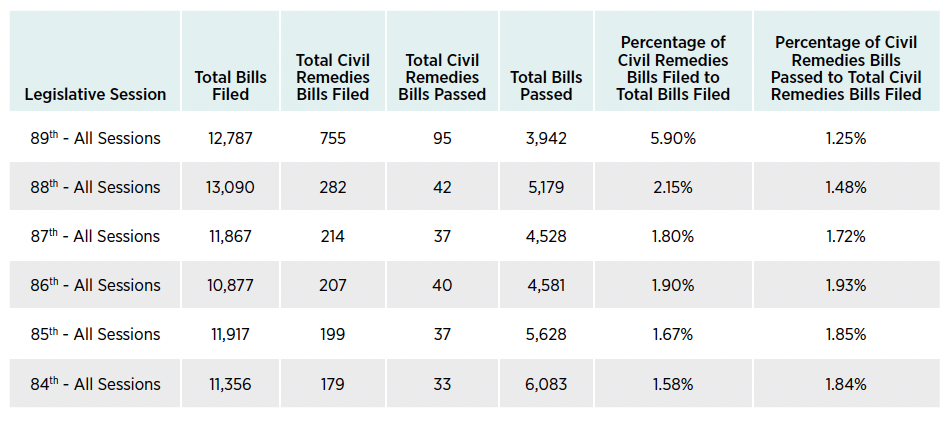
Table 2. New Civil Remedies Legislation Passed: Preserving Texas Values 89th Legislative Session (2025)
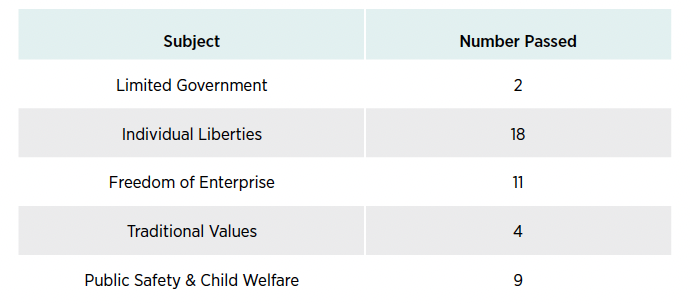
Other topics considered include health care, public policy, financial regulations, land and resources management, and emergency preparedness.