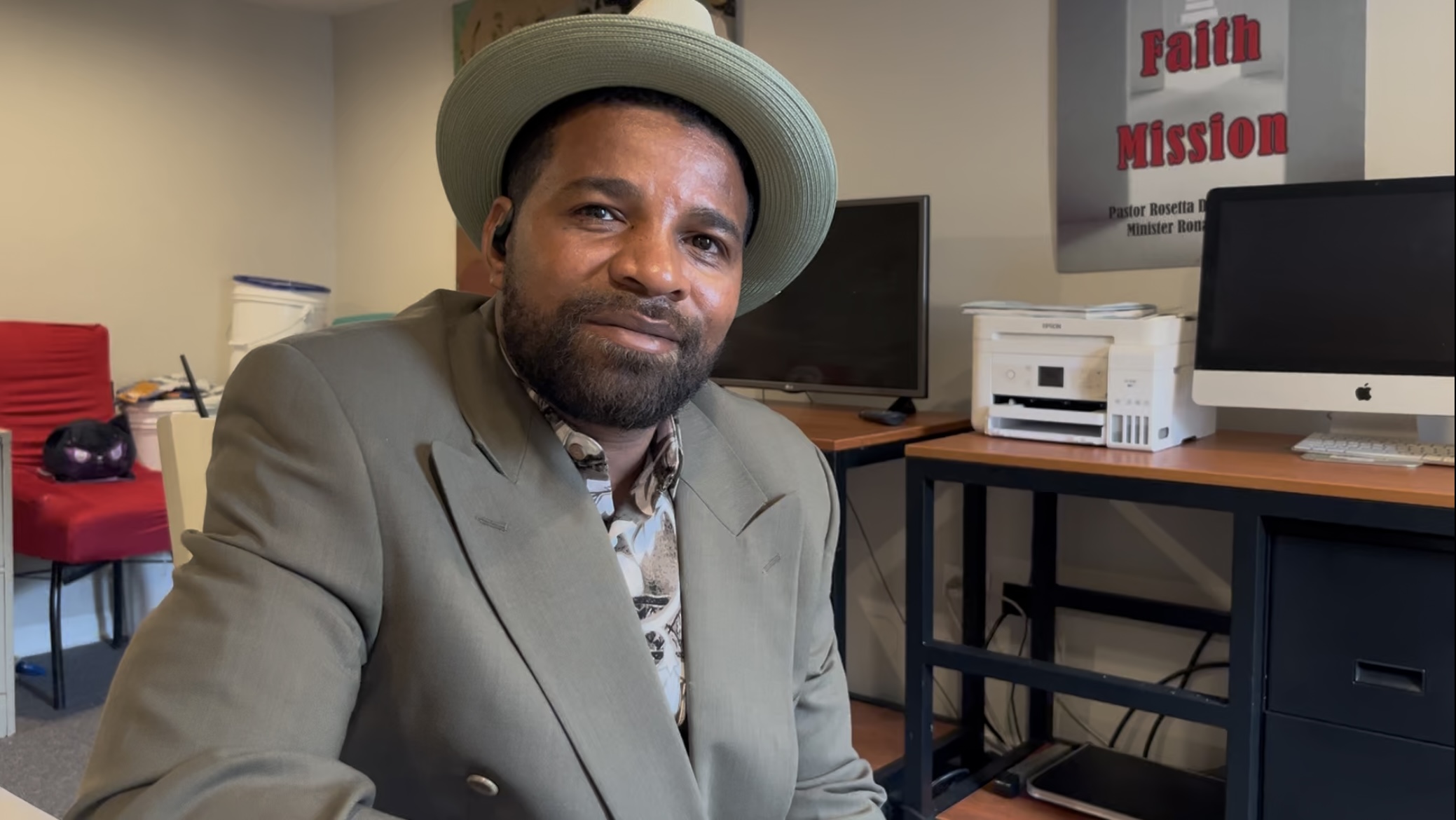
Clabe Johnson wants to instill a sense of community in the neighborhood’s young men.
In Chicago’s Austin neighborhood, the mindset is shifting around how to break generational disinvestment. A firsthand example is Clabe Johnson, founder of Young Urban Men of America.
“The reality is that we can change things in our community,” he said. “We are our own medicine.”
Before he got involved in non-profits, Johnson, 42, was making good money as a real estate investor. His success bucked the Austin trends of unemployment (15% as of 2024) and poverty (23% as of 2024).
But there was a problem.
“I learned compensation does not equal fulfillment. I still wasn’t fulfilled,” he said.
Then the floods hit Austin in 2023. Johnson and his brother shared a garden-level apartment and lost everything.
In the aftermath, Johnson learned about a group that was organizing volunteers to help clean out flood-damaged homes: Every Block a Village.
Even while he and his brother were still getting back on their own feet, Johnson jumped in as an organizer and found the sense of purpose he had been missing.
“A lot of men in Austin were just like I was,” Johnson said of flood cleanup volunteers. “They had no sense of ownership in the community. It was just a place they lived. A lot of people felt like they just existed.”
After the flood recovery initiative slowed down, Johnson stayed involved with Every Block a Village. By fall of the next year, he put his company in the care of others and joined the organization as interim chairman.
One of the first things he did was establish a regular meeting he calls “The Brotherhood.” It’s a word-of-mouth gathering that allows Austin men to find that community connection Johnson once lacked. Those who participate seek out ways to improve the community.
In December 2025, Johnson took the ideas he developed through The Brotherhood and launched a youth mentorship program. That organization, Young Urban Men of America, now has a partnership with the neighborhood high school.
“For Earth Day, we held a neighborhood cleanup event. All these young men had a chance to work beside role models from their own neighborhood,” Johnson said. “I don’t recall many opportunities like that when I was young.”
He believes the dynamic he experienced of “just existing” and not feeling a connection to the community contributes to Austin’s problems in ways that are hard to quantify. There are Austin success stories, like his own, but they aren’t always visible to the young people who need them most.
The wide range of mentorship opportunities from YUMA are designed to get young men on a trajectory in which they both support themselves and feel involved in the community.
“What we’re doing is breaking up the preschool-to-prison industrial complex,” he said. “We’re creating a vital infrastructure to success for young men ages 4 to 40.”
A key difference-maker for Johnson was stable employment from a young age.
“Before I had my own business, I got a job with a moving company,” he said. “Not only did it teach me how to work and show me that I had a gift for training others, it was also where I met the people I partnered with early on when I moved into developing properties.”
Johnson has seen firsthand that both reliable employment and community connection are key to lifting Austin up.
“We have to stop focusing on getting 100% subsidies from the government or 100% someone else to do it for us. It’s not outside influence that matters. It’s how we see ourselves.”
In 2026, YUMA became a community partner of the Center for Poverty Solutions. You can get involved in its mission by using the form on its website.
Clabe Johnson
Founder, Young Urban Men of America
Austin neighborhood, Chicago