For the first time in decades, Louisiana voters have a chance to choose new members of the board that controls their electricity rates. The May 16 primary elections for the Louisiana Public Service Commission (LPSC) — a five-member board that sets the rules for your power bill — just narrowed the field. Now, a runoff on June 27 will determine who fills those seats. The decisions these new commissioners make will affect what Louisiana families pay for electricity for years to come.
This is not a race to sleep through.
The LPSC regulates the electric and gas utilities that serve millions of Louisiana homes and businesses. It decides which new power plants get built, how much utilities can charge customers, and who pays when the grid needs upgrades — the utility company or you. As electricity demand grows and major industrial projects continue expanding across Louisiana, the next generation of commissioners will shape whether energy in this state becomes more affordable and reliable, or more expensive and unstable.
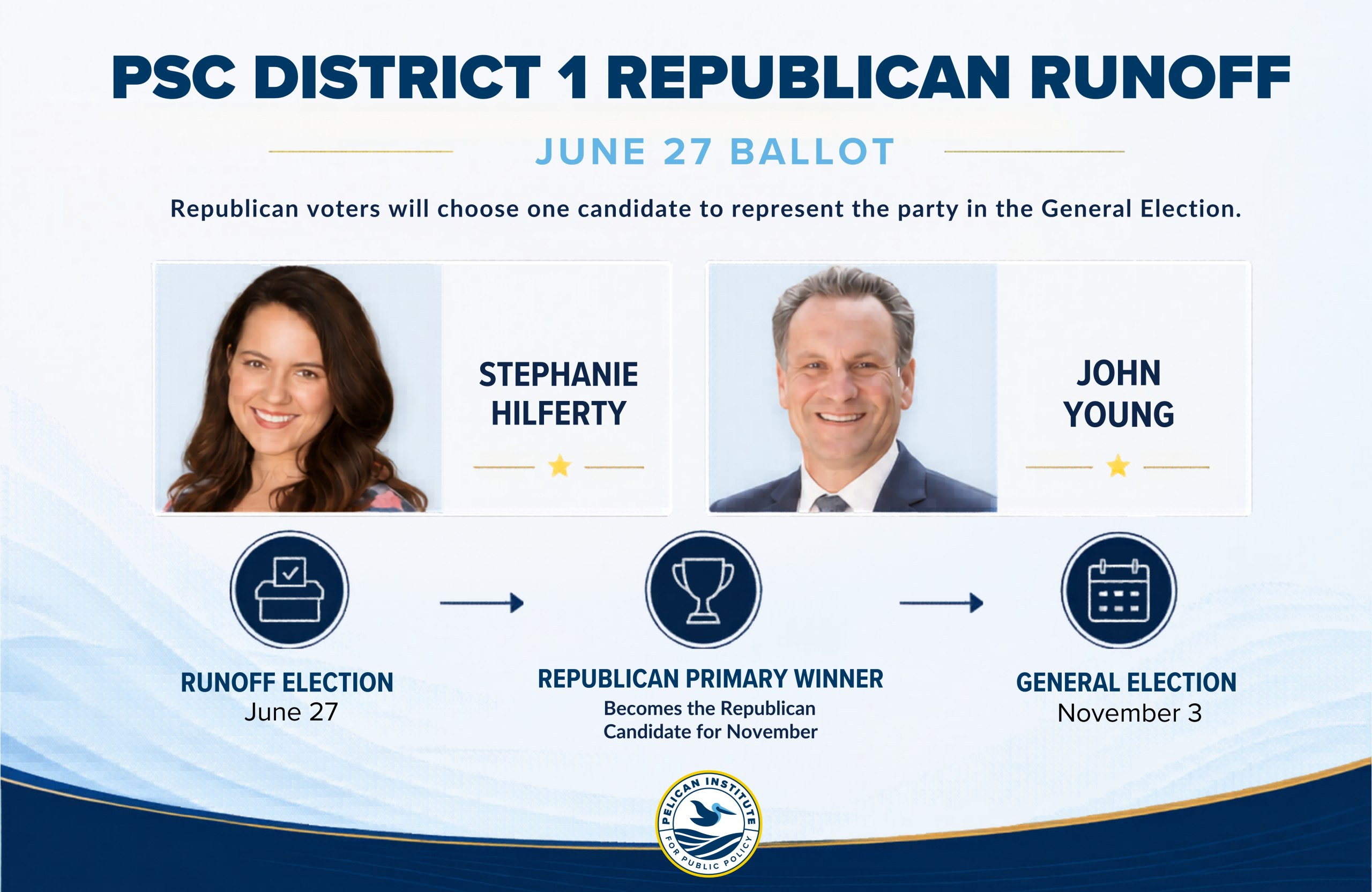
District 1: Hilferty and Young Sprint to a Runoff Election this Summer
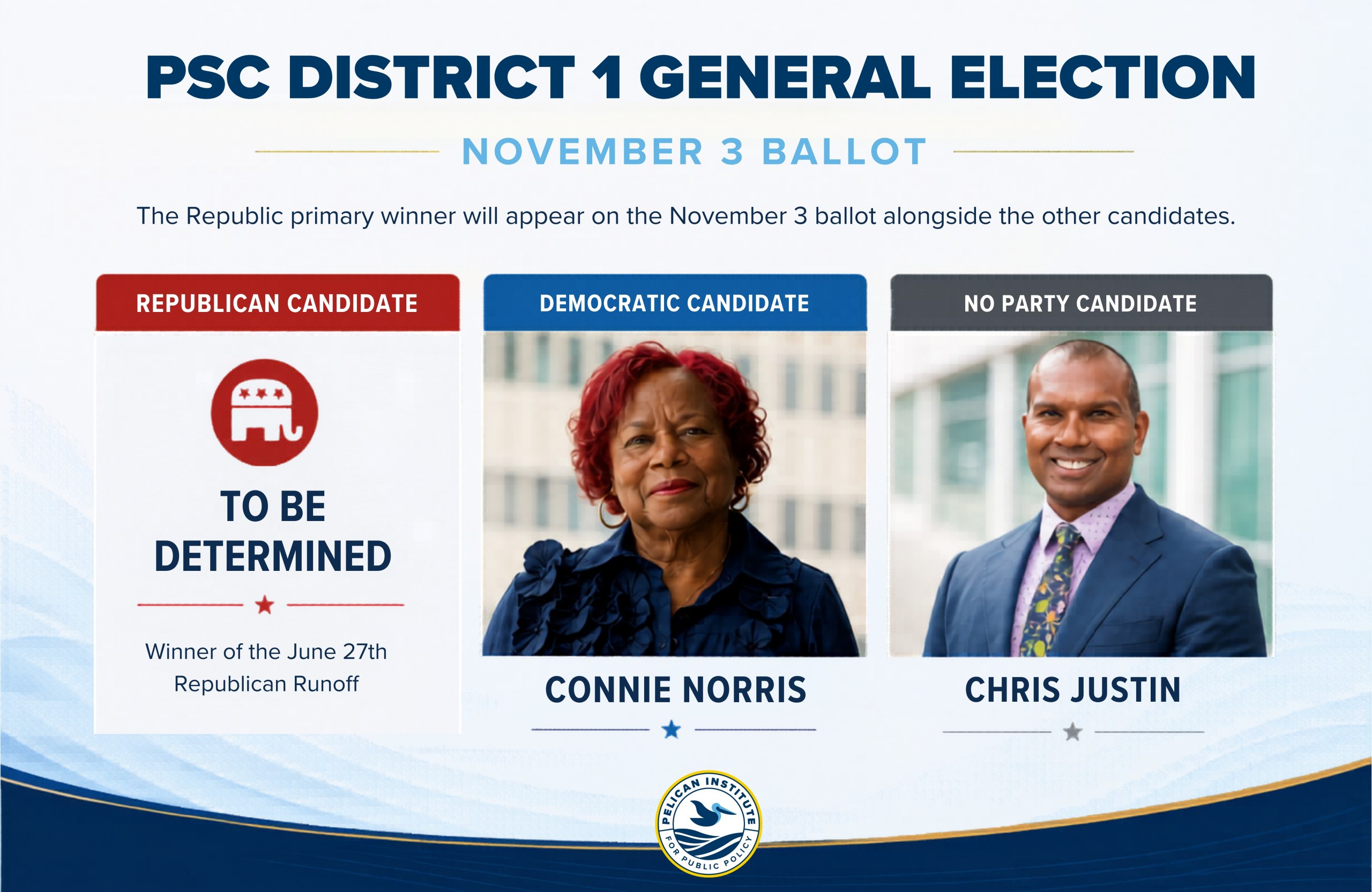
In District 1, which covers much of metro New Orleans, Jefferson Parish, and the Northshore, Republican state Representative Stephanie Hilferty and former Jefferson Parish Councilman John Young finished as the top two vote-getters in the primary. They will meet in a runoff on June 27. The winner of the Republican runoff will face Democrat Connie Norris and No Party candidate Chris Justin in the general election on November 3, 2026.
District 5: The November Matchup Is Set
In District 5, which covers much of North Louisiana, including the Shreveport-Bossier and Ouachita regions, voters did not need a runoff to make up their minds. Both parties chose their nominees outright on May 16.
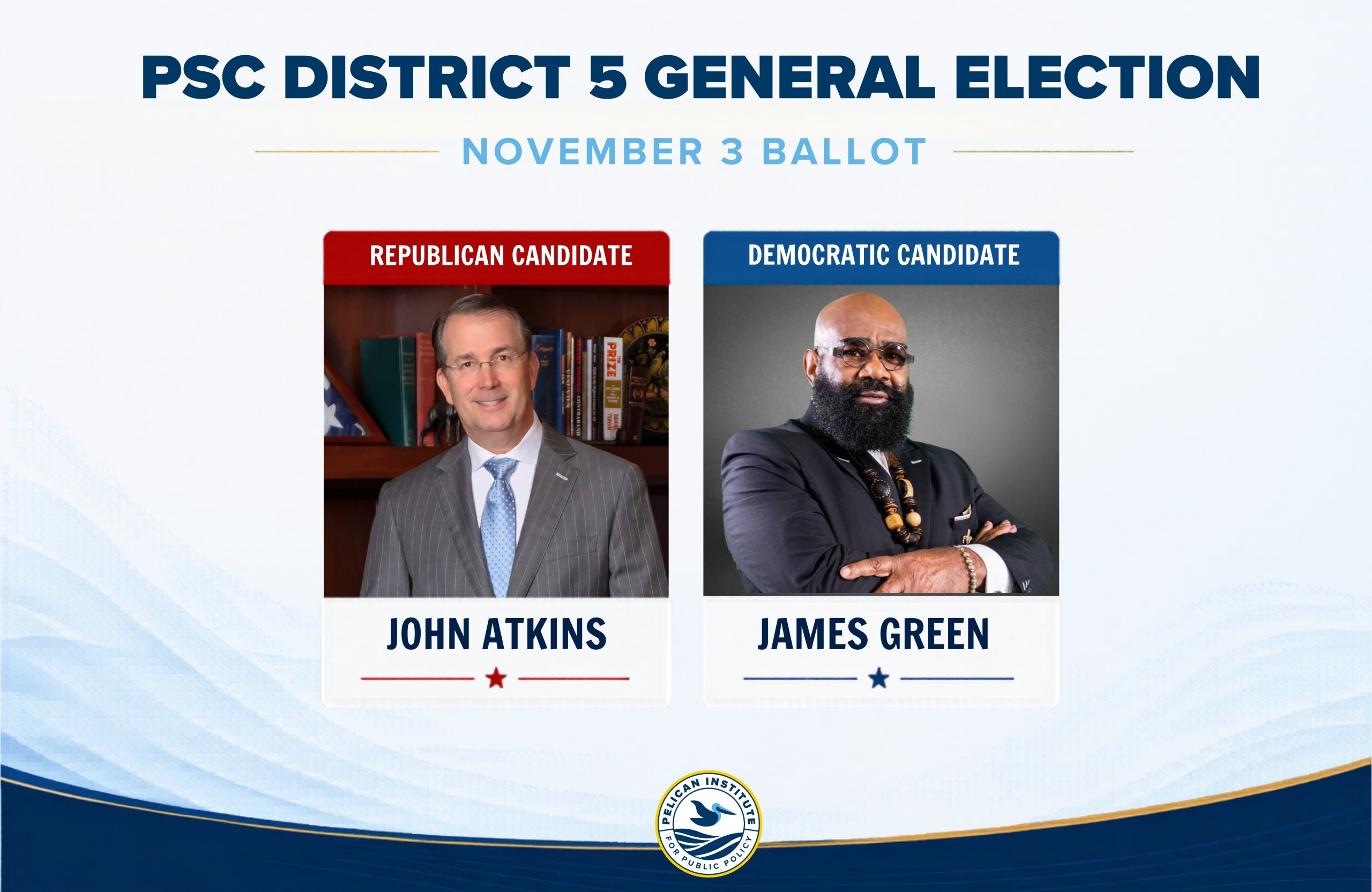
Republican John Atkins won his primary with 88% of the vote. On the Democratic side, Shreveport City Councilman James E. Green captured 76% to secure his nomination. The two will meet in the general election on November 3, 2026.
The stakes could not be higher. Louisiana families are already feeling the pressure of rising utility bills. The candidates who win these races will cast votes on rate increases, grid investments, and energy policy that land directly on your monthly statement. Engaged voters, not special interests, should be the ones deciding who holds that power.