Xi greets Trump on Shenzhen tarmac ahead of three-way summit with Putin
Chinese President Xi Jinping met President Trump at his plane in Shenzhen on Wednesday, before Thursday talks with Vladimir Putin on trade, chips, Iran, Ukraine and nuclear arms.
The full story
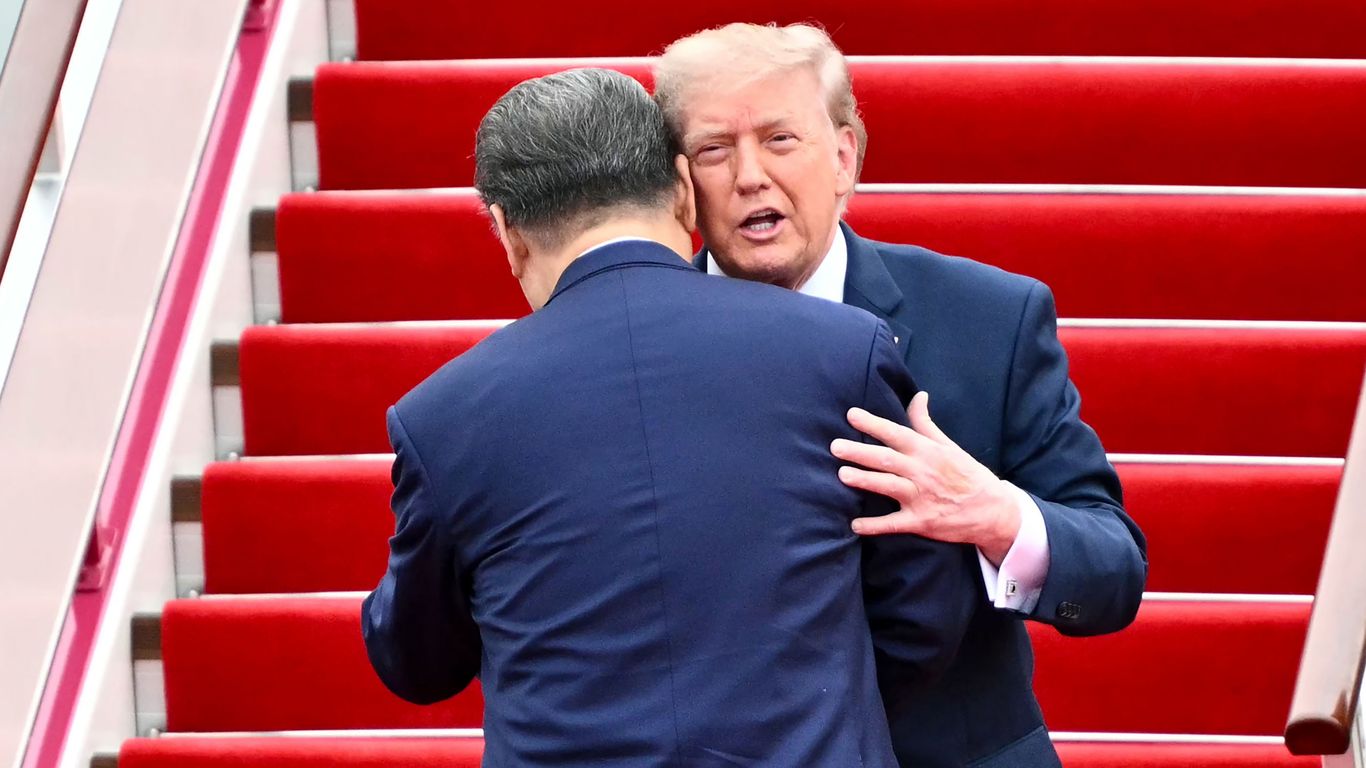
Here is the full story. Chinese President Xi Jinping made a surprise appearance on the airport tarmac in Shenzhen on Wednesday to welcome President Donald Trump, who arrived in China for this year's Asia-Pacific Economic Cooperation forum. Xi stood at the bottom of the steps of Air Force One, shook Trump's hand and then embraced him. Dozens of performers waving pom-poms lined a red carpet near the plane, chanting and cheering. The U.S. national anthem was played together with China's, and J-10C fighter jets flew over the airport.
The welcome stood out. Xi did not personally greet Trump when the U.S. president visited Beijing in May. When Russian President Vladimir Putin landed in Shenzhen earlier on Wednesday, he was met by Cai Qi, Xi's chief of staff. The gesture returned one Trump made when he met Xi at the bottom of his jet's stairs at Joint Base Andrews during Xi's state visit to Washington, rather than receiving him at the White House as U.S. presidents usually do.
Trump came to Shenzhen from Manila, where he had attended meetings on the sidelines of the annual summit of the Association of Southeast Asian Nations. In Shenzhen he is scheduled to join three-way talks with Xi and Putin on Thursday. The leaders are expected to discuss nuclear arms control, Iran, Ukraine, trade and AI chips. Chinese Foreign Ministry spokesperson Mao Ning said on Monday that the three would exchange views on safeguarding world peace and strategic stability among major powers, calling the meeting of "groundbreaking significance." The White House has said the talks will focus on reducing the spread of nuclear weapons. China has around 600 warheads, a number the Pentagon estimates could reach about 1,000 by the end of the decade, while Russia has about 4,400.
Trade is expected to be central to the Trump-Xi relationship. At last year's APEC summit in South Korea, the two leaders agreed to a truce in their trade war: Trump lowered tariffs, and Beijing agreed to crack down on fentanyl precursors, resume soybean purchases and pause controls on rare-earth exports. In September, Treasury Secretary Scott Bessent said the truce had been extended to Jan. 10. Scott Kennedy of the Center for Strategic and International Studies said the main question is what conditions would have to be met to extend it beyond January, and that the leaders might keep negotiating up to the deadline. Trump and Xi are also expected to meet in December at the G20 summit in Miami, to which the U.S. has also invited Putin.
The focus of the dispute has shifted toward export controls, Kennedy said. The U.S. has blocked sales of advanced AI chips and chipmaking equipment to China since 2022, and China answered in April 2025 with licensing requirements on several rare-earth materials, disrupting supplies to factories in the U.S. and Europe. On Monday, the U.S. Commerce Department expanded its rules on advanced AI chips, requiring licenses to export them to Singapore, Malaysia, Thailand, Indonesia and Brazil, and for data center operators offering large amounts of computing power to Chinese clients. The department said the rule was meant to stop existing restrictions from being bypassed through data centers in other countries. A spokesperson for China's commerce ministry expressed "strong dissatisfaction" on Tuesday and said: "If the U.S. persists, China will take countermeasures."
The U.S. war in Iran may also come up. Kennedy said Washington wants to exit Iran and could use help from China and Russia, whose ties to Tehran might help secure a pledge not to charge ships fees to pass through the Strait of Hormuz and help ease oil prices, which have climbed amid Iranian attacks on commercial shipping. This is Trump's first trip abroad since the Nov. 3 midterm elections, in which Republicans lost both houses of Congress. Newsweek reported that the trip also comes against the backdrop of a scandal involving Jensen Huang, who resigned as Nvidia's chief executive after reports that he had an affair with an alleged Chinese intelligence asset; Craig Singleton of the Foundation for the Defense of Democracies said he doubted Trump would raise the matter with Xi.
Analysts differed on what the summit could deliver. Zhiqun Zhu of Bucknell University said "Xi holds the most cards" and predicted "more pomp and circumstance than substantive agreement." Singleton said Chinese negotiators have concluded that Trump needs a deal more than Xi does. Fredrik Wesslau of the European Council on Foreign Relations said that without Ukrainians and Europeans at the table, it would be close to impossible to put whatever the leaders decide into practice.
Reported by
Get this email every day
Get the day's top story delivered to your inbox each morning by signing up below.
Other news / Full articles
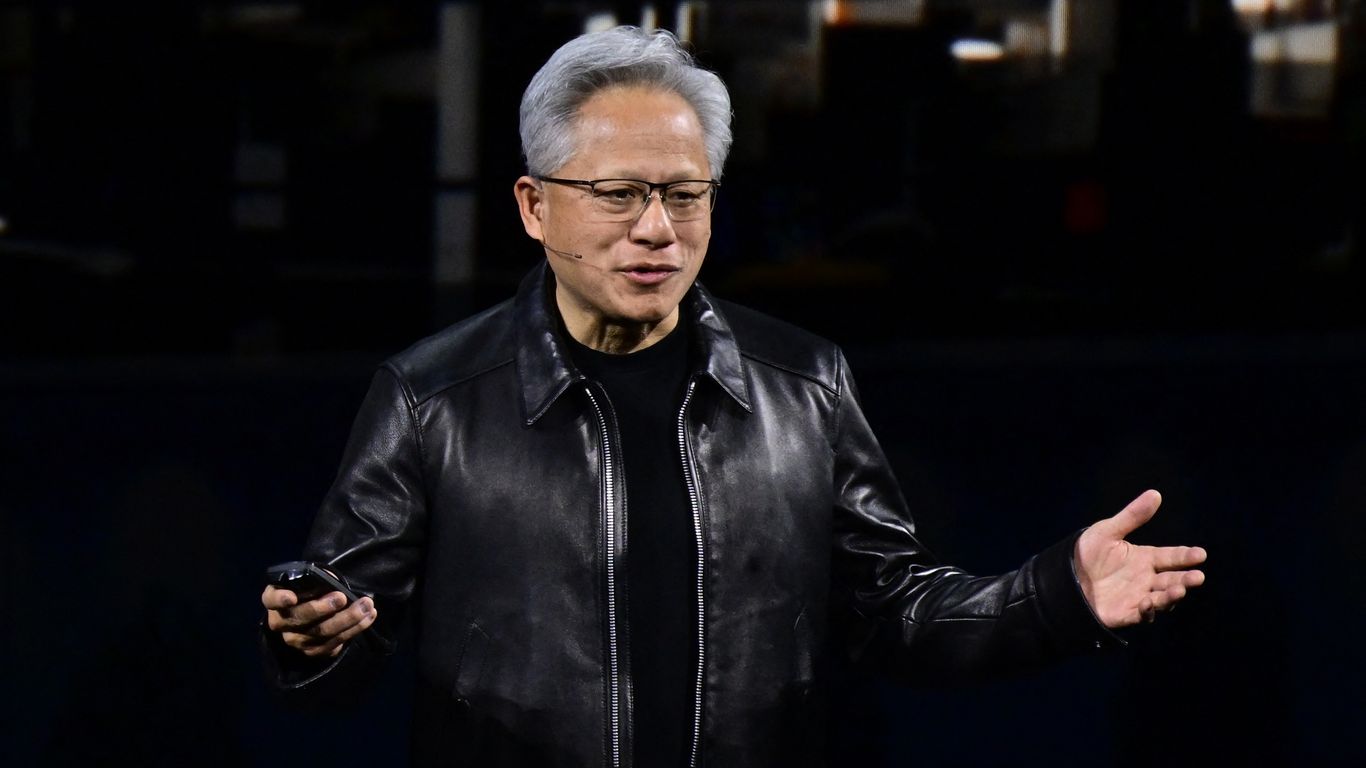 Jensen Huang says he would be honored to return as Nvidia CEO
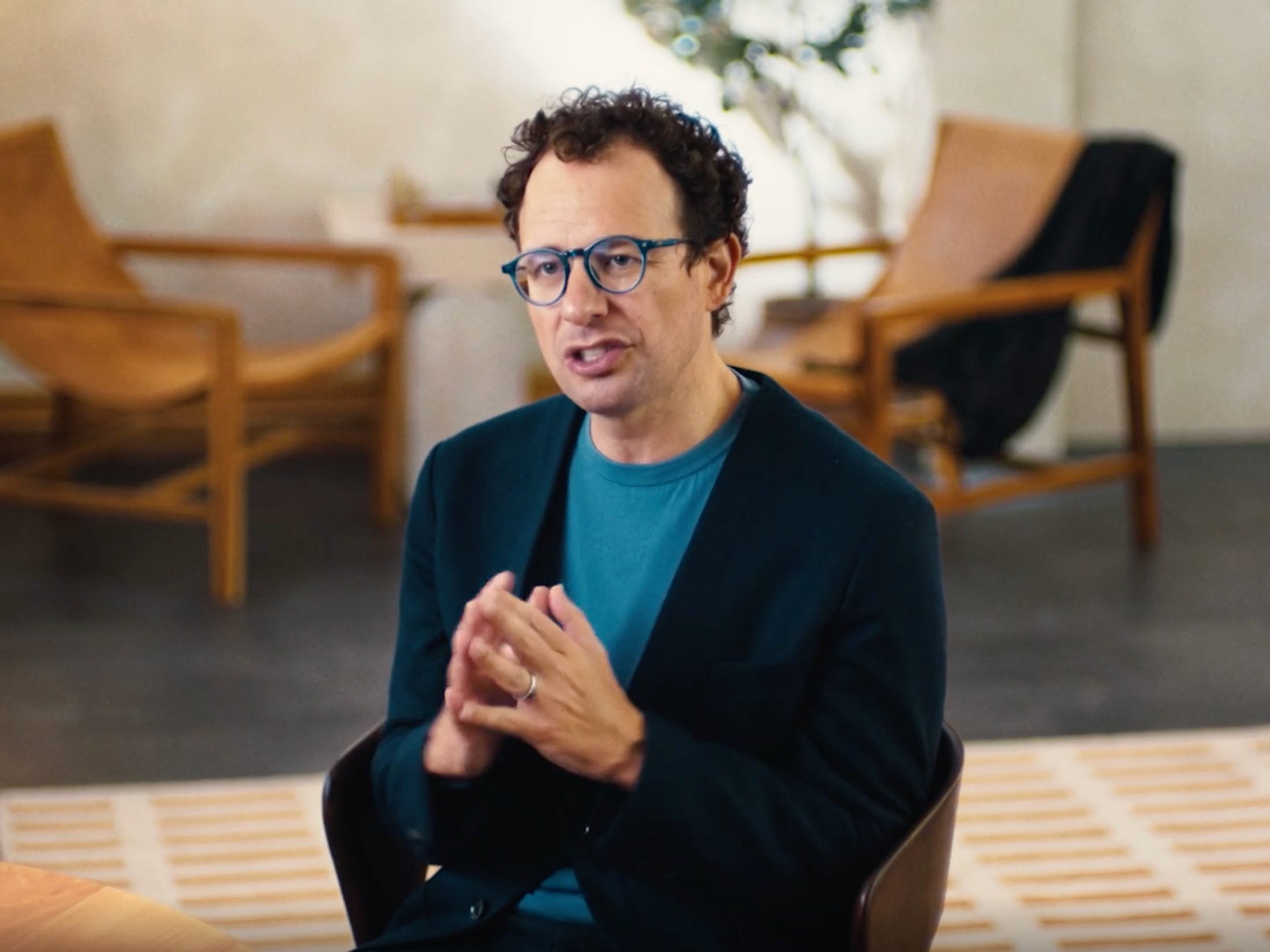 Anthropic prepares IPO
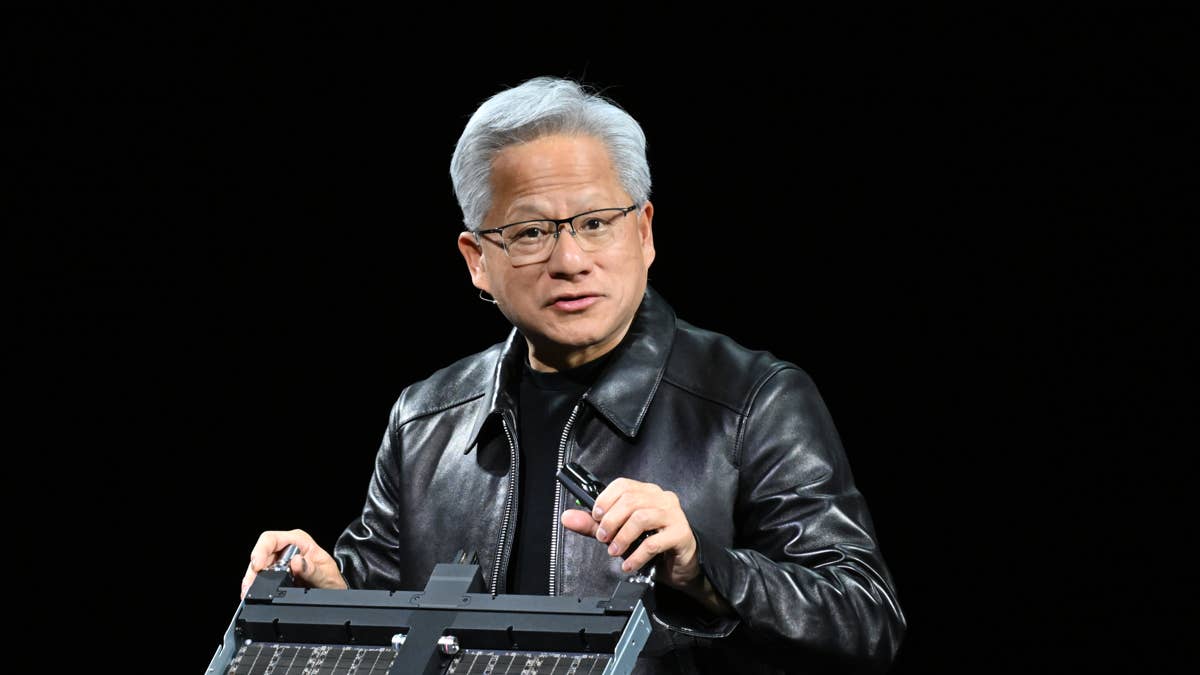 Nvidia leads tech stock slide as investors weigh Jensen Huang's exit
 Commerce Department rule restricts remote access to advanced U.S. AI chips
 California sues OpenAI over AI safety failures tied to Hugging Face attack
 Push to reinstate Jensen Huang grows as Nvidia board resists