Stock futures rebound after tech-led sell-off pushes major U.S. indexes into correction
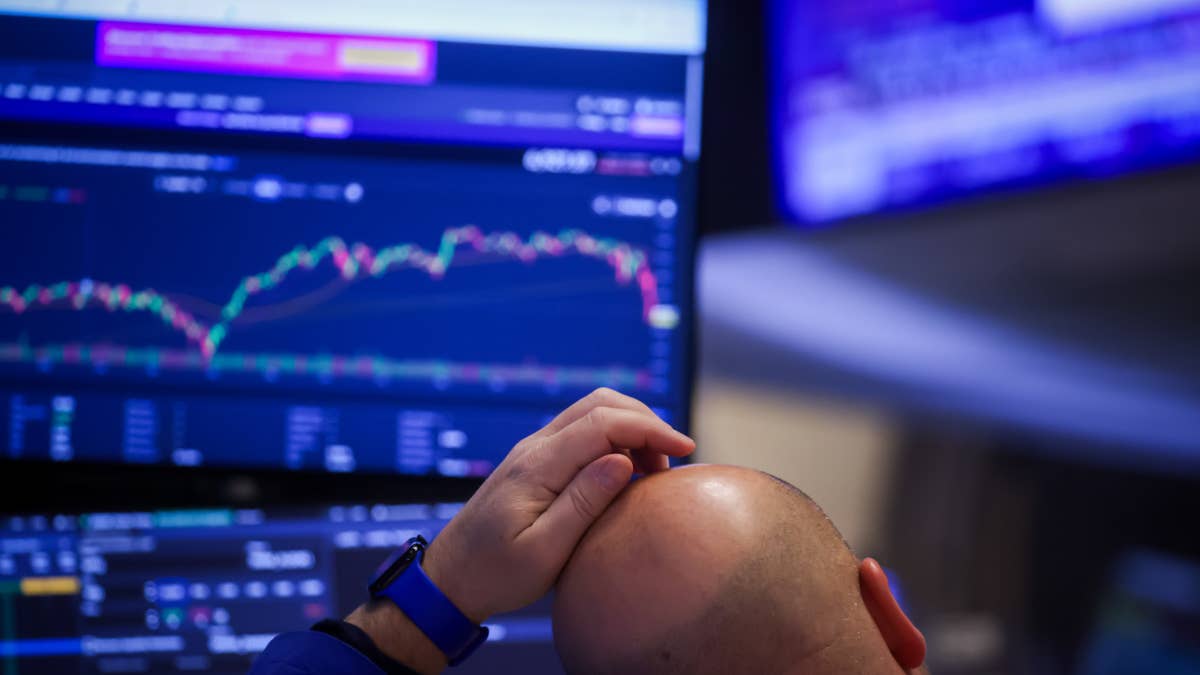
U.S. stock futures rose sharply ahead of Thanksgiving week after the worst weekly losses in years, driven by an AI and Nvidia-led tech slump, left major indexes in correction.
The full story
Here is the full story. U.S. stock futures rose sharply as a holiday-shortened trading week began, offering investors some relief after a sell-off concentrated in technology and chip stocks pushed all three major indexes into correction. Late on Sunday, Dow futures were up 798 points, or 1.66%, S&P 500 futures were up 2.11% and Nasdaq futures were up 2.75%. By Monday morning, futures pointed to the Nasdaq opening about 3.4% higher and the S&P 500 more than 2.6% higher. Nvidia was up 8% in pre-market trading, Alphabet 4.5% and Anthropic 4%. In Europe, London's FTSE 100, Germany's DAX and France's CAC 40 were each up around 0.5% to 0.6%, and the Euro Stoxx 50 gained 0.8%.
The rally follows a punishing week. The Dow and Nasdaq posted their biggest weekly declines since the early days of the COVID pandemic, and the S&P 500 had its steepest weekly drop since April 2025, when President Donald Trump's tariff increases rattled markets. The selling peaked on Nov. 20, when Nvidia fell 14%, Micron dropped nearly 14% and Arm Holdings lost 14.1%. A correction is defined as a fall of 10% or more from a recent closing high. The S&P 500 and the Dow are down around 12% from their peaks, and the Nasdaq Composite fell 18.1% from its Oct. 6 closing peak through Nov. 20. Over the same period the semiconductor index fell 36.4%, and the VIX, a gauge of expected market volatility, closed Friday at 35.89. The S&P 500's gain for the year has shrunk to about 1%, the Dow's to 0.2%, and the Nasdaq is now down 2.7% for 2026.
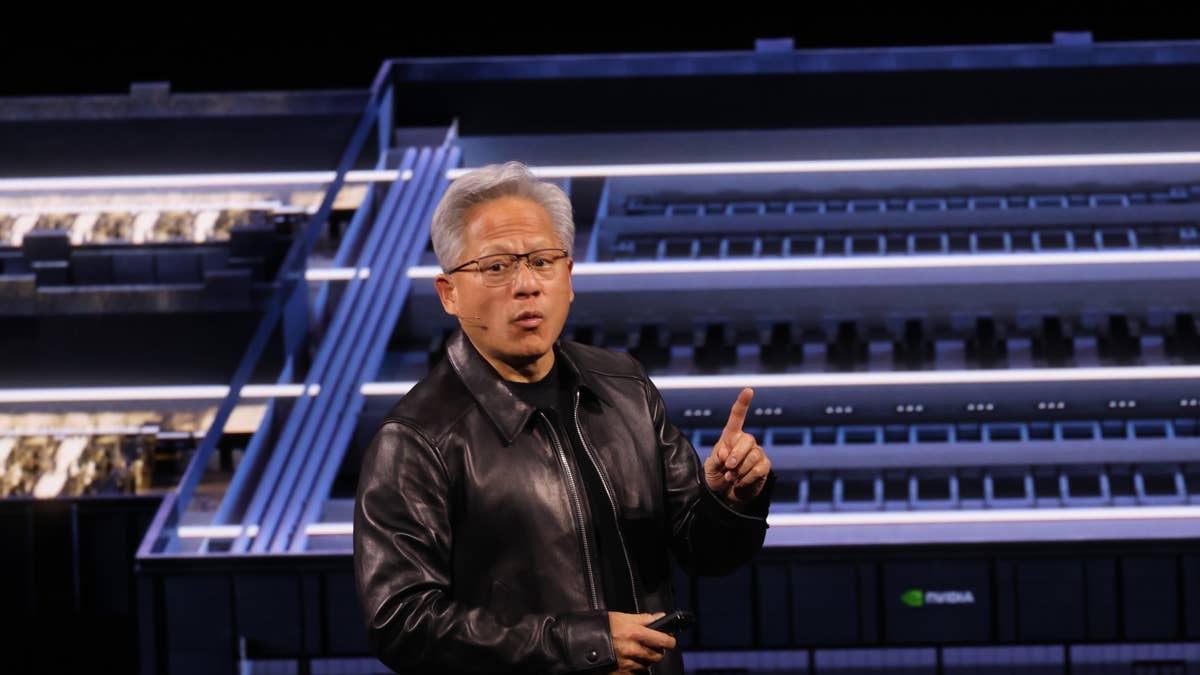
Nvidia has been at the center of the slide. The chipmaker, which was the world's most valuable company for much of the year, has lost roughly 48% since peaking at $243.37 on Oct. 6 and is now outside the top three companies by market value. Huang, its co-founder, left as CEO in mid-November. TheStreet reported that The New York Times, The Wall Street Journal and others had reported Huang was having an affair with a woman alleged to be a spy for China, and that the company has faced news reports alleging it allowed powerful AI products to be smuggled into China. Fortune reported that the scandal raised fears that Huang's financing deals with smaller cloud companies could unravel, and that revelations of Chinese backdoor access to high-end U.S. chips are prompting a federal crackdown on export loopholes. Trump also vowed to stop U.S. companies from building data centers abroad. The damage spread widely: Nebius fell 67.5%, Sandisk 61.8% and CoreWeave 56.9% from Oct. 6 to Nov. 20, while Alphabet, Meta, Oracle and Micron also suffered steep one-month losses. Anthropic, which went public last week and rose to $111.50, dropped more than 8% on Friday to below $89.
The downturn began after this month's midterm elections, in which Democrats who are more skeptical of data centers won control of Congress and several state capitals, adding to worries that the AI boom could turn to bust. Moody's Analytics chief economist Mark Zandi warned that the losses could weigh on growth by curbing consumer spending. "It feels increasingly like the easy money in the AI trade has been made," he wrote, adding that the economy could not rely on AI as its only growth engine.
Market strategists were divided on the rebound. Matt Orton of Raymond James said there are "a lot of really high-quality companies that are on fire sale right now." Chris Beauchamp of IG said investors "can't emerge from their shelters just yet," adding that such sell-offs rarely reverse in a day. Ed Yardeni said he does not expect a bear market, a decline of 20% or more, writing that a pullback "has turned into a correction." Amish Patel of Raymond James said lower valuations are starting to improve the balance of risk and reward but that investors want clearer evidence of returns on AI spending. Forecasters remain upbeat on 2027: Morgan Stanley and Goldman Sachs expect the S&P 500 to end next year at 8,700, UBS Global Wealth Management and Wells Fargo see 8,200, and Federated Hermes' Steve Chiavarone sees 10,000.
The week ahead is short. Markets are closed on Thursday, Nov. 26, for Thanksgiving and open for only half a day on Friday, and thin volume could magnify price swings. Hewlett Packard Enterprise, Agilent and Zoom report earnings on Nov. 23, Dell and Medtronic on Nov. 24, and Deere on Nov. 25. The Personal Consumption Expenditures inflation report on Wednesday, Nov. 25, will feed into the Federal Reserve's interest rate decision at its Dec. 8 and 9 meeting.
Reported by
- TheStreet: It's Thanksgiving week after an ugly stock market slump: now what?
- Fortune: Dow futures jump 800 points and Nasdaq soars nearly 3% as stocks rebound from correction with Wall Street still upbeat on 2027
- The Independent: ‘Fire sale’: Expert explains why stocks are rising again after brutal tech sell-off wipes off billions
- The Center Square: Everyday Economics: The stock selloff could hit spending
Get this email every day
Get the day's top story delivered to your inbox every morning by signing up below.
Other news / Full articles
 Trump urges Nvidia to rehire Jensen Huang as board presses on with CEO search
 String of tech outages hits email, flights, banks and federal networks
 Jensen Huang resigns as Nvidia CEO as California probes the company's China ties
 Anthropic files for IPO at $1.5 trillion valuation as AI stocks slide
 Trump says he would work with Democrats to cap credit card interest rates
 Grand Theft Auto VI posts $3.79 billion in first-day sales