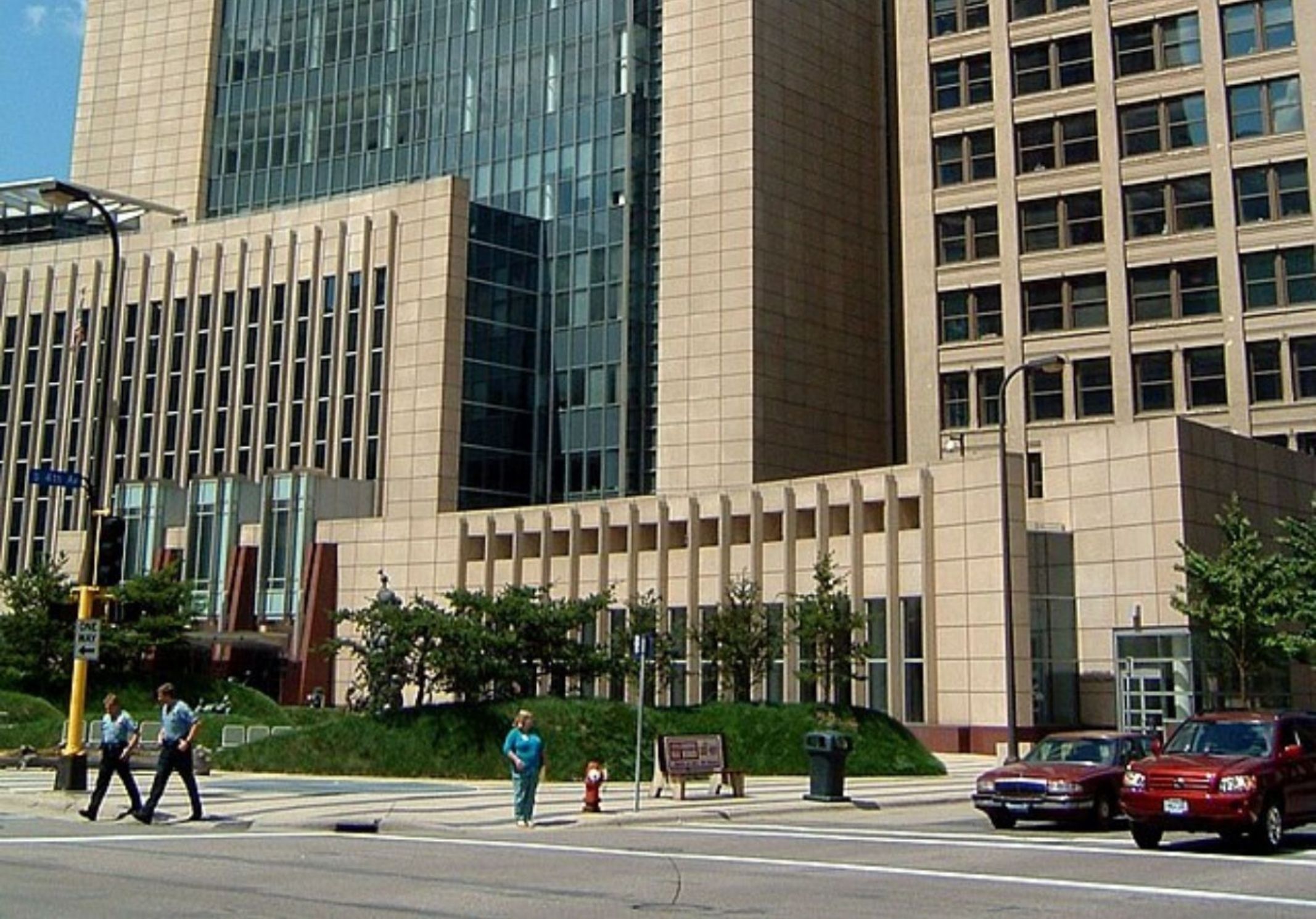
Richard Rodriguez Soriano was deported back to his native Nicaragua three weeks ago (May 7). Yesterday, May 27, there was a court hearing lasting for more than an hour at the federal courthouse in downtown Minneapolis over whether Mr. Rodriquez should be released from ICE custody.
Your correspondent was there for the absurd spectacle. The case is captioned as Rodriguez Soriano v. Blanche et al, with Todd Blanche, the current U.S. Attorney General, serving as the respondent. It’s a habeas corpus case, with the petition demanding the release from ICE custody of Mr. Rodriquez, who was released from ICE custody on May 7 in Managua, Nicaragua, as ordered by a U.S. Immigration Court.
The convoluted backstory: Rodriquez was arrested on April 12 by local police in Sioux Falls, South Dakota, on an aggravated domestic assault charge. The Minnehaha County (SD) sheriff honored an ICE detainer on Mr. Rodriquez and turned him over to ICE on April 14, at the jail in Sioux Falls. He was transferred to Minnesota where he appeared in Immigration Court at Ft. Snelling on April 29, where he was ordered to be deported back to Nicaragua.
If I understand the timeline correctly, his attorney filed the habeas petition on May 1 in Minnesota, at which time Rodriquez was no longer within the jurisdiction, as he was en route to Louisiana for further processing in accordance with the Immigration Court’s April 29 order.
Government lawyers responded in a timely fashion to the habeas petition on May 7. In carrying out the deportation, ICE does not appear to have violated any order issued by any court at any level. I don’t recall any such allegation even being made during yesterday’s hearing.
Instead, much of the hearing was spent rehashing the events of April 14, where Mr. Rodridquez’s lawyer alleges that some sort of ICE paperwork violation took place.
Keep in mind that the attorney has not spoken to her client since before his deportation. She continues to pursue this litigation based on her undocumented beliefs regarding his wishes.
Reportedly, Mr. Rodriquez has not appealed his underlying deportation order, although he still has a day or two remaining on the appeal deadline. Reportedly, no one in the United States has heard from Mr. Rodriquez since his deplaning in Managua earlier this month. His current geographic preferences remain a matter of speculation. I should also mention that he reportedly speaks no English.
I forgot to mention that in both open court and in court filings, no party is allowed to say his last name, only his initials, R.S. Please recall that his full last name is in the caption to the case.
This no-last-name policy is districtwide and applies to all habeas corpus cases involving foreign citizens. They are to be treated as one would an abused child, whose identities must be hidden for protective reasons.
Regardless, his lawyer of record is demanding that ICE go to Nicaragua, find Mr. Rodriquez, bring him back to America, and set him free. It’s not clear that the presiding judge, John Tunheim, has that power.
The lawyer argues that this extraordinary remedy is needed to reverse the alleged defect with Rodriquez’s April 14 Sioux Falls custody transfer. I have read the underlying filings in the case, and I like to believe that I was listening carefully in court yesterday. However, I am unable to explain what, exactly, ICE is alleged to have done wrong in taking custody of Mr. Rodriquez.
As it stands today, Rodriquez has no more authorization to enter the United States than he has ever had. So, what would be the purpose of bringing him back to the U.S. with the April 29 deportation order still in effect? Why does a judge assigned to the Minnesota district have any role in this affair?
We await Judge Tunheim’s ruling.