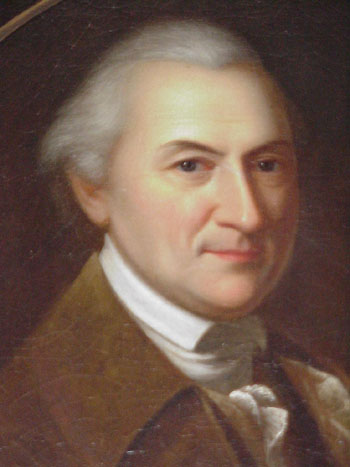
Only by understanding the risks and terrors Dickinson predicted can we fully appreciate the courage of those who were determined to face them.
This essay first appeared in the May 22, 2026 Epoch Times.
This is the second in a five-essay series on the Declaration of Independence, written for its 250th anniversary. Read part I here.
In theory, the matter had already been decided the previous month, when Congress adopted a resolution proposed by Richard Henry Lee of Virginia:
“Resolved: That these united colonies are, and of right ought to be, free and independent States, that they are absolved from all allegiance to the British crown, and that all political connection between them and the state of great Britain is, and ought to be, totally dissolved.”
Yet in legislative halls, nothing is really final until it is final. So on July 1, convinced that while Independence might one day be necessary, it was as yet premature, Dickinson rose to make his case against the pending declaration.
Let us, as President Richard Nixon used to say, make one thing perfectly clear: Dickinson was no coward. He was brave and a patriot. When Britain adopted the Townshend Duties in 1767, it was Dickinson who inspired the opposition. It was Dickinson who, again and again, had served as penman and point man for the colonial resistance.
At or near the onset of his speech, Dickinson offered a prayer:
“Almighty God, with whom dwells Wisdom itself, so … enlighten the Members of this House, that their Decision may be such as will best promote the Liberty Safety and Prosperity of these Colonies.”
He then asserted that it was in the American interest to assure that the British government believed as long as possible that Americans sought reconciliation. This would give America time to secure foreign alliances before the final rupture—in particular, an alliance with France. Dickinson further noted that inter-colonial unity was essential, but that hammering out its terms was proving far more difficult than expected. He chaired the committee of Congress then negotiating the Articles of Confederation, but, he reported, “the Committee on Confederation dispute almost every Article … Some of Us totally despair of any reasonable Terms of Confederation.”
Meanwhile, he said, resistance without independence seemed to be producing good results: Parliament had repealed the Stamp Act and all the Townshend Duties but the one on tea. The City of London itself had written to Parliament opposing “the tyrannical measures pursued against our fellow subjects in America.”
In response to a claim that independence would instill more spirit in the Continental Army, Dickinson countered that catering to a standing army is a “Terrible Enforcement of an Argument.” Moreover, after a few victories by American forces, “Great Britain … may be induc’d … to withdraw her Armies, to Protect our Commerce, Establish our Militias—in Short to redress all the Grievances complain’d of in our first Petition.”
Dickinson portrayed terrors arising from a declaration of independence: “The War will be carried on with more Severity, Burning Towns Letting Loose Indians on our Frontiers.” He recounted the history of wars, and the extremes they provoked: massacres, the destruction of innocents, the death of women and children. “Shall We proclaim this to be our Creed to the World?”
If America lost the war, the cause of American liberty would be lost. Even if America were to win, “We shall weep at our Victories” and be “Overwhelm’d with Debt.”
Under the circumstances, he said, declaring independence prematurely would be to “brave the Storm in a Skiff made of Paper.”
Dickinson knew that his stance would cost him his remaining popularity, as assuredly, for several years, it did. But courage and a sense of duty propelled him on.
Dickinson lost the debate when Congress confirmed the vote for independence the following day. Understanding that the vote must be unanimous, he remained away to ensure that it became so. Once the decision had been made, he resigned his position in Congress to join the Continental Army.
We must understand Dickinson’s arguments against immediate Independence, not because they were correct—as they only partially were—but to illustrate that those who voted for Independence fully understood the dangers of what they were doing. They thereby proved to be Dickinson’s equals in courage, and perhaps his superiors in judgment.
Next installment: The Men Who Wrote the Declaration of Independence.