Al.com John Sharp and Ruth Serven Smith
Everywhere she goes, Faith Wheeler says she can’t escape the prying lenses of the cameras around her city – including by her driveway.
“I feel like I’m being watched,” said Wheeler, a sophomore at Gulf Shores High School.
She’s not alone. Alabama lawmakers are poised to consider new restrictions on automated license plate reader (ALPR) cameras as privacy concerns mount over the rapid expansion of the technology across the state — and the nation.
“We need to address this issue,” said state Sen. Arthur Orr, R-Decatur. “The status quo … is totally unacceptable. We need to tighten the screws on the license plate readers in a big way.”
Alabama has no specific law regulating the technology, even as thousands of cameras are operating statewide. That’s despite growing concerns from civil liberties advocates like the ACLU and conservative organizations like the Alabama Policy Institute over government surveillance and data collection. Law enforcement agencies, however, defend the use of the cameras as an effective crime-fighting tool.
“I have people who are friends who are on both sides of the issue right now,” said state Sen. Lance Bell, R-Pell City, who has extensive history working in law enforcement.
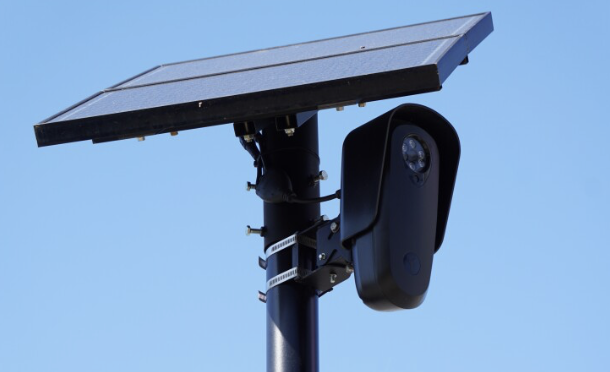
Orr said he expects to file legislation to establish statewide rules governing automated license plate readers, including cameras manufactured by Atlanta-based Flock Safety.
Orr said the legislation would go further than existing Administrative Code language that allows state agencies to retain license plate reader data for up to five years — a period he considers excessive compared to restrictions recently adopted by private companies such as Flock Safety.
“We need to rein them in and have some bright lines drawn as far as the limits on the use of technology and to protect the rights of the citizens,” Orr said. “Americans don’t … want to be tracked or followed. But they also want to support law enforcement. Yes, there is going to be a discussion.”
The issue is also emerging in the Alabama governor’s race.
“I back our law enforcement one hundred percent, and I want them to have every tool they need to catch criminals and bring people home safely,” said U.S. Sen. Tommy Tuberville, the Republican nominee for governor.
“But I understand why some Alabamians have real privacy concerns about these cameras,” Tuberville added in a statement to AL.com.
Tuberville suggested lawmakers should establish statewide standards.
Democratic challenger Doug Jones said the technology can help deter crime and assist investigations, but said he would “like to see more guardrails going up.”
“I can’t say that I would try as a governor to ban them statewide,” Jones told AL.com. “I think that is as much as anything a local decision with law enforcement and what works best for them, and what they believe can help protect their folks the best.”
Alabama lags on regulation
Across the nation, 25 states have enacted legislation regulating automated license plate readers, according to the Policing Project at New York University School of Law. Alabama is not among them.
The research group says eight states limit law enforcement agencies from retaining license plate reader data for longer than 30 days. Another 13 states require audits to identify misuse by officers.
Max Isaacs, director of technology law and policy for the Policing Project, said existing laws vary considerably.
He said New Hampshire has among the nation’s strictest protections, limiting how long data can be retained, while Minnesota is the only state requiring law enforcement to obtain a warrant before using the technology to track individuals.
“That is very protective, and it’s a good safeguard against police accessing this data without justification,” Isaacs said.
Orr, the lawmaker from Decatur, is not new to the debate. In 2021, he sponsored legislation to regulate license plate readers. It passed in the Alabama Senate but stalled in the House.
At the time, he said, many lawmakers did not view the issue as urgent. He believes that has changed as concerns over privacy, technology and data collection have become more prominent. He said he plans to file new legislation after the Nov. 3 general election.
“I’ll have a bill to start the legislative process where there can be amendments added,” Orr told AL.com.
One possibility, he said, could be an outright statewide ban, though he acknowledged such a move would depend on whether lawmakers and the next governor determine it is necessary.
“Some would wish to ban them,” he said. “But when you talk to law enforcement, they say they can be very useful at capturing criminals on the run or find a child who is abducted and other pressing situations.”
He said public hearings will likely be held and could draw testimony from civil liberties organizations, law enforcement officials and industry representatives.
“As far as the Legislature is concerned, the starting point will be to allow them but to have a very limited time on how long (law enforcement) can keep the information,” Orr added. “It’s certainly less than five years.”
Rising concerns
The debate comes amid the rapid expansion of Flock Safety’s camera network.
Flock’s nationwide system includes more than 120,000 cameras and contracts with more than 7,000 law enforcement agencies. In Alabama alone, more than 2,800 cameras are in operation.
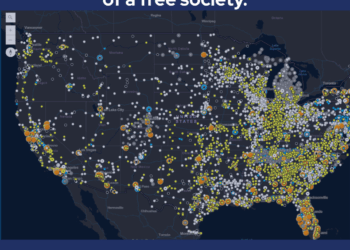
One camera-mapping website, LPRMaps, ranks Alabama sixth nationally for the number of automated license plate readers per capita. The website DeFlock indicates that most of the cameras operating in Alabama are manufactured by Flock Safety.
Civil liberties advocates argue the cameras create a powerful surveillance tool capable of tracking drivers’ movements and infringing on Fourth Amendment protections against unreasonable searches. However, there has been no federal court ruling that bans them on constitutional grounds.
The technology has also drawn scrutiny nationwide because of incidents involving improper access to camera data, including reports of law enforcement personnel using the systems to monitor current or former romantic partners.
Misuse of the cameras has been documented in Alabama.
A Springville police officer resigned last month following an internal investigation into the improper use of the cameras to search for information involving a family member.
In Moody, a police department employee was fired after being found in violation of agency policy governing license plate reader use.
Nationwide, at least 69 police officials have been accused, charged, or convicted of misusing license-plate readers, the Washington Post reported last week.
Flock Safety announced last week that it will require law enforcement customers to implement an audit tool designed to detect unusual searches or misuse such as officer searching for information about romantic partners. The company is also reducing its standard data-retention period from 30 days to seven days, although evidence tied to criminal investigations can be retained longer.
Law enforcement organizations are expected to strongly defend the use of the cameras when legislation is introduced.
Huey “Hoss” Mack, executive director of the Alabama Sheriffs Association, said the technology is helping agencies locate missing people and solve crimes more quickly.
He also noted that Flock Safety has already shortened its retention period and implemented additional safeguards.
Whenever violations occur, Mack said, agencies have responded through policy changes, discipline or employee terminations.
“The use of these systems are not a mass surveillance operation but a use of advanced technology to improve public safety,” Mack said.
Alabama State Sen. Chris Elliott, R-Josephine, said privacy concerns surrounding Flock Safety are understandable but noted that many Alabamians already live among numerous privately owned surveillance devices.
Having something, or someone else, watching may be a different issue.
“I think the outrage of late is that there is a third party involved here and that concerns people and I can understand why,” Elliott said. “But I think that has been the case for a long time with Ring cameras, and neighbors having them pointed at your house all day and every day, storing (data) into the cloud for whoever has access to that. There are privacy concerns there as well.”
Voicing local concerns
The statewide debate has become increasingly visible at the local level. Over the past two weeks in Gulf Shores, residents have shown up at city council meetings requesting Flock cameras be removed.
A growing number of communities across the country have voted this year to remove, suspend or reject Flock camera systems, though there is no indication that any Alabama city is considering a similar move.
Gulf Shores Police Chief Dan Netemeyer has defended the cameras, saying they have helped solve cases.
He cited a case involving a 90-year-old dementia patient who was found after driving into Florida, as well as incidents involving abandoned pets at a city dog park.
Orr said the future legislation will need to be “balanced with the needs of law enforcement.”
“It could be that we won’t allow Flock cameras on the state roads or interstates,” Orr said, adding that perhaps the decision of whether to have the cameras on city streets would be left up to local officials.
“It’s a fluid (situation) and there are multiple decision points and I cannot contact 139 legislators right now and ask, ‘What do you think of this decision point?’” he told AL.com. “It’s where you need to get into session and have the ability to get their input and hear from the law enforcement community, and the concerned citizens.”