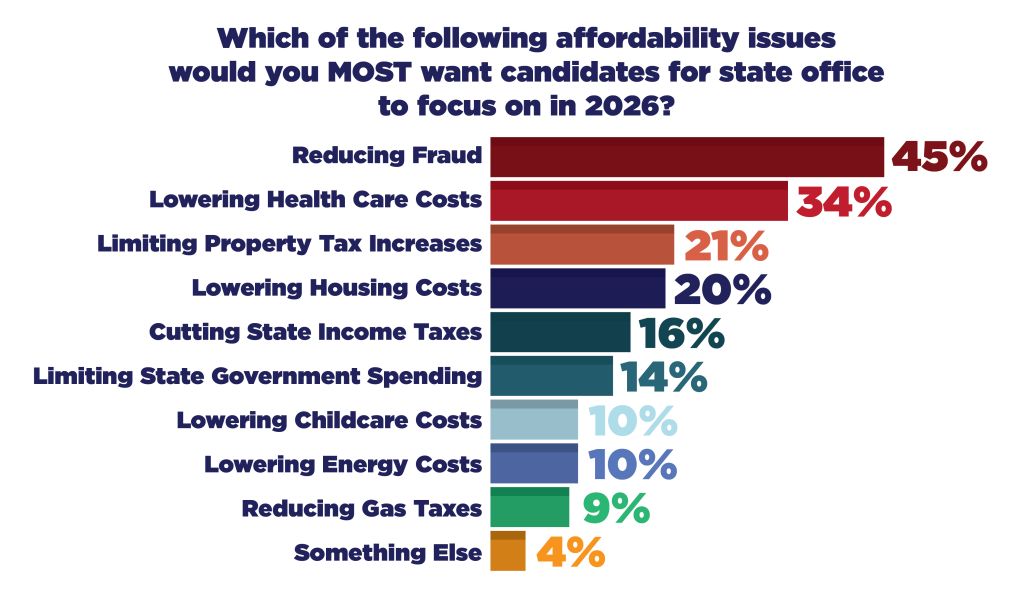
Reducing fraud was the number one suggestion for how to make the state more affordable according to respondents to the latest Thinking Minnesota Poll. Forty-five percent said reducing fraud should be the top affordability focus of candidates in 2026. The next closest issue was lowering healthcare costs at 34 percent followed by limiting property taxes (21 percent) and lowering housing costs (20 percent). Clearly the fraud problem in state government is still on the minds of likely voters, even as they were specifically asked about affordability.
The Thinking Minnesota poll was conducted by Meeting Street Insights, a nationally recognized polling operation based in Charleston, S.C. Interviews were completed June 2-4, 2026, among 500 registered voters in Minnesota who voted in the November 5,2024, election using a mix of cell phone and landline interviewing. The margin of error is +-4.38 percent.
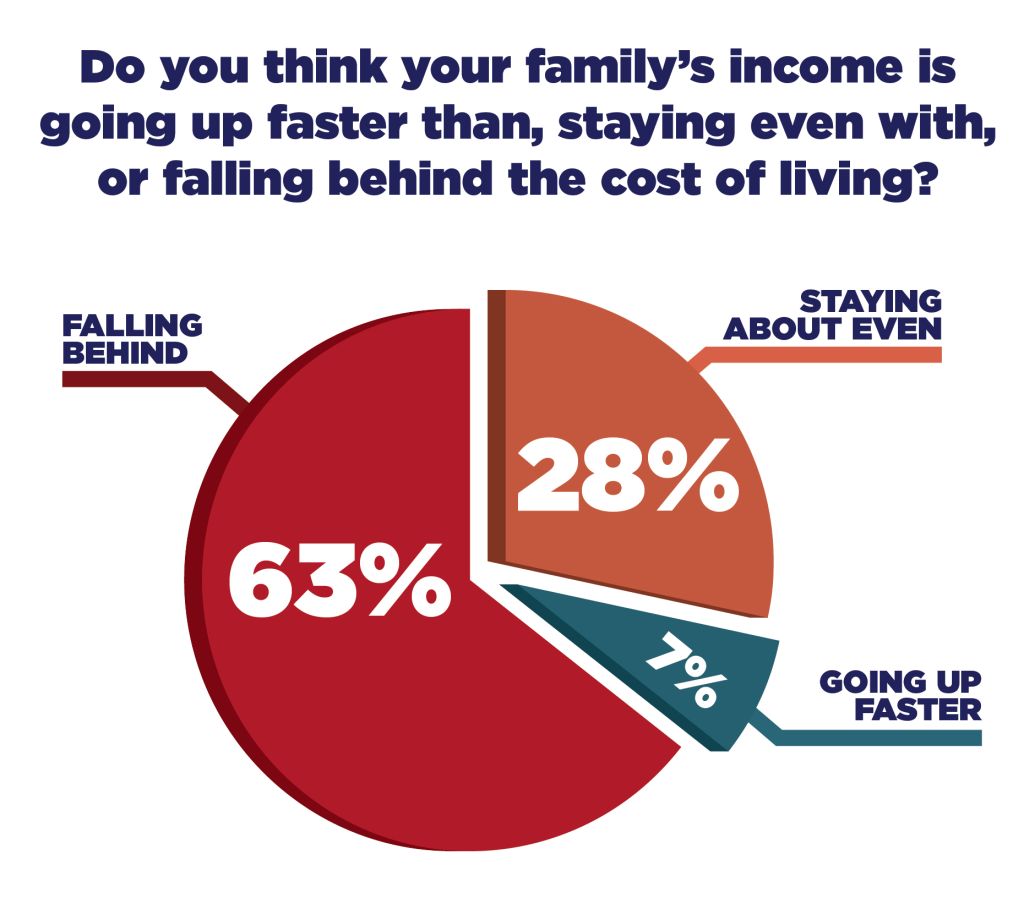
The June poll also asked whether family income is keeping up with the cost of living, something we asked in our December 2025 poll. Sixty-three percent of Minnesotans said their family income is falling behind the cost of living, three points higher than the December results. Only seven percent said income is going up faster than the cost of living, while 28 percent said it’s staying about even. That level of economic pessimism and the fact that it inched up since last year is enough to tell us affordability will be a top issue for Minnesotans in November.
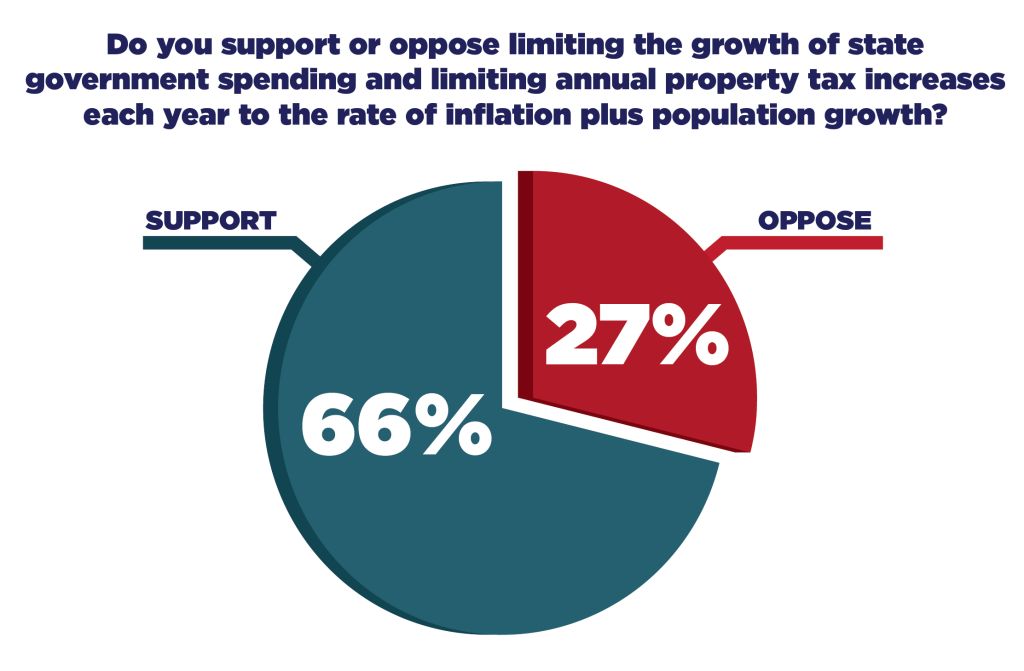
Understanding that affordability is impacted by factors outside of Minnesota, the Thinking Minnesota Poll focused on topics directly influenced by state government. Affordability is most directly impacted by state taxes and respondents told us taxes are too high. Sixty-one percent said income tax rates are too high, unchanged since the last time we asked in 2023. Sixty-six percent support limiting both the growth of state government spending and annual property tax increases to the rate of inflation plus population growth. Sixty-three percent support getting rid of unfunded mandates passed from state government onto local governments.
Beyond taxes, many state policies artificially restrict the supply of goods and services, impacting the affordability of those services. This economic reality drives Minnesota’s misguided policymaking in housing, utilities, healthcare, and childcare. For each topic, we queried a list of affordability solutions, including the misguided strategy of using taxpayer funds to subsidize the activity.
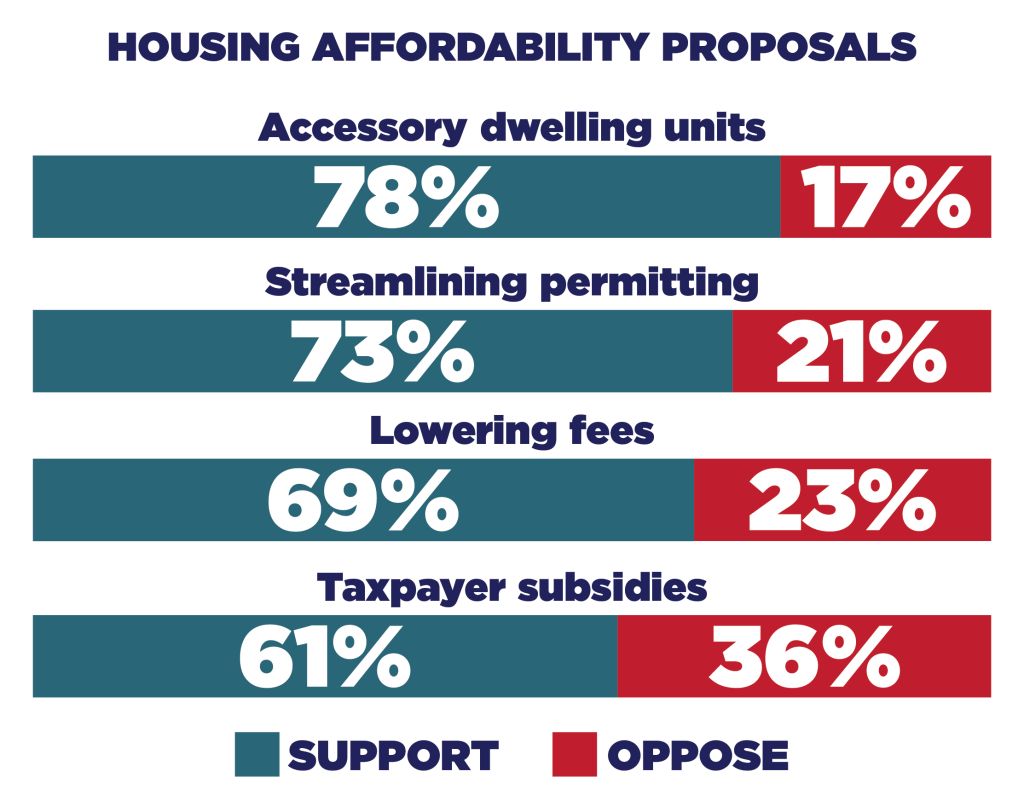
For housing, poll respondents favored allowing homeowners to build accessory dwelling units (78 percent), streamlining the housing permitting process (73 percent) and lowering government fees imposed on new housing (69 percent). Using taxpayer funds to help lower-income people and first-time homeowners purchase housing came in at 61 percent.
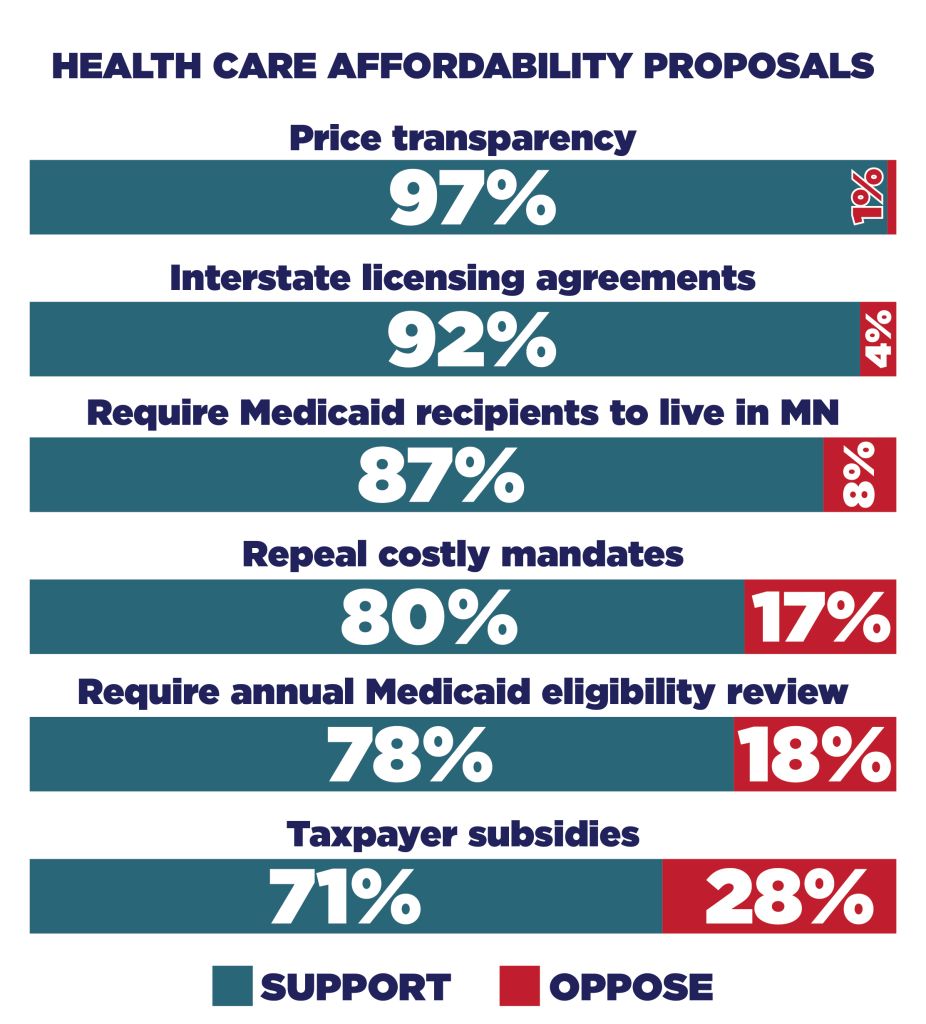
For healthcare, poll respondents favored making price information more user-friendly (97 percent), allowing Minnesota to join interstate licensing agreements (92 percent), requiring all Minnesota Medicaid recipients live in Minnesota (87 percent), getting rid of costly health insurance mandates (80 percent), and requiring all Minnesota Medicaid recipients have their eligibility reviewed annually (78 percent). Using taxpayer funds to help lower-income people pay for healthcare was farther down the list at 71 percent.
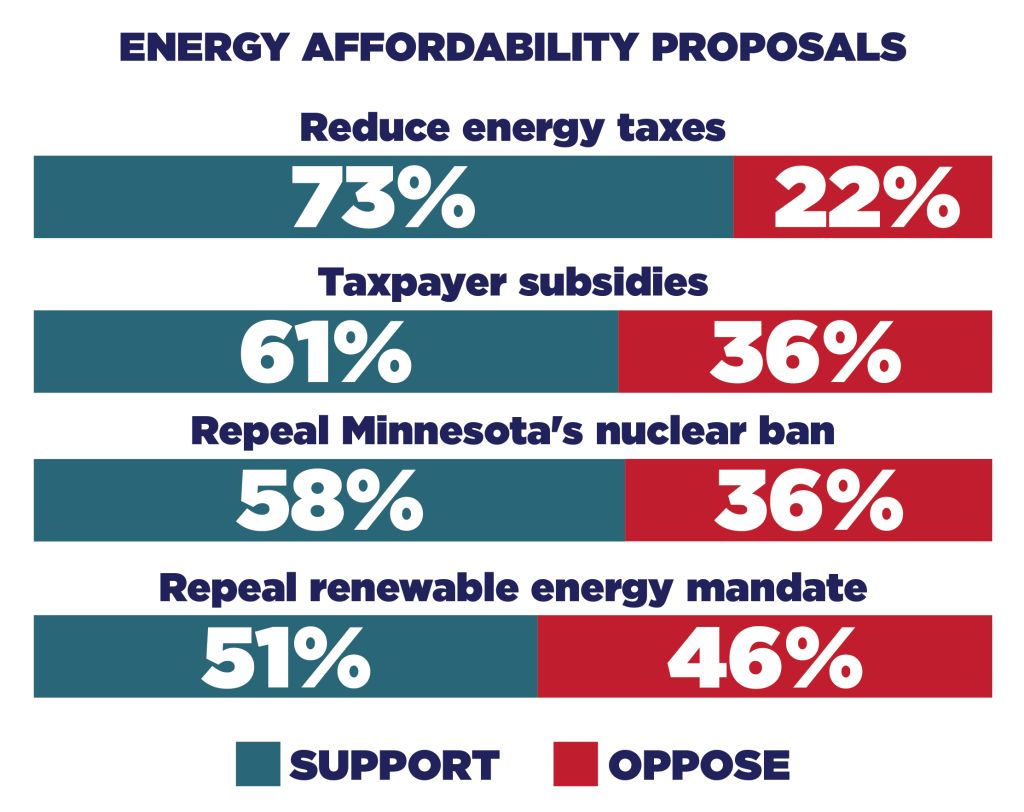
When it came to energy solutions, only reducing taxes on electricity, natural gas, and gasoline (73 percent) polled better than using taxpayer funds to help lower-income people pay their utility bills (61 percent). For childcare, using taxpayer funds to help lower-income people pay for childcare was the surprising top choice of respondents at 68 percent. A majority of Minnesotans oppose reducing state childcare regulations (47 percent), easing hiring qualifications for some childcare center staff (56 percent) and letting staff supervise more children at one time (58 percent).
“Minnesotans deserve real solutions to the very real problem of affordability,” said John Phelan, American Experiment Economist. “We need to lower taxes and stop pretending that throwing money at problems like childcare and housing shortages will actually solve anything.”