Photo courtesy of Flock Safety
The recent outcry over Flock cameras is lacking in fact and echoes the same narrative driven hysteria that led people to vandalize Tesla cars just a year ago – only today that hysteria is leading people to vandalize and remove Flock cameras installed in their communities.
The fact is, Flock is simply the newest version of automatic license plate reader (ALPR) technology that has been in use by law enforcement for decades.
With proper safeguards, the technology provides Minnesota’s law enforcement with state-of-the-art tools to help quickly solve serious crimes or locate missing people, while protecting the public from mass surveillance and data misuse.
What is Flock?
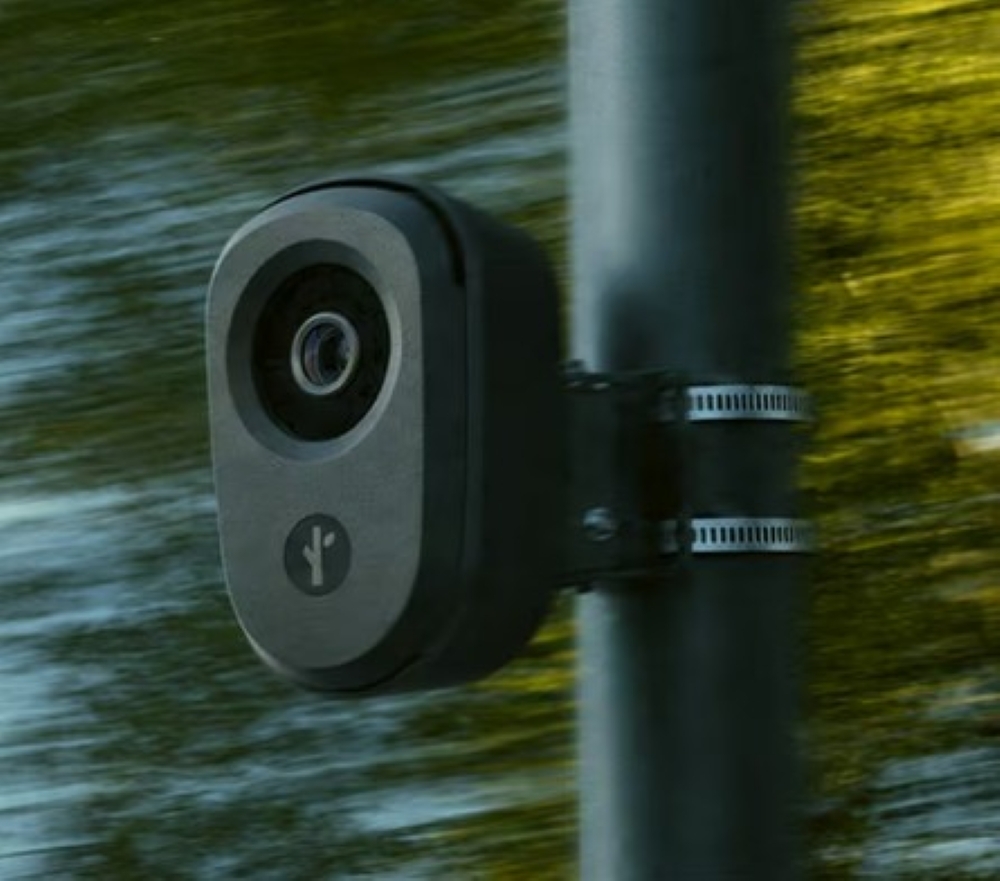
Flock is the brand name of one of several automatic license plate reader camera systems in use by Minnesota law enforcement. Each Flock camera costs about $3,000 plus installation fees.
Flock cameras capture images of license plates and vehicles passing by fixed locations. Flock technology then compares the data against law enforcement watchlists of stolen vehicles, or vehicles wanted in connection with other crimes or missing person cases and alerts law enforcement of the “hit” in real time.
Anecdotal stories of missing children being recovered, murder suspects arrested, and countless other crimes promptly solved have been gathered and reported as the Flock system has expanded.
https://www.facebook.com/reel/941751688955613
https://www.facebook.com/reel/941751688955613
https://www.facebook.com/share/r/16BB17VbfPP/
Investigators can also review Flock data retrospectively, similar to reviewing footage from a convenience store surveillance camera. This can help identify a suspect in a crime by identifying cars that were driven by a particular location at a particular time.
Flock AI technology also assists law enforcement in more quickly integrating with other publicly accessible data associated with a vehicle known as commercial profiles. This integration saves investigators valuable time – it does not provide law enforcement with data that it doesn’t already have access to manually.
What’s unique about Flock is that its customer base includes a rapidly growing private sector that includes homeowner associations (HOA’s), churches and commercial properties. Those privately leased systems can opt to share their data with law enforcement, helping create a force multiplier for law enforcement by providing coverage and access to data that it wouldn’t otherwise have.
What Flock is NOT
There is a growing list of unfounded rumors about Flock.
Flock is not an Israeli based company, nor is it associated with Israeli intelligence or military entities. Flock is a Georgia based, US company.
Flock does not capture cellphone data from passing cars.
Flock does not utilize facial recognition to identify people in cars.
Flock does not have access to law enforcement databases or driver and vehicle services databases.
Flock does not conduct continuous, real-time tracking of a specific citizen’s daily routine.
Flock users cannot monitor live feeds of Flock cameras.
Flock cameras do not track speed and are not reporting speeders to law enforcement.
Flock does not violate constitutional privacy protections. The courts have long ruled that those protections do not extend out it public.
How many Flock cameras are there?
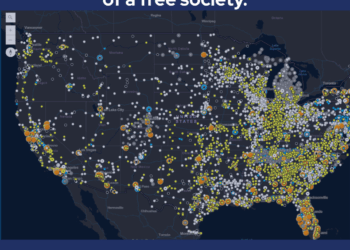
According to Flock Camera Locations website, there are currently 1,438 Flock cameras operating in Minnesota, the majority of which are in the twin cities’ metro area. Flock does not report the breakdown of units operated by private entities or public law enforcement.
The Minnesota Bureau of Criminal Apprehension (BCA) maintains a database of Minnesota law enforcement ALPR cameras but does not differentiate between brands. There are currently 116 Minnesota law enforcement agencies reporting use of over 500 ALPR cameras across the state, but the exact number of Flock cameras operated by law enforcement in Minnesota is not reported.
According to reporting by the Sahan Journal, 59 Minnesota law enforcement agencies have signed 5-year contracts with Flock in recent years.
Successes
Unfortunately, there is no central database of Flock related arrests or recoveries in Minnesota. Those arrests and recoveries are documented, but documenting the connection to Flock is not tracked. It would benefit law enforcement and Flock to document success data for future debate.
For now, we are left with anecdotal stories and the commonsense notion that technology which helps our law enforcement agencies more quickly solve serious crime is a good thing for us all.
Statute governing ALPR data
Minnesota adopted Minnesota State Statute 13.824 in 2014. The statute governs the collection and use of ALPR data by all users – public and private. It is widely respected law that balances public safety and citizen protection from government overreach.
The data captured by Flock and other ALPR systems is managed by individual users. By statute the data may be kept no longer than 60 days. Flock has installed a default setting of 7 days on its data, after which it is deleted unless flagged by law enforcement as part of an active investigation.
Law enforcement agencies are required to create policies that limit the users of Flock and ALPR data to those with a role-based reason – active patrol response, follow up investigations, etc.
The statute allows for data sharing between law enforcement agencies, both state and federal, for criminal purposes. A great deal of friction has come from local law enforcement sharing its Flock data with Immigration and Customs Enforcement (ICE). The issue is one that will likely need to be litigated to provide clear guidance. ICE has broad investigative authority under the Immigration and Nationality Act, and a large percentage of immigration violations are technically criminal, even though ICE often utilizes a civil process to remove many immigration violators.
ICE has a legitimate and meaningful role as a law enforcement agency in the U.S. As such local law enforcement should cooperate and share information with ICE, just as it does with every other law enforcement agency in the country.
Recent debate over Flock
Nearly every city and county that utilizes Flock cameras has held some sort of public review of or debate over their use of Flock in recent months. As a result, nearly a dozen cities and counties have either cancelled their contracts or paused their use of Flock recently.
Others, like Anoka County have committed to increasing their use of Flock cameras. The City of Shakopee is debating the issue tonight during a workshop on the issue. Fortunately, it appears that the city remains generally supportive of the technology.
It’s unfortunate that few of the decisions to move away from Flock have been grounded in solid reasoning. For example, West St. Paul reportedly decided to discontinue its use of Flock because the technology is “not yet” trusted, despite its own review uncovering no internal misuse. Duluth’s reasoning centered largely on the fact that vandals had destroyed too many of the cameras, making it fiscally problematic to continue.
It seems the best policy is one of continued use combined with a healthy dose of oversight and transparency. The City of Wayzata seems to be taking that approach and has a very informative and transparent website detailing the location of and use of Flock cameras throughout the city – it even allows for the public to search if their vehicle has been detected in the past 30 days.
Have you been Flocked?
Those concerned with the “overreach” of Flock cameras might consider using the independent Have I Been Flocked website to see if they have been detected while driving.
I reviewed my route to work and identified at least three Flock cameras just in my home city that I drive by at least twice per day. The Have I Been Flocked site indicates that, according to their data practices request, Flock has not maintained any data related to my vehicle despite my daily driving involves passing multiple Flock cameras.
The takeaway
Flock is simply the newest form of ALPR technology that law enforcement has employed for decades. The “potential” for abuse is manageable and should not be used as an argument to prevent or block the use of Flock.
Minnesota law tightly governs the collection, maintenance, and sharing of Flock data. There are safeguards in place to prevent misuse, and consequences if those safeguards are abused.
Removing this valuable public safety tool from the law enforcement is the epitome of cutting off our nose to spite our face. Minnesota can do better – avoiding the hysteria around Flock cameras would be a great start.