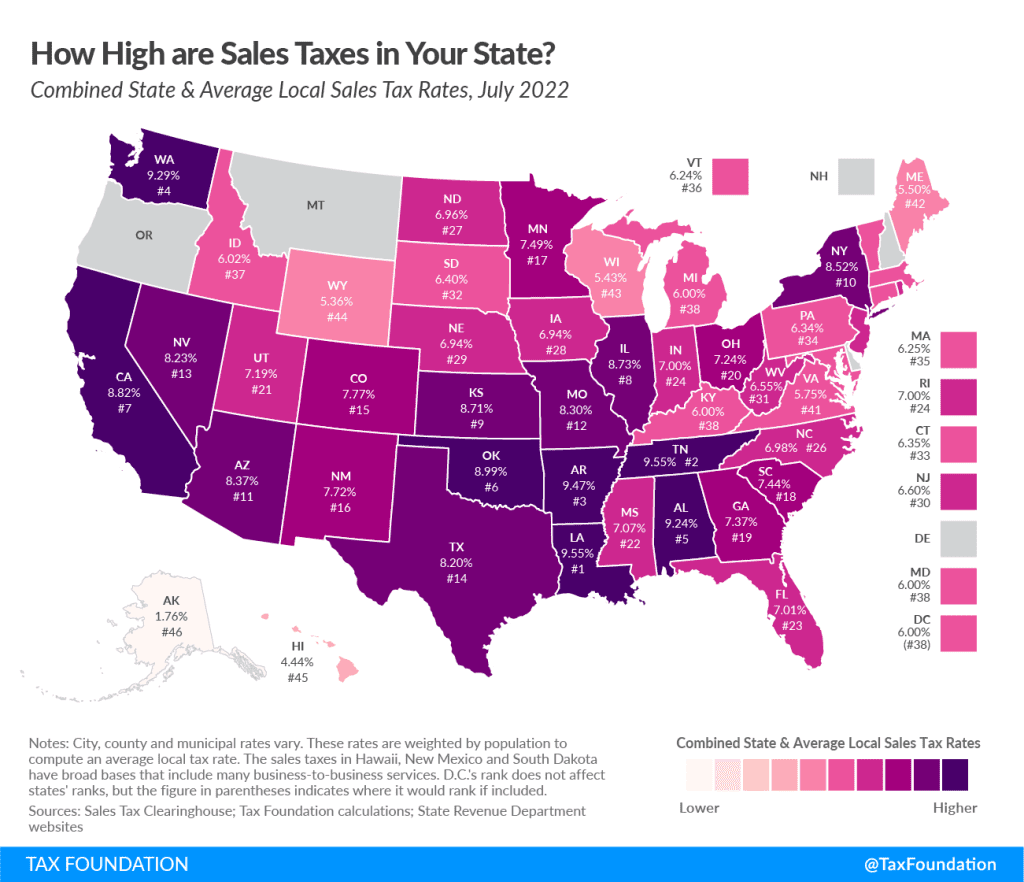
In July 2022, Minnesota’s average combined state and local sales tax rate was 7.49%, which was lower than in 16 other states, according to the Tax Foundation (Figure 1).
Figure 1
For January this year, Tax Foundation data show that Minnesota’s average combined state and local sales tax rate was up to 8.14%, which was now lower than in just 14 other states (Figure 2).
Figure 2
The reason for this is a series of local sales tax impositions and hikes either passed or enabled by that “historic” 2023 DFL trifecta.
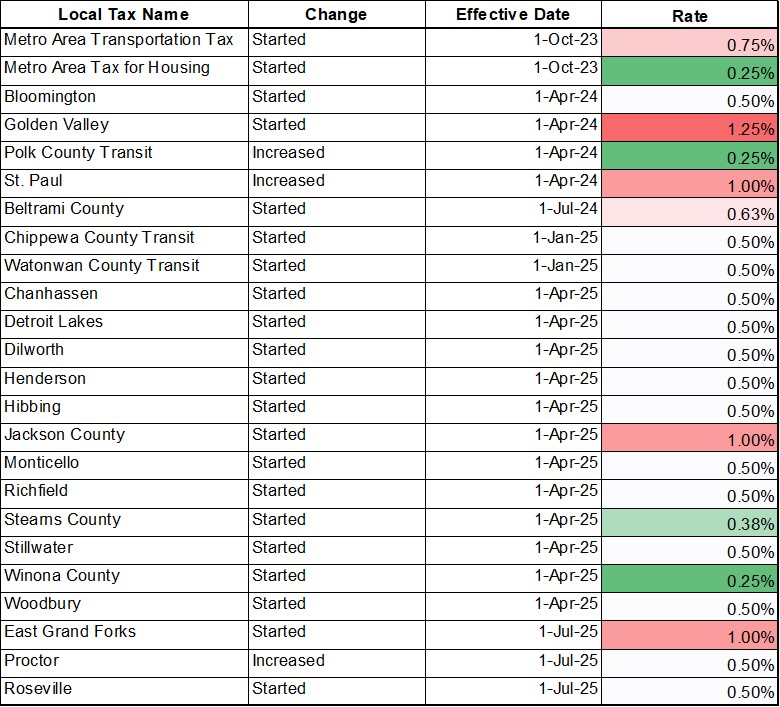
The first of these new taxes was a 1% sales tax imposed in the seven-county metro which came into effect on October 1, 2023: 0.75% to fund new transportation spending and 0.25% for new spending on housing.
In addition, the Legislature also authorized more than three dozen cities and counties to seek voter approval of local sales taxes ranging from 0.25% to 1.25%. Table 1 shows those sales and use taxes imposed or increased between October 1, 2023, and July 1, 2025. In June 2023, I gave this example of how these might work:
Consider a retailer in Woodbury where a sale of $100 is subject to Minnesota state sales tax (6.875%) and Washington County Transit sales tax (0.5%) so that total sales tax is $7.38. Just across the St. Croix in Hudson, Wisconsin, a similar retailer making a sale of $100 would levy Wisconsin state sales tax (5.00%) and St. Croix county sales tax (0.5%) so that total sales tax is $5.50. Now, add to that Woodbury sale the 1.0% metro sales tax and Woodbury’s own proposed sales tax of 0.5% and the sales tax on that $100 transaction rises to $8.88, 61% higher than in Hudson.
Table 1: Changes to sales and use taxes
In November 2023, I noted that “sales taxes are not the worst way for a government to raise revenue,” but I also pointed out that we have to ask, “how high are the other taxes the government levies?” and in Minnesota the answer is generally, “very,” and they only ever get higher. Whether it is the property tax, gas tax, tab fees, or sales tax, the 2023/2024 trifecta made that heavy burden heavier and squeezed affordability for Minnesotans.