July 14, 2026, 9 a.m.
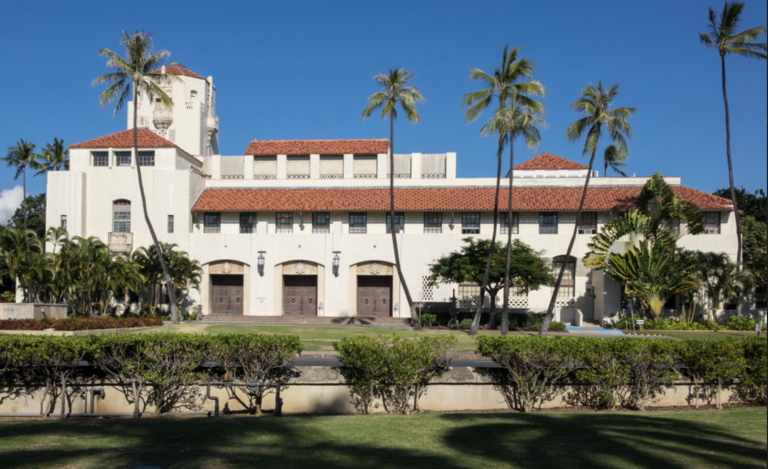
Honolulu Hale
To: Honolulu City Council Committee on Budget
Val A. Okimoto, Chair
Scott Y. Nishimoto, Vice Chair
From: Grassroot Institute of Hawaii
Ted Kefalas, Director of Strategic Campaigns
RE: Bill 67 (2025) — RELATING TO REAL PROPERTY TAXATION
Aloha Chair Okimoto, Vice Chair Nishimoto and other members of the Committee,
The Grassroot Institute of Hawaii offers comments on — and an amendment to — Bill 67 (2025), which would limit the amount that property value assessments for homeowners age 65 or older can increase each year to 2% or the rate of inflation, whichever is lower.
The past several years have seen significant increases in the assessed values of residential properties in Honolulu. And for many homeowners, these higher values have resulted in higher tax bills.
Attempts to limit these unexpected increases are welcome; however, Grassroot recommends amending the bill to mitigate the fact that assessment caps can create distortions in the real estate market.
Research shows that under the 2% assessment cap and 1% rate cap of California’s famous 1978 Proposition 13,[1] homeowners have tended to stay in their homes much longer than in other states,[2] despite the fact that many of those homeowners might have wanted to downsize or move to other neighborhoods or cities.
In a 2005 paper for the National Bureau of Economic Research, economists Nada Wasi and Michelle White reported that after the enactment of Proposition 13, owner-occupiers moved less often and therefore the supply of owner-occupied housing units offered for sale declined, which in turn forced renter households to delay their transitions to owning.[3] Other studies have reached similar conclusions.[4]
Basically, an assessment cap can disincentivize homeowners from moving.
In 1986 and 1988, California voters added language allowing homeowners 55 years of age or older to keep their property tax benefits if they move, subject to some requirements.[5] The effect of this was to make it much more likely for homeowners to move at age 55 than age 54, indicating the importance of this caveat to Proposition 13.[6]
Grassroot suggests the Council insert a provision guaranteeing that Oahu homeowners could keep part or all of their tax benefits if they sell their properties and move into other Honolulu homes that they plan to use as primary residences. This would minimize the distortionary effect of the assessment cap by removing the disincentive to sell.
As this bill moves forward, Grassroot welcomes dialogue about the level at which the cap should be set.
Thank you for the opportunity to testify.
Ted Kefalas
Director of Strategic Campaigns
Grassroot Institute of Hawaii
1050 Bishop St. #508 | Honolulu, HI 96813 | 808-864-1776 | info@grassrootinstitute.org
[1] “Understanding Proposition 13,” Office of the Assessor, County of Santa Clara, accessed Aug. 2, 2024.
[2] Nada Wasi and Michelle White, “Property Tax Limitations and Mobility: The Lock-In Effect of California’s Proposition 13,” National Bureau of Economic Research Working Paper 11108, February 2005. See also Keith Ihlanfeldt, “Do Caps on Increases in Assessed Values Create a Lock-In Effect? Evidence From Florida’s Amendment One,” National Tax Journal, March 2011.
[3] Wasi and White, p. 8.
[4] Paul Fisher, “The Role of Property Tax in California’s Housing Crisis,” University of Arizona Department of Economics, May 5, 2023, p. 4.
[5] California Propositions 60 and 90 attempted to resolve this concern by allowing homeowners over age 55 to keep their tax benefits if they sold their homes and moved. See “Transfer of Base Year Value for Persons Age 55 and Over – Propositions 60/90,” California State Board of Equalization, accessed July 13, 2026.
[6] Fernando Ferreira, “You Can Take it with You: Transferability of Proposition 13 Tax Benefits, Residential Mobility, and Willingness to Pay for Housing Amenities,” UC Berkeley Center for Labor Economics Working Paper No. 72, Feb. 5, 2005; and Fernando Ferreira, “You Can Take it with You: Transferability of Proposition 13 Tax Benefits, Residential Mobility, and Willingness to Pay for Housing Amenities,” Journal of Public Economics, Vol. 94, Issues 9-10, October 2010.