Oct. 6, 2026, 10:30 a.m.
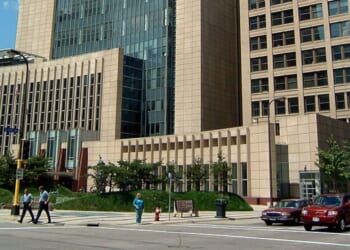
Hawaiʻi County Building
To: Hawaiʻi County Council, Policy Committee on Planning, Land Use and Economic Development
Ashley Kierkiewicz, Chair
Michelle Galimba, Vice Chair
From: Grassroot Institute of Hawaii
Jonathan Helton, Policy Analyst
RE: Bill 154 (2026) — RELATING TO COMMERCIAL PARKING LOTS AND GARAGES
Aloha Chair Kierkiewicz, Vice Chair Galimba and other members of the Committee,
The Grassroot Institute of Hawaii opposes Bill 154 (2026), which would remove paid parking garages and facilities as permitted uses in the general commercial, village commercial, industrial-commercial mixed, limited industrial, general industrial and downtown Hilo commercial zoning districts.
Grassroot believes this bill would aggravate — rather than ameliorate — Hawaiʻi County’s parking and traffic management issues. Namely because it ignores the true problem: arbitrary free parking mandates.
Right now, the County imposes parking mandates on all development within the zoning districts targeted by this legislation.[1] Requiring businesses and other commercial uses to provide free off-street parking contributes to the “automobile dependency” and “inefficient land use patterns” the county Planning Department identified in its analysis of the bill as issues it is attempting to address.[2]
Numerous studies have identified that parking mandates increase costs for businesses and new housing[3] and frustrate attempts at building walkable communities.[4]
Moreover, parking mandates can hinder renovation and rebuilding. In many areas of the state, including Hawaiʻi County, an old building that does not meet current parking rules cannot be retrofitted to a new use without having to purchase land to add the required parking.
A planned bowling alley on Lanai encountered this problem, and construction was delayed as the property owners tried to figure out how to provide more parking.[5]
In cities that have reduced or eliminated required parking, less free off-street parking has been constructed, and land has been freed up for new and expanded homes and businesses.[6]
Rather than repeal these burdensome, costly regulations, Bill 154 (2026) would instead prohibit businesses from offering paid parking facilities.
Restricting paid parking facilities while continuing to mandate free off-street parking would remove all price signals that could inform future planning decisions. Prices — even for parking — are a signal to an area’s businesses and residents that either more or less parking needs to be provided.
In a world without mandatory free off-street parking, areas that experience high parking demands could adapt and price paid surface lots or garages accordingly. Parking fees would encourage drivers to stay parked in a place no longer than necessary, and the churn would help ensure that some parking always remains free or opened up.
Meanwhile, areas with low parking demand and empty parking lots could build new housing or businesses in place of the unused parking, contributing to more economic opportunities for residents and more tax revenue for the County.
In reality, Bill 154 (2026) is well-intended. But it is the wrong fix to the problem of auto dependency, urban sprawl and poor planning brought about by the County’s own parking mandates.
Thank you for the opportunity to testify.
Jonathan Helton
Policy Analyst
Grassroot Institute of Hawaii
1050 Bishop St. #508 | Honolulu, HI 96813 | 808-864-1776 | info@grassrootinstitute.org
[1] Section 25-4-51. Required number of parking spaces., Hawaii County Code, accessed Oct. 5, 2026.
[2] Communication 0886.004 2024-2026, p. 1.
[3] “The Costs of Parking in Hawai‘i,” prepared by PBR & Associates for the Ulupono Initiative, August 2020, p. 3; C. J. Gabbe and Gregory Pierce, “Hidden Costs and Deadweight Losses: Bundled Parking and Residential Rents in the Metropolitan United States,” Housing Policy Debate, Vol. 27, Issue 2, Aug. 8, 2016.
[4] Ellen Schwartz, “New research synthesis: The impacts of minimum parking requirements,” UCLA Institute of Transportation Studies, March 3, 2026.
[5] Ahry McGurik, “Lanai bowling alley saga shines light on county’s cumbersome parking mandates,” The Maui News, Oct. 30, 2025.
[6] Abbey Seitz, Trinity Gilliam and Arjuna Heim, “Stalled: How parking mandates drive up housing costs,” Hawaiʻi Appleseed Center for Law and Economic Justice, October 2025, pp. 16-17; and Daniel Baldwin Hess and Brendan Flowers, “Developer Response to the Removal of Minimum Parking Requirements in Buffalo,” Transportation Research Journal, Volume 2677, Issue 12, May 10, 2023; C. J. Gabbe, Greogry Pierce and Gordon Clowers, “Parking policy: The effects of residential minimum parking requirements in Seattle,” Land Use Policy, Vol. 91, February 2020