File this item under “too little, too late.” From KSTP-5,
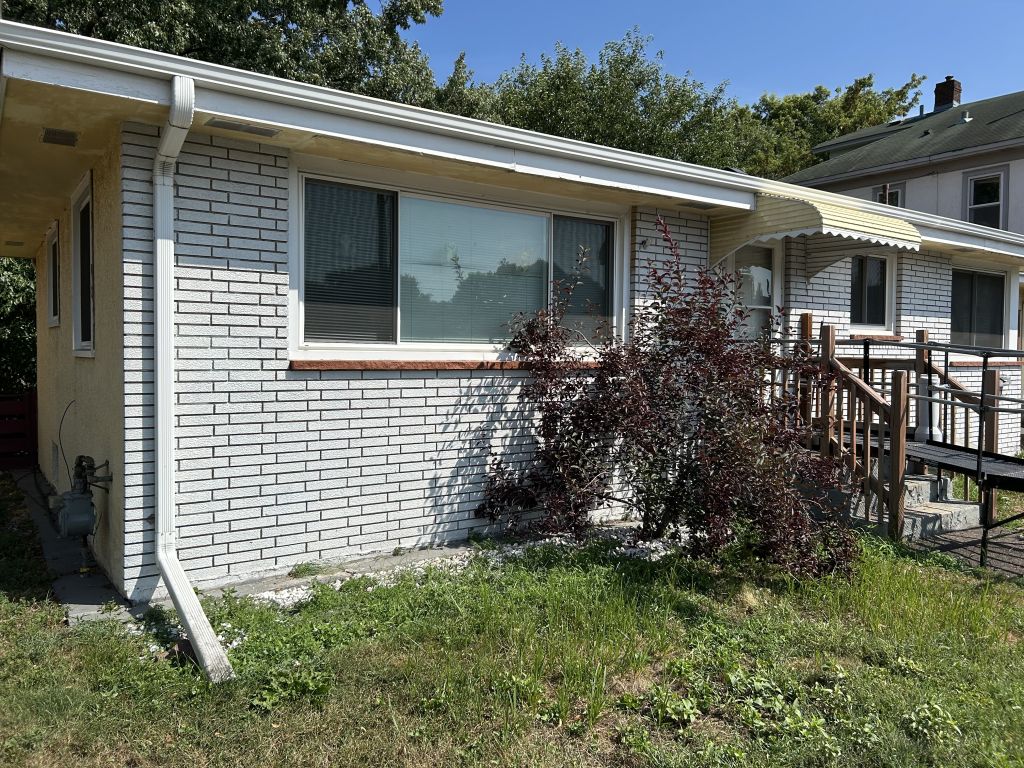
Two assisted living facilities managed by a woman charged in an alleged sex trafficking conspiracy will be permanently shut down, the Minnesota Department of Health said Thursday.
One of the facilities is located on University Avenue NE, and is shown in this photo.
The woman charged is Andrea Sampson, a former Anoka County prosecutor and describe by the Attorney General’s office in court filings (p. 10) as a former commercial sex worker, herself.
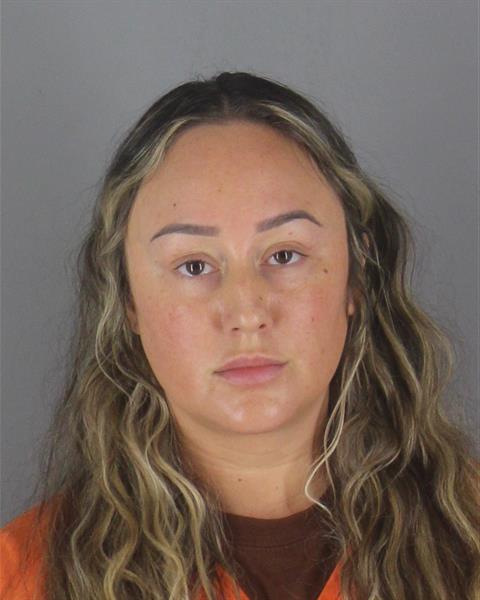
Sampson, along with three co-defendants, faces 26 felony counts in the sex trafficking case. She was released from jail earlier this week on a $300,000 bond. She is named 27 times (but not charged) in a related criminal complaint filed against her business associate, Salman Elmi.
KSTP quotes the state Dept. of Health (MDH),
In this instance, the Minnesota Department of Health (MDH) has determined there are licensing violations that pose an imminent risk of harm to the health or safety of residents.
Why wait until now? The operations described in the series of sex/fraud criminal charges were largely shut down in late February after many search warrants were executed.
It’s regulation by headline, and the result here is an unhappy ending for the happy endings.
But don’t worry, there’s still plenty of assisted living spaces available. The two houses shut down housed, at most, 10 residents. According to page 4 of this MDH study,
As of February 12, 2024, there are 2,222 licensed assisted living facilities in Minnesota.
This number includes 1,337 facilities that are licensed for 10 beds or fewer.
Newly added facilities are nearly all small, MDH reported,
Among current provisional licensed facilities (new facilities in their first year of practice and awaiting full licensure upon passing their survey), small facilities with 10 beds or fewer account for 90% of those provisional licenses.
It’s a growth industry. Checking the current MDE list of licensed assisted living facilities reveals a total number of 2,527 of all types, a growth of 305 over that 2024 baseline. That represents an increase in the size of the industry of nearly 14 percent over a two-and-a-half year period. While it’s true that Minnesota’s population is aging, overall population growth is hardly budging.
Checking the MDH look up tool shows 363 facilities holding provisional licenses, meaning that they have been open less than a year, as described above.
Hennepin County holds just over 22 percent of the state’s population, but hosts 42 percent (1,062) of the state’s licensed assisted-living facilities. Of the 363 newbies with provisional licenses, 187 (52 percent) are located in Hennepin County.
The 2024 MDH study quoted above included the results of an operator survey. The Department received 231 responses. Of those responding, about 2/3 provided demographic information. In the end, it’s not clear how representative of the underlying population the responses were.
Language was one of the demographic data items collected. MDH reports,
Staff members of the respondents speak a total of 23 languages. English emerged as the primary language (83%), followed by Somali (23.4%), Spanish (11.7%), Amharic (8.8%), and Oromo (7.3%).
Residents living in the respondents’ facilities speak 21 different languages, with English ranking the highest (88.3%), followed by Somali (9.5%), Spanish (8%), and Hmong (3.6%).
Let’s focus on the language of assisted-living residents. Persons of Somali ethnicity are believed to represent something just under 2 percent of the state’s total population and slightly larger than the state’s Hmong population. And perhaps there are cultural reasons why persons from this background would prefer smaller, homogenous facilities. But the 500 percent differential is striking, and nearly three times the Hmong share, given similar overall population sizes.
Returning to the newly-issued provisional licenses. A nonscientific review of the three-dozen or so new facilities beginning with the letter “A” indicates that the vast majority, if not all, appear to be run by individuals of either East African or West African origin.
Bear with me for some back-of-the-envelope calculations. Assume in 2024 there were 2,222 small facilities with an average size of five residents, for a total of 11.110. Take 9.5 percent of that amount (per the survey) and you have a Somali-resident population of 1,055.
Of the post-2024 added 305 facilities, assume 80 percent are Somali-oriented, times five residents per, produces an additional population of 1,220. Combined that gets you over 2,200 assisted living residents, or some 2 percent of the underlying population. Keep in mind, those in assisted living represent a little over 1 percent of the overall population.
As it happens, MPR News has done a deep dive into this subject. The attribute much of the surge to group homes being licensed by MDH as assisted-living facilities and to generous taxpayer subsidies. MPR reported back in March,
Largely funded by taxpayer money, group homes help thousands of Minnesotans with mental, cognitive or physical disabilities live as independently as possible. But the industry’s rapid growth in recent years has led to problems that are leaving vulnerable people in danger and local governments struggling with the consequences.
Since 2020, more than 900 houses in Minnesota have been transformed into group homes, an increase of 20 percent. Much of that growth has been concentrated in the northwestern suburbs of Minneapolis, including Brooklyn Center, Crystal and New Hope.
But Brooklyn Park is the epicenter of Minnesota’s group home boom. Some 300 group homes are licensed to operate there, more than any other city in the state, including Minneapolis and St. Paul, the state’s largest cities.
Perhaps more investigation is warranted.