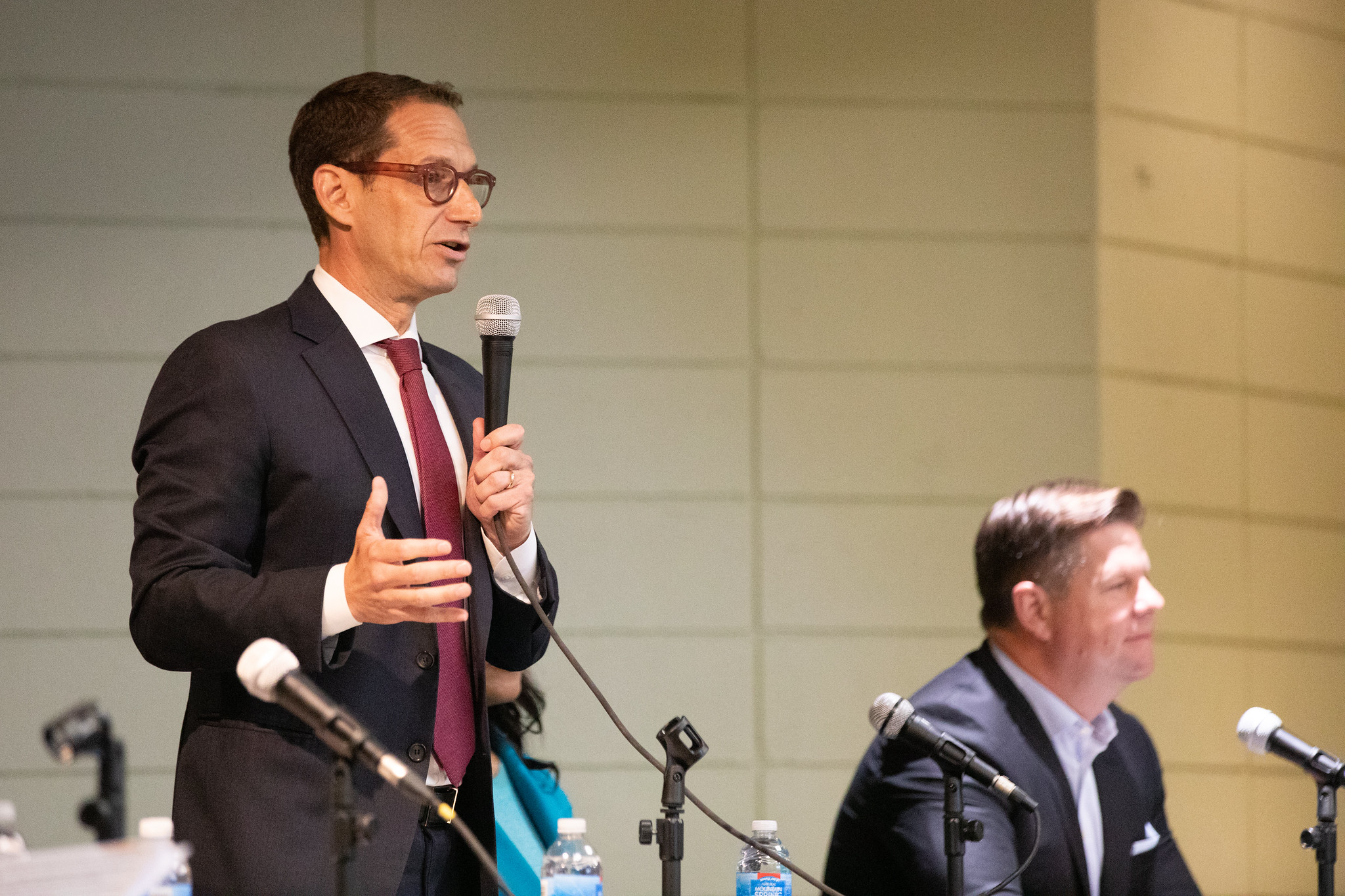
Now back to those important distinctions. His strongest support comes from moderates (86%), liberals (80%) and conservatives (77%). His weakest support is from progressives, but at 53% he’s convinced enough of them to continue down his current path. The Los Angeles Times last November reported that “he has won over his city,” and the Chronicle polling suggests his numbers have only improved in the following six months. There are national lessons here.
What has the mayor done? Per a 100-day analysis last April in the San Francisco Standard, Lurie has moved beyond the counterproductive “Housing First” homeless strategy (just building them apartments) and focused instead on a “Breaking the Cycle” approach that creates wraparound services to deal with addiction and mental-health issues. San Francisco’s violent-crime rates always have been relatively low, but the mayor has cracked down on visible street, drug and property crimes.
Per the Standard, his downtown-business initiative has included expanding “public-drinking ‘entertainment zones,’ slashed red tape on development, and an order to bring city workers back to the office.” He has “leaned on his connections to bring private funds to bear on the downtown problem.” Based on my experience, the downtown financial district looks pretty lively, after having given ghost-town vibes not long ago.
Although a bit more nebulous, Lurie has promised to improve the public schools and make the city more family-friendly, the article added. San Francisco is known for being a (relatively) childless city, so that’s a good pursuit. Recently, he’s been willing to endure the wrath of labor unions as he — get this — has proposed budget cuts to tackle the city’s deficit. It’s unclear how to deal with the city’s outrageously high cost structure, but a little fiscal conservatism can’t hurt. The mayor will release his complete budget plan next month, so we’ll see.
Lurie isn’t the only good-news story. Voters recalled Boudin in 2022 and replaced him with a more traditional district attorney. That same election, voters overwhelmingly recalled three school-board members. In 2024, voters approved three conservative-oriented ballot initiatives relating to crime, homelessness and drugs. A new state law, Senate Bill 423, puts additional oversight on the city’s notoriously slow permitting department.
No one will ever mistake San Francisco’s voters for those in, say, Oklahoma City, but who cares? For those of us interested in positive urban outcomes, it’s the policies — not partisan preferences — that matter. The big question is whether Democrats, whose politicians control most of the biggest U.S. cities, will learn the requisite lessons.