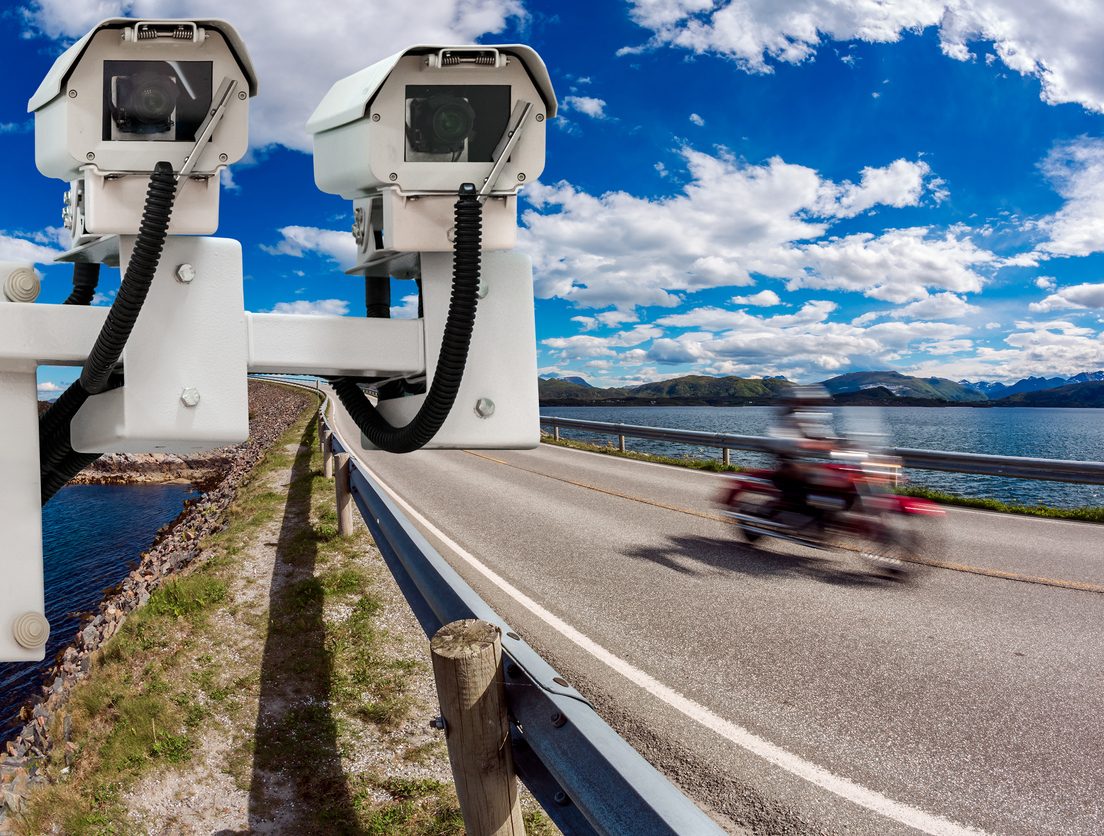
After scrapping its first attempt at remote speed enforcement in 2019, the city of Phoenix has jumped back on the photo radar gravy train, extracting hundreds of thousands of dollars each month from drivers and funneling that money to government bureaucrats, private contractors and even political candidates, all under the guise of public safety.
But while it is not at all clear that Phoenix’s photo radar system is making local roads less dangerous, the city has made it an official piece of its traffic safety plan, which the city is using to line its pockets with tens of millions of dollars in federal grants. At the same time, Phoenix is incentivizing the camera vendor to issue more and more citations to drivers and in the process breaking the longstanding bargain the government had with citizens about how traffic enforcement is conducted.
Thankfully, Arizona voters will have an opportunity to weigh in on photo radar schemes with Proposition 319 on November’s statewide ballot. A “yes” vote will bar state agencies and local governments from using photo enforcement unless they have a contract to use those systems by December 31, 2026, and will require cities that keep existing systems to win voter approval at the next regular general election and every 10 years after that. If voters ultimately reject photo radar in their communities, the cameras come down within 90 days.
That is the public-buy-in test Phoenix never put on a local ballot before flipping its cameras back on.
Photo Radar Déjà Vu
Phoenix ended its first experiment with photo radar in 2019 after a 5-4 vote to not renew the contract. Residents and city council members had long called the cameras a shakedown and questioned their effectiveness. But a couple of years ago the council agreed to bring it back.
The city justified its new photo radar program under “Vision Zero,” its long-range plan to eliminate traffic deaths. Under that program, 17 speed cameras went live in February 2026 and citations started in March. Officials insist the program is about speed, resource-deprived police, and fatal crashes—not money. They insist that it just covers its cost (i.e., it’s “revenue neutral”) with any surpluses going to its Vision Zero plan.
Of course, almost anything a solvent city does is “revenue-neutral” to the city. By that standard, photo radar is no more “revenue neutral” than hiring a platoon of parking enforcement officers and announcing that the new tickets will cover the extra paychecks. But photo radar is hardly “revenue neutral” to the people who pay its enormous costs—drivers in Phoenix.
The cameras extract cash from residents, commuters, and visitors and transfer it to a camera vendor, a legion of process servers, the municipal court system, politicians’ campaign coffers, and, if anything is left, city safety projects. That is not a closed loop inside City Hall. It is a withdrawal from household budgets and the local private economy to private vendors and government bureaucrats.
Functionally, it is taxation by citation—collected after the fact, by mail, at industrial scale.
“Vision Zero”—a gateway to federal money
Phoenix folded Vision Zero into its Road Safety Action Plan in 2022, with a $10 million-a-year price tag attached. The goal is zero traffic deaths by 2050. What the brand also did was to put Phoenix in line for a new stream of federal money.
Mayor Kate Gallego said the quiet part out loud when the council adopted the plan: it “places the city in a much better position to access federal dollars that will amplify our investment.” Staff later reported tens of millions in safety grants awarded under that umbrella—city materials have cited more than $35 million in one accounting and more than $59 million in another. So, Vision Zero gained the city access to the federal trough.
And a revived photo radar program and revenue stream became a part of the plan.
Tickets flooded in faster than proof of enhanced safety
Corridor cameras cite drivers at 11 mph over the posted limit; school-zone units cite them at 5 mph over. By midsummer, the court had issued more than 65,000 citations with fines ranging from about $200 to almost $500 (excluding surcharges). Drivers had paid about $1.67 million. The city’s cut was about $700,000. Millions of dollars in citations remain pending.
With fatalities trending down before the city brought cameras back, it’s not clear the new photo radar program has caused any meaningful reduction in traffic deaths.
The incentives: a vendor paid for volume
Under the city’s contract, the camera vendor, Verra Mobility (American Traffic Solutions), gets $3,000 per camera per month—about $612,000 a year for 17 units—plus $20 for each paid or otherwise adjudicated citation. The vendor mails notices and, when mail is ignored, sends process servers. Phoenix keeps most of the surplus dollars from fine collections, contending that it applies proceeds to Vision Zero. All of that is money the city would not have but for issuing tickets.
A contractor paid per camera and per collected ticket has a direct interest in volume and collection. So does a city that funds staff, court time, and “safety projects” from the same stream.
Return to the parking-enforcement officer comparison. If Phoenix hired scores of extra enforcement employees and pledged that new fines would cover new salaries, no one would call the arrangement a gift to residents. Households would still be poorer by the amount of the tickets, with fewer dollars to make ends meet and spend on local businesses. Photo radar does the same extraction with fewer public faces and a private middleman. “Revenue neutral” describes the city’s hope that the program will not be a line-item loss . . . and that residents won’t notice. It says nothing about neutrality for the people who live in Phoenix.
The broken bargain with citizens
Traditional traffic enforcement is sparse, public, and discretionary. An officer cannot stop everyone, but not everyone needs to be stopped. Flashing red and blue lights, a roadside stop, and the chance of a warning do much of the deterrence. The officer can also look at weather, traffic, construction, and assess whether the speed was actually dangerous. Roads are designed and speed laws established and enforced with all that in mind.
Photo radar breaks that bargain. Enforcement approaches 100% of qualifying events at the camera locations. And enforcement occurs in private, after the fact, and by mail.
Traditional forms of deterrence are eliminated. There isn’t a very public and visible traffic stop. Instead, the “officer” is a reviewer looking at images and a speed measurement in an office, not assessing conditions in the field and talking with the accused.
Revenue through fines is not a side effect of a rare encounter. It is how the cameras, the vendor, the process servers, and a chunk of court and police time get paid. Even if every surplus dollar later buys a crosswalk, the mechanism is still a money generating scheme.
Delayed notice prevents an effective defense
Arizona law forbids speed greater than is reasonable and prudent under the circumstances—conditions, hazards, visibility, surface, traffic. Posted limits are not the law; they are the presumptive speed limit.
A live stop gives the driver a chance to note those facts and even discuss them with the officer or justice of the peace. Receiving a camera ticket weeks later does the opposite. The motorist has no reason to take note of any roadway conditions or preserve any other exculpatory evidence. The camera records speed against a posted number plus a threshold. It does not record whether that speed was reasonable and prudent.
Imagine a driver who admits going over the speed limit but had a good reason. Maybe she sped up to avoid a crash that was about to happen. Maybe she was rushing to help someone having a medical emergency. Maybe she accelerated for a few seconds to get away from a dangerous situation on the road. In each case, the law may recognize her conduct as reasonable. But she can only prove that if someone is there to see it.
A police officer at the scene can do exactly that. The officer can hear the driver’s explanation, look at the conditions on the road, find witnesses, and write down what happened while it is still fresh. A camera can’t do any of those things. It captures a single, narrow moment and nothing else. The driver may lose the very evidence she needs to defend herself, simply because no person was there to record it.
Indeed, when an officer uses radar to enforce the speed limit, the driver has a fair chance to test the evidence against her. She can ask whether the officer aimed at the right vehicle. She can ask whether a different car produced the reading, whether something interfered with the signal, whether the equipment was properly calibrated, and whether the officer ran the required checks. Those questions are basic tools of a fair defense, and they often decide the outcome.
Automated enforcement largely takes those tools—and thus those defenses—away. It replaces an officer’s firsthand testimony with a record produced by a machine. You can’t cross-examine a camera about what it saw or what it missed. When the government can punish people based on evidence that can’t be meaningfully questioned, due process suffers.
As a result, the defense the statute contemplates becomes nearly impossible to raise—further breaking the bargain of traditional enforcement.
Contesting any speeding ticket is difficult, but with photo radar, what should be a contextual judgment is turned into a bright-line billing event.
Politicians cash in
The money from photo radar ticket fines does not just go to the vendor and City Hall. Arizona imposes a mandatory 10% Clean Elections surcharge on civil and criminal fines and penalties, with an additional 1% surcharge routed to a separate account in the same public-campaign fund, funding speech with which you may disagree.
Photo-radar penalties feed that stream.
In fact, the Citizens Clean Elections Commission’s own reports list court assessments as a primary revenue source. Participating candidates for the legislature and statewide office therefore sit downstream of a system that increases the money available for their campaigns by ticketing more people. That is not a conspiracy theory. It is how A.R.S. § 16-954 and § 16-976 are written, and it is why some defenders of the cameras openly worry that killing photo radar would “defund” Clean Elections.
A safety tool that also subsidizes campaigns is not a neutral safety tool. It’s a political campaign financing tool.
Add the other aligned interests: a vendor paid per collected ticket; a city that treats surplus as Vision Zero fuel; courts stuffed with cases that exist only because a camera flashed; process servers whose fees rise when people ignore the first envelope.
Voters get a say in November
Phoenix’s crash problem is not trivial—largely a problem of a huge, fast, spread-out city. But it’s not a sudden emergency warranting drastic action, and photo radar can only change speeds at a handful of mid-block sites. Vision Zero gave the revival of photo radar an emotional vocabulary and a path to federal grants. And the “revenue neutral” claim gave it a slogan.
None of this justifies fundamentally changing how speed laws are enforced or the fleecing of Phoenix drivers. But the city has its plan: cite a huge number of speeders. A percentage of them pay the fine. The vendor and courts take their cut. Surplus is rebranded as safety. And campaign accounts get flush with cash.
Drivers, not the city’s general fund, supply the cash.
With Prop 319, voters can decide in November whether cities should have to ask before they keep running that meter. Even if sold under the guise of public safety, photo radar raises fundamental concerns about perverse incentives for bureaucrats and politicians—and the right to due process.
Scott Day Freeman is a Senior Attorney at the Goldwater Institute.