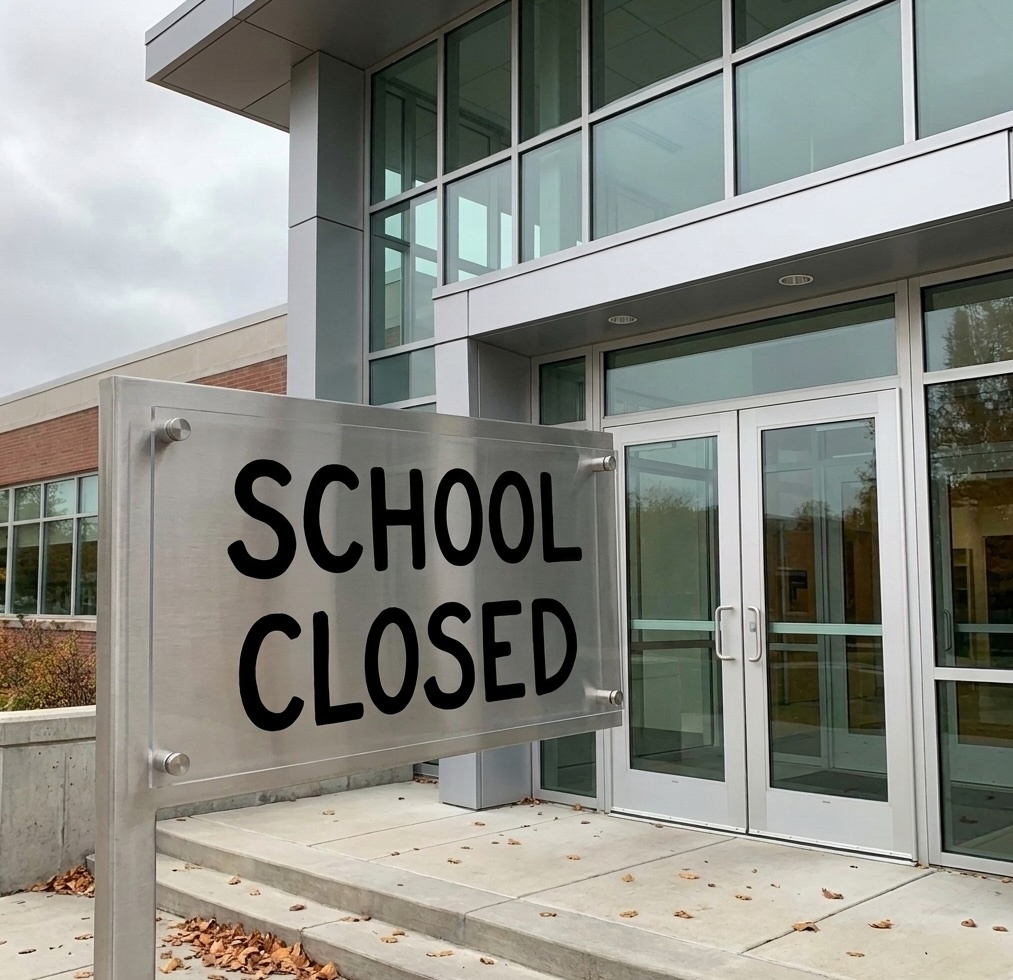
If your child’s school is closed Thursday (Oct. 15) and Friday (Oct. 16) for “MEA,” you might think of it as fall break without knowing what the letters stand for.
MEA stands for Minnesota Educator Academy and is an annual conference put on by Education Minnesota, the state’s teacher union.
Billed as a professional development conference, MEA is open only to union members and college students studying to become educators. While it was traditionally a two-day event, the conference was permanently shortened to one day (the third Thursday of October) back in 2018.
Districts are not required to observe MEA, but most do, and many have already penciled off the Thursday and Friday on future calendars. State law requires a school boards to schedule at least 165 instructional days for students in grades 1 through 11, unless a four-day week schedule has been approved. Minnesota already ranks near the bottom among states for classroom days and hours.
“It’s become a fall break for our families and they come to expect it, quite honestly,” Monica Byron, president of Education Minnesota, told Fox 9. For families who can’t afford to travel, Fox 9 reports, “parents strategize how to balance taking off work and paying for additional childcare.”
Who actually attends MEA?
The conference has been a yearly gathering for Minnesota educators since the 1800s, according to Fox 9.
But how many of the union’s 76,000 working members attend in person?
Not many.
In 2019, about 3,000 teachers were expected to attend. In 2020, when the conference went virtual because of COVID-19, Education Minnesota tweeted that more than 1,300 educators had signed up. Actual attendance was 669 in 2023, 621 in 2024, and 659 in 2025, according to Education Minnesota figures reported by Fox 9.
Byron attributes the drop to the pandemic and online options. She told Fox 9 that “in-person attendance never recovered” and that “thousands now choose to take MEA courses online instead of making the drive to St. Paul to complete license renewal courses.”
The conference also has a history of sessions on ideological topics, including social justice in the classroom, anti-oppression work, and how to talk to young children about gender identity.
Fewer than 1 percent of the union’s working members attended in person last year. A fall break may be worthwhile for families and teachers, but it doesn’t need to be tied to the union’s annual conference.